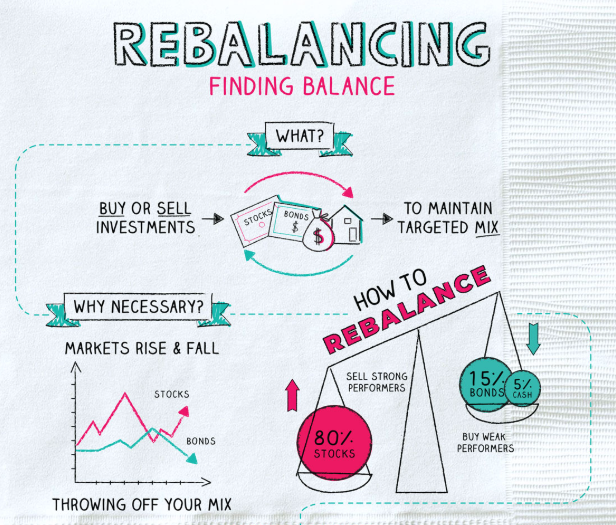
Portfolio rebalancing is a fundamental investment practice that involves adjusting the allocation of assets within a portfolio to maintain a desired investment strategy. Over time, market movements cause the values of different asset classes to change at varying rates, resulting in deviations from the original asset allocation. Rebalancing helps investors restore their intended portfolio mix, ensuring that investment risk remains aligned with long-term financial objectives.
A well-diversified portfolio is typically constructed based on an investor’s risk tolerance, investment horizon, and financial goals. For example, an investor may initially allocate 60% of their portfolio to equities, 30% to fixed income securities, and 10% to cash. However, if equity markets experience strong growth while bond markets remain relatively stable, equities may eventually account for a much larger proportion of the portfolio. Although the portfolio’s value may have increased, the investor is now exposed to a higher level of market risk than originally intended.
Rebalancing addresses this issue by selling a portion of the outperforming assets and reinvesting the proceeds into underrepresented asset classes. This process restores the target allocation without necessarily changing the investor’s long-term strategy. Rather than attempting to predict market movements, portfolio rebalancing focuses on maintaining discipline and consistency throughout different market cycles.
One of the primary benefits of portfolio rebalancing is effective risk management. Financial markets experience periods of expansion and contraction, with different asset classes performing well under different economic conditions. Without periodic adjustments, a portfolio may gradually become concentrated in a single asset class, increasing its vulnerability to market downturns. Rebalancing helps preserve diversification and reduces the likelihood of excessive exposure to one segment of the market.


Portfolio rebalancing also encourages disciplined investment behavior. Investors are often influenced by emotions during periods of strong market performance or heightened volatility. During bull markets, there may be a temptation to increase exposure to rapidly appreciating assets, while market declines may encourage panic selling. A structured rebalancing strategy helps minimize emotional decision-making by relying on predetermined investment guidelines rather than short-term market sentiment.
Economic conditions frequently influence the need for portfolio adjustments. Changes in interest rates, inflation, economic growth, and monetary policy can affect the performance of various asset classes. Equities may outperform during periods of economic expansion, while high-quality bonds may provide greater stability during slower growth or heightened uncertainty. Regular portfolio reviews enable investors to ensure that their allocations continue to reflect both market conditions and personal financial objectives.
There are several approaches to portfolio rebalancing. Some investors rebalance at predetermined intervals, such as quarterly or annually, while others adopt threshold-based strategies that trigger adjustments when an asset class deviates beyond a specified percentage from its target allocation. Both methods aim to maintain portfolio discipline while minimizing unnecessary transaction costs.
Although rebalancing offers important benefits, investors should also consider practical factors such as taxes, trading costs, and liquidity. Frequent adjustments may generate transaction expenses or taxable gains that reduce overall returns. As a result, many investors incorporate tax-efficient strategies and reasonable rebalancing intervals into their investment process.
Modern investment technology has simplified portfolio monitoring and rebalancing. Many investment platforms now provide automated tools that continuously monitor asset allocations and recommend or execute adjustments based on predefined investment parameters. These technologies support more efficient portfolio management while reducing administrative complexity.
In conclusion, portfolio rebalancing is an essential element of long-term investment management. By maintaining appropriate asset allocation, controlling portfolio risk, and promoting disciplined decision-making, rebalancing helps investors remain aligned with their financial goals despite changing market conditions. When combined with diversification and regular portfolio reviews, it contributes to a more resilient and sustainable investment strategy.