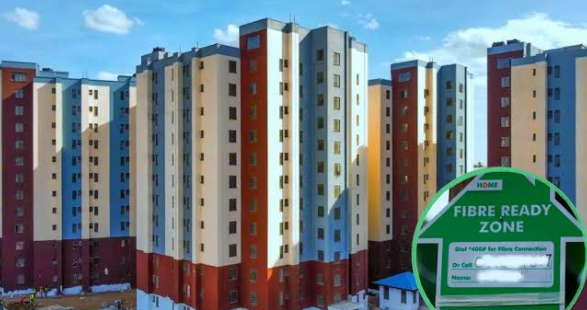
Digital infrastructure is becoming an increasingly important component of urban development as governments and private companies integrate broadband connectivity into large-scale housing projects. In Kenya, Safaricom’s partnership with the Affordable Housing Programme demonstrates how telecommunications infrastructure is evolving from a complementary service into an essential utility within residential developments. Beyond creating an additional source of revenue for the telecommunications company, the initiative reflects broader structural changes in digital connectivity, real estate development, and long-term infrastructure investment.
The partnership begins with the first phase of the Mukuru Affordable Housing Project in Nairobi, where Safaricom will provide fiber broadband connectivity to newly completed housing units. The company intends to expand the model to affordable housing developments across the country as the government works toward delivering 500,000 affordable, social, institutional, and student housing units by 2029. This large-scale rollout creates an opportunity for Safaricom to expand its fixed broadband network while participating in one of Kenya’s most significant public infrastructure programmes.
A key feature of the initiative is the deployment of Safaricom’s Wi-Fi Bamba solution, a tokenized broadband service designed to improve internet accessibility among lower-income households. Unlike conventional fibre packages that require fixed monthly subscriptions, Wi-Fi Bamba allows households to purchase internet access according to their financial capacity. This flexible pricing model accommodates households with irregular incomes while lowering barriers to broadband adoption. As a result, Safaricom can expand digital inclusion by reaching customer segments that have traditionally remained underserved by fixed broadband services.
The agreement also supports Safaricom’s broader strategy of diversifying revenue beyond its mature mobile voice and mobile money businesses. Kenya’s fixed broadband market continues to experience steady growth as households, businesses, educational institutions, and public agencies increasingly rely on high-speed internet connectivity. Affordable housing developments provide concentrated communities of potential broadband subscribers, enabling Safaricom to reduce installation costs, improve network efficiency, and lower customer acquisition expenses. As occupancy levels increase across completed housing projects, the company can build a growing base of recurring broadband revenues while creating opportunities to cross-sell additional digital products and services.


The expansion of broadband connectivity within residential developments also reflects changing consumer expectations. Reliable internet access has become increasingly important as remote working, online education, digital banking, video streaming, cloud computing, and e-commerce become integral to everyday life. Housing developments that incorporate high-quality digital infrastructure may therefore become more attractive to prospective residents. Improved connectivity can enhance the overall living experience, support higher occupancy levels, and strengthen the long-term competitiveness of integrated residential communities.
Beyond telecommunications, the initiative illustrates the growing convergence between infrastructure, technology, and real estate investment. As developers increasingly incorporate broadband connectivity into residential projects, digital infrastructure is emerging as a value-enhancing feature alongside utilities such as electricity, water, and transportation. This integration supports broader urban development objectives while improving access to digital services that contribute to economic participation and social inclusion.
The partnership also aligns with Kenya’s broader digital transformation agenda by expanding internet access and supporting national digital inclusion objectives. Increased broadband penetration strengthens productivity, encourages innovation, and improves access to education, financial services, healthcare, and government platforms. These broader economic benefits reinforce the role of telecommunications infrastructure as a key driver of long-term economic development.
Safaricom’s affordable housing broadband initiative highlights the expanding investment opportunities at the intersection of telecommunications, digital infrastructure, and real estate. By embedding fiber connectivity within Kenya’s affordable housing programme, the company is positioning itself to benefit from sustained demand for broadband services while supporting the country’s urbanization and digitalization goals. As more housing units come online, integrated digital infrastructure is likely to become an increasingly important factor in shaping residential property demand, expanding broadband adoption, and generating resilient recurring revenue streams for telecommunications providers.