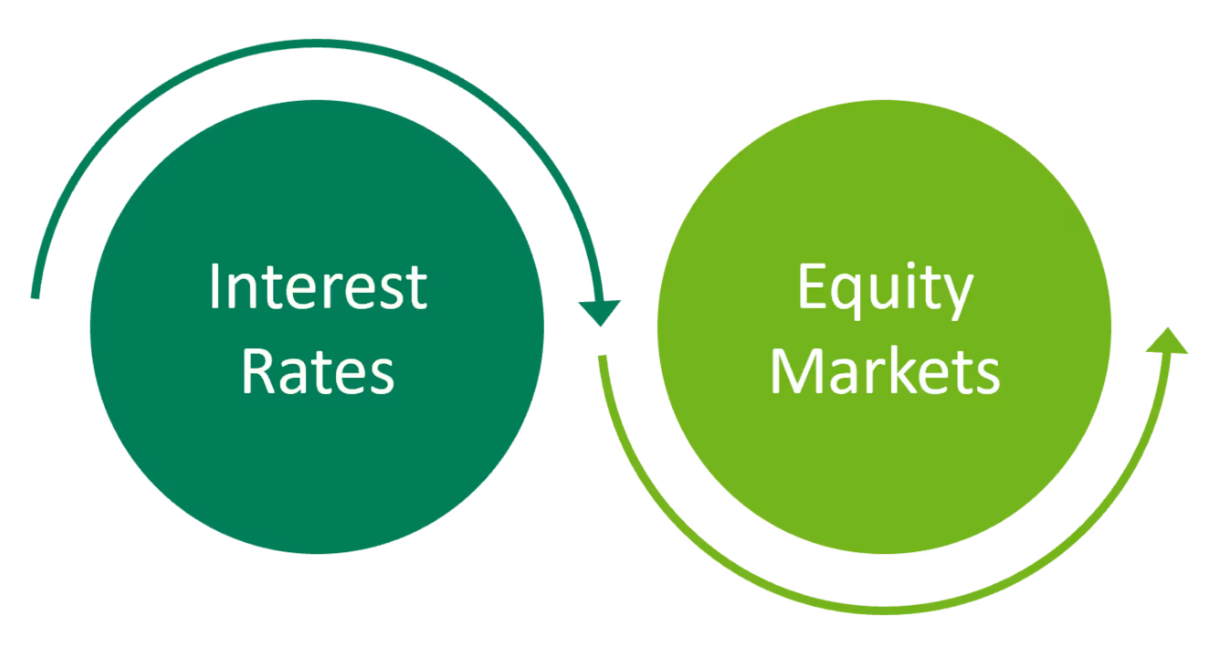
Interest rates are one of the most influential macroeconomic variables affecting financial markets and investment decisions. Set primarily through central bank monetary policy, interest rates influence borrowing costs, consumer spending, corporate profitability, and overall economic activity. Equity markets, in particular, are highly sensitive to changes in interest rate environments, as these shifts affect investor expectations, valuation models, and capital allocation strategies.
One of the primary ways interest rates affect equity markets is through the cost of borrowing. When interest rates are low, businesses can access cheaper financing for expansion, investment, and operational activities. Lower borrowing costs may support higher corporate earnings and encourage economic growth, which can positively influence stock market performance. Consumers may also increase spending due to reduced loan and mortgage costs, further supporting company revenues and market confidence.
In contrast, rising interest rates generally increase financing costs for businesses and households. Higher borrowing expenses may reduce corporate profitability and limit expansion plans, particularly for sectors that rely heavily on debt financing. Consumers may also reduce spending as loans become more expensive, affecting demand across the economy. These developments can place downward pressure on corporate earnings and equity valuations.
Interest rates also influence how investors value stocks. Equity valuations are often based on discounted future cash flows, and interest rates are a key component of the discount rate used in valuation models. When interest rates rise, the present value of future earnings declines, potentially reducing stock prices. Growth-oriented companies, whose valuations depend heavily on expected future profits, are often more sensitive to interest rate increases compared to firms with stable and immediate cash flows.


Sector performance within equity markets can vary significantly depending on the interest rate environment. Financial institutions such as banks may benefit from rising interest rates through improved lending margins, while sectors like real estate and utilities may face pressure due to higher financing costs. Technology and growth sectors are also often more vulnerable to higher rates because of their reliance on future earnings expectations.
Investor behavior and portfolio allocation are closely linked to interest rate trends. In low-interest-rate environments, investors may shift toward equities in search of higher returns, particularly when fixed income investments offer relatively lower yields. Conversely, when interest rates rise and bond yields become more attractive, some investors may reallocate funds from equities into fixed income assets, affecting stock market liquidity and performance.
Interest rates are also connected to inflation and broader economic conditions. Central banks often raise interest rates to control inflationary pressures, while lower rates may be used to stimulate growth during economic slowdowns. Equity markets therefore respond not only to the rate changes themselves but also to what those changes signal about the future direction of the economy.
Global financial markets are increasingly interconnected, meaning that interest rate decisions in major economies can influence capital flows and investor sentiment worldwide. Higher rates in advanced economies may attract international capital, affecting equity markets in emerging economies through currency movements and changing investment flows.
In conclusion, the relationship between interest rates and equity market performance is complex and multifaceted. Interest rates influence corporate profitability, consumer demand, investor behavior, and valuation dynamics across financial markets. Understanding these interactions helps investors make informed portfolio decisions and adapt to evolving economic conditions.