A rare virus in an unlikely setting
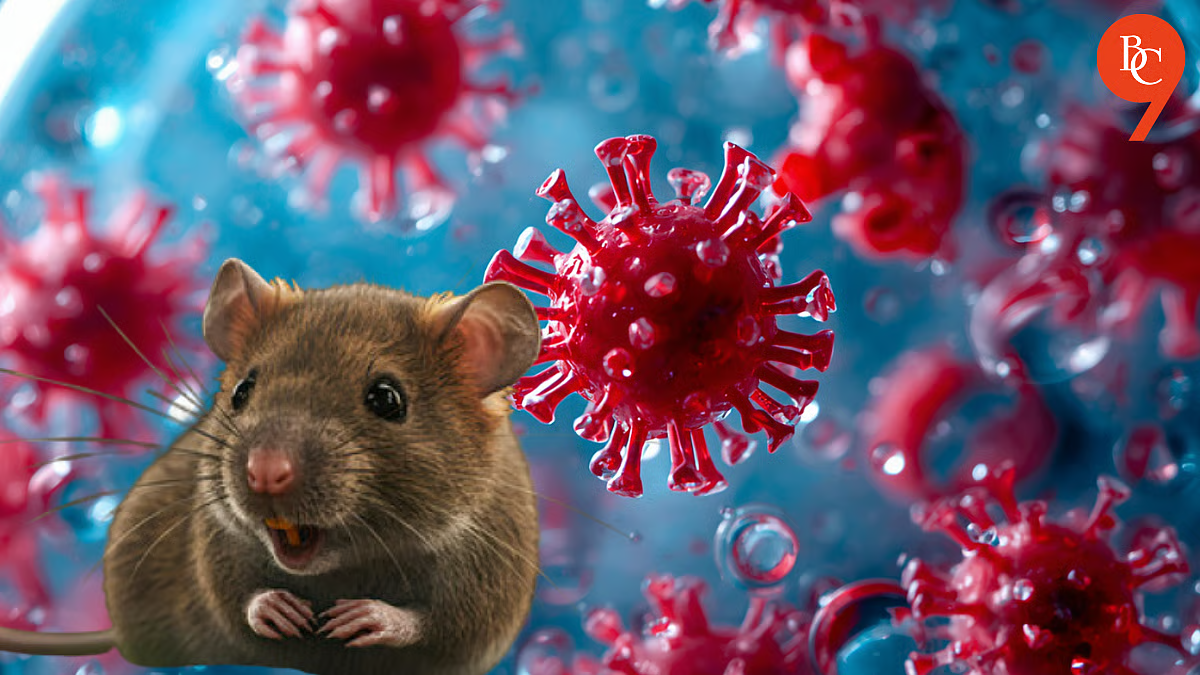
Hantavirus is not a disease most travellers think about before boarding a cruise. It is typically associated with rural environments — farmers, hikers, or wildlife workers who come into contact with infected rodents or their droppings, urine, or saliva. The idea of an outbreak unfolding aboard a luxury expedition vessel is jarring precisely because it defies that expectation.
Yet that is exactly what appears to have happened aboard the MV Hondius, a Dutch-flagged ship operated by Oceanwide Expeditions. Seven confirmed or suspected cases have emerged among passengers and crew, with three fatalities — a Dutch man, his wife, and a German national. A British passenger is in intensive care in South Africa, and two crew members require urgent medical attention. The ship, which departed Ushuaia in southern Argentina in March, is now moored off Cape Verde after the island nation declined to allow passengers ashore pending investigation of the outbreak.
The Andes strain: a key distinction
Not all hantavirus strains behave the same way. The strain the World Health Organization suspects may be involved here is the Andes strain, which circulates predominantly in South America — particularly Argentina — and is notable for one unusual characteristic: it is the only hantavirus strain with documented, if limited, capacity for human-to-human transmission.
That distinction matters enormously. For most hantavirus strains, transmission simply does not happen between people. With the Andes strain, close-contact spread has been observed in previous outbreaks, though it remains rare. WHO’s Maria Van Kerkhove confirmed this nuance at a Geneva briefing, stating that transmission may have occurred between very close contacts — specifically naming a husband and wife and people sharing cabins. This is not the same as saying the virus spreads easily or behaves like a respiratory illness.
Reconstructing the likely chain of infection
WHO’s working hypothesis is that the initial cases — the Dutch couple — were infected before they even boarded the ship, having travelled through Argentina prior to joining the cruise. The Hondius left Ushuaia, a departure point deep in Patagonian territory where the Andes strain is endemic.
Other cases may have been acquired during shore excursions — specifically bird-watching trips to islands where birds and rodents coexist, a recognised exposure pathway. WHO also noted that no rats were found aboard the ship itself, a fact that reduces but does not eliminate all risk vectors. Testing and viral sequencing are ongoing, with South Africa’s National Institute for Communicable Diseases working to characterise the virus strain.
A human tragedy unfolding in real time
Beyond the epidemiology, this is a story of profound human distress. The Dutch man died on April 11, but his body remained aboard for nearly two weeks before being disembarked at Saint Helena on April 24, with his wife accompanying the repatriation. Tragically, she was already showing gastrointestinal symptoms at that point. She deteriorated during a flight to Johannesburg and died upon arrival at the emergency department on April 26. Contact tracing is now under way for passengers on that flight.
Van Kerkhove acknowledged the fear felt by those still aboard, speaking directly and empathetically: “We hear you, we know that you are scared.” It was a rare moment of visible humanity from a global health official — and a reminder that behind every outbreak data point is a real person in an extraordinary and frightening situation. Roughly 150 passengers and crew remain on board, their disembarkation route still unresolved at the time of this writing.
Why the public risk assessment holds up — for now
The WHO’s insistence that risk to the wider public is low is not simply a reassurance reflex. It is grounded in the biology of the Andes strain and the cluster’s contained geography. The cases are linked to a specific journey through an endemic region, and the suspected person-to-person transmission appears limited to those in prolonged, close physical contact — not casual proximity.
Spain’s health ministry offered a measured counterpoint, suggesting the ship need not dock in the Canary Islands if all sick passengers are evacuated in Cape Verde and no new cases emerge. That conditional framing is worth noting: the situation remains fluid, and the response posture is appropriately adaptive rather than fixed.
What this outbreak should prompt us to consider
This incident raises legitimate questions about pre-departure health screening and disease awareness protocols for expedition cruises that visit remote, wildlife-rich environments. Argentina’s Patagonian region is known hantavirus territory. Travellers venturing into such environments deserve clear, accessible briefings on local zoonotic disease risks — not as a cause for alarm, but as part of responsible travel preparation.
It also underscores the value of real-time international coordination. The rapid involvement of WHO, South Africa’s health authorities, the Dutch and German foreign ministries, and Cape Verdean officials reflects a system that, while imperfect, is functioning. The speed of contact tracing, evacuation planning, and public communication has been notably faster than many past outbreaks of comparable scale.
The MV Hondius outbreak is a sobering reminder that infectious disease does not recognise the boundaries of luxury or leisure. The Andes strain’s rare capacity for human-to-human transmission makes this cluster scientifically significant — but the containment logic remains sound as long as the chain of exposure stays within identifiable close-contact clusters. What this outbreak demands most urgently is not panic, but precision: precise testing, precise contact tracing, and precise communication to the people most directly affected. WHO appears to understand that. The question is whether the global public will hold space for nuance in an era more comfortable with alarm.
This commentary is based on reporting by Reuters, as published in The East African, under the headline “WHO: No cause for alarm, hantavirus risk is low.” All factual claims are drawn exclusively from that source. No additional claims have been introduced.