Family Bank’s upcoming debut on the Nairobi Securities Exchange on June 23 marks the culmination of a five-year journey to become a publicly traded company. This is not merely a corporate milestone for one mid-sized lender — it is a signal, however modest, that Kenya’s capital markets may be slowly finding their footing again after years of listlessness. The question worth asking is not just what this listing means for Family Bank, but what it says about the state of the NSE and the appetite for investment in Kenya’s banking sector.
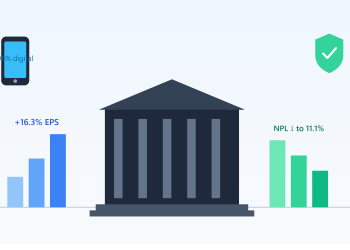
The listing follows Family Bank’s successful capital-raising efforts in 2025, when it raised Kshs 8 bn through a private placement against an initial target of Kshs 6.09 billion, surpassing the target by 31%. That the bank enters the bourse from a position of financial strength rather than desperation is a refreshing departure from the pattern of distressed listings that have occasionally undermined investor confidence on the NSE. Following exceptional 55.4% growth in profitability in 2025, Family Bank sustained its growth trajectory in Q1’2026, delivering a 52.6% increase in profit after tax to Kshs 1.6 bn, driven by sustained growth in interest-earning assets and diversified income streams. These are not the numbers of a bank seeking a lifeline — they are the numbers of an institution that has earned its place on the exchange.
The bank will be listed by way of introduction, allowing existing shareholders to freely trade their shares on the bourse while widening investor participation without issuing new shares. This approach is both pragmatic and telling. It suggests that Family Bank is not in urgent need of fresh capital but is instead prioritising transparency, liquidity, and the governance disciplines that come with public listing. For a bank that has been trading its shares over the counter since 2006, the move to a regulated exchange is a long-overdue formalization of what was already a semi-public enterprise.
The bank’s listing will be the second this year following Kenya Pipeline Company’s initial public offering in March, and will push the number of listed banks to 12, enhancing the sector’s influence on the bourse. For the NSE, which has struggled to attract new listings and has seen most recent market activity driven by secondary share sales and bond issues rather than fresh equity offerings, Family Bank’s arrival is a welcome development. It brings a new name with a recognizable brand and a loyal customer base into the fold, potentially drawing in retail investors who may have previously felt excluded from owning a piece of the institution they bank with.


There is, however, an unresolved tension that the listing alone cannot fix. Analysts expect that the listing will serve to reduce the ownership of founder Titus Muya and his associates, which remained above the 30%, with the founding family’s 31.9% shareholding viewed unfavourably by credit rating agencies. Concentrated ownership at the top has long been a governance risk that discerning institutional investors scrutinize carefully. The NSE listing is a step toward dilution and transparency, but it will only count if management follows through with genuine efforts to broaden the shareholder base over time rather than treating the listing as a box-ticking exercise.
Ultimately, Family Bank’s NSE debut should be read as both a vote of confidence in Kenya’s investment environment and a gentle reminder of the work still to be done. The NSE needs more listings, better liquidity, and deeper retail participation to fulfill its role as an engine of capital formation. For shareholders, tradability on the NSE enhances liquidity and valuation transparency, aligning the bank with listed peers such as Equity Group, KCB, and Co-operative Bank, while also strengthening corporate governance standards and signaling readiness to compete in Kenya’s highly dynamic banking sector. If Family Bank’s entry inspires other mid-tier lenders and private companies sitting on the fence to consider public listing, then June 23 will mean far more than just one bank ringing the opening bell.