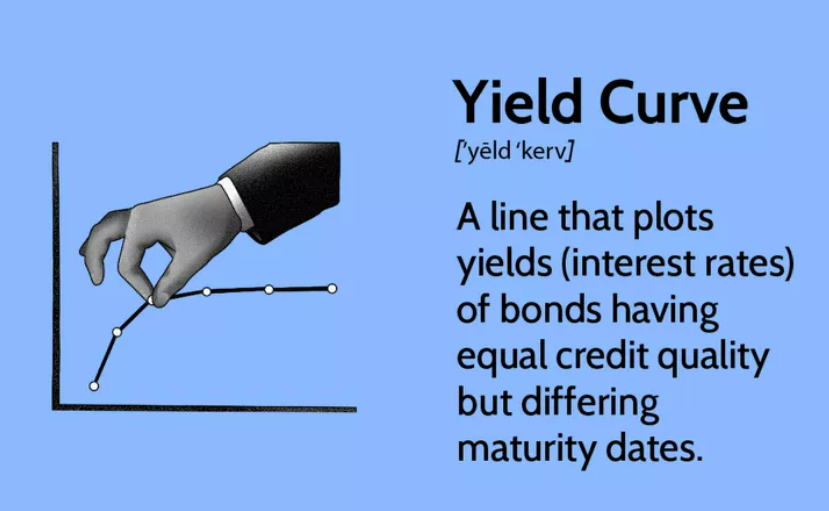
The yield curve is one of the most closely watched indicators in financial markets, providing valuable insights into investor expectations, economic conditions, and future interest rate movements. A yield curve is a graphical representation of interest rates on bonds of the same credit quality but different maturities. Government securities are most commonly used for this purpose because they are generally considered low-risk benchmarks for financial markets.
Under normal economic conditions, the yield curve slopes upward, meaning longer-term bonds offer higher yields than shorter-term bonds. This reflects the additional risk and uncertainty associated with lending money for extended periods. Investors typically demand higher compensation for locking in funds over longer horizons, leading to higher long-term interest rates.
The shape of the yield curve is important because it provides information about market expectations. A steep yield curve often indicates expectations of stronger economic growth and potentially higher inflation in the future. In such environments, investors anticipate increased demand for capital, which may lead to higher interest rates over time. This scenario is generally viewed as supportive of business expansion and investment activity.
Conversely, a flat yield curve occurs when the difference between short-term and long-term interest rates narrows. This may signal uncertainty regarding future economic growth or expectations that interest rates could stabilize. Investors often interpret a flattening yield curve as an indication that economic momentum may be slowing.


One of the most widely discussed yield curve patterns is an inverted yield curve, where short-term interest rates exceed long-term rates. Historically, inverted yield curves have often preceded economic slowdowns or recessions in various economies. This occurs because investors may expect future interest rate cuts in response to weaker economic conditions, driving demand for longer-term bonds and reducing their yields. While an inverted curve does not guarantee an economic downturn, it is frequently regarded as an important warning signal.
Yield curves also influence investment decisions across multiple asset classes. In fixed-income markets, investors use yield curve movements to assess bond valuation, duration risk, and portfolio positioning. Changes in the yield curve can affect the attractiveness of different maturities and influence investment strategies designed to maximize returns or manage risk.
Equity markets are also sensitive to yield curve developments. A positively sloped yield curve often supports banking sector profitability, as financial institutions can borrow at lower short-term rates and lend at higher long-term rates. However, a flattening or inverted yield curve may reduce lending margins and raise concerns about future economic growth, potentially affecting stock market sentiment.
Monetary policy decisions play a significant role in shaping yield curves. Central banks influence short-term interest rates through policy measures, while long-term yields are largely determined by market expectations regarding inflation, growth, and future policy actions. As a result, yield curves serve as a bridge between monetary policy and market expectations.
Investors, economists, and policymakers closely monitor yield curve movements because they provide a forward-looking perspective on economic conditions. Unlike many economic indicators that reflect past performance, the yield curve often captures expectations about future developments, making it a valuable analytical tool.
In conclusion, the yield curve remains a critical indicator in economic and investment analysis. By reflecting market expectations regarding growth, inflation, and interest rates, it helps investors assess risk, allocate capital effectively, and better understand the broader economic environment.