

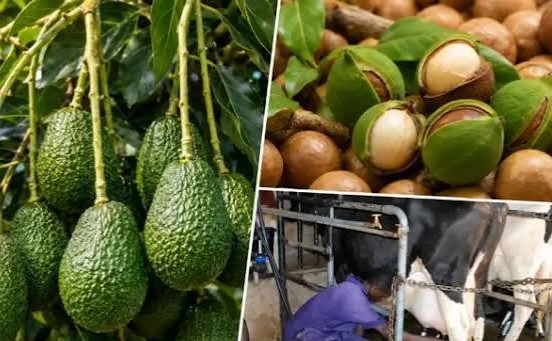
Kakuzi Plc’s 2026 profit warning highlights the exposure of Kenya’s export-oriented agricultural sector to international commodity price movements and fluctuations in production. The Nairobi Securities Exchange-listed agribusiness expects its full-year net earnings to decline significantly from the Kshs 387.6 mn recorded in 2025, following sustained weakness in macadamia prices and lower crop volumes. The anticipated decline highlights the sensitivity of agricultural earnings to market conditions and harvest performance, particularly for businesses dependent on international demand.
Macadamia price movements illustrate the extent of this volatility. Kakuzi’s macadamia segment shifted from a profit of Kshs 635.0 mn in 2022 to a loss of Kshs 354.0 mn in 2023, as average selling prices declined from USD 15.3 to USD 7.2 per kilogram. The company’s avocado operations also recorded weaker performance, with first-half segment profit declining by 45.3% to Kshs 215.9 mn. Consequently, group net profit fell by 97.6% to Kshs 7.1 mn in the six months ended June 2026. These results indicate that declining selling prices and reduced production can simultaneously constrain revenue and profitability across agricultural segments.
The implications extend to earnings forecasting, cash generation and investment risk assessment. Lower commodity prices can compress margins, while reduced harvest volumes limit saleable output and the potential for revenue recovery. These pressures may also constrain funding for capital expenditure and shareholder distributions. Furthermore, significant earnings fluctuations complicate valuation, particularly where historical profits reflect temporarily favourable market conditions rather than sustainable operating performance.
However, the available figures do not establish whether the current weakness represents a prolonged structural downturn or a cyclical correction. Assessing Kakuzi’s longer-term earnings outlook therefore requires consideration of future macadamia prices, crop volumes, avocado profitability, production costs and export market conditions. For investors evaluating Kenya’s agricultural sector, the key consideration is whether underlying operating capacity and cost competitiveness can support earnings recovery when market conditions improve.