

Sharp Daily
  • News
  • Business
  • Technology
  • Real Estate
  • Opinion
  • About Us
No Result
View All Result
Sharp Daily
  • News
  • Business
  • Technology
  • Real Estate
  • Opinion
  • About Us
No Result
View All Result
Sharp Daily
No Result
View All Result
Home News

The Power of Dollar-Cost Averaging for Beginners

Jane Kamau by Jane Kamau
October 22, 2026
in News
Reading Time: 3 mins read

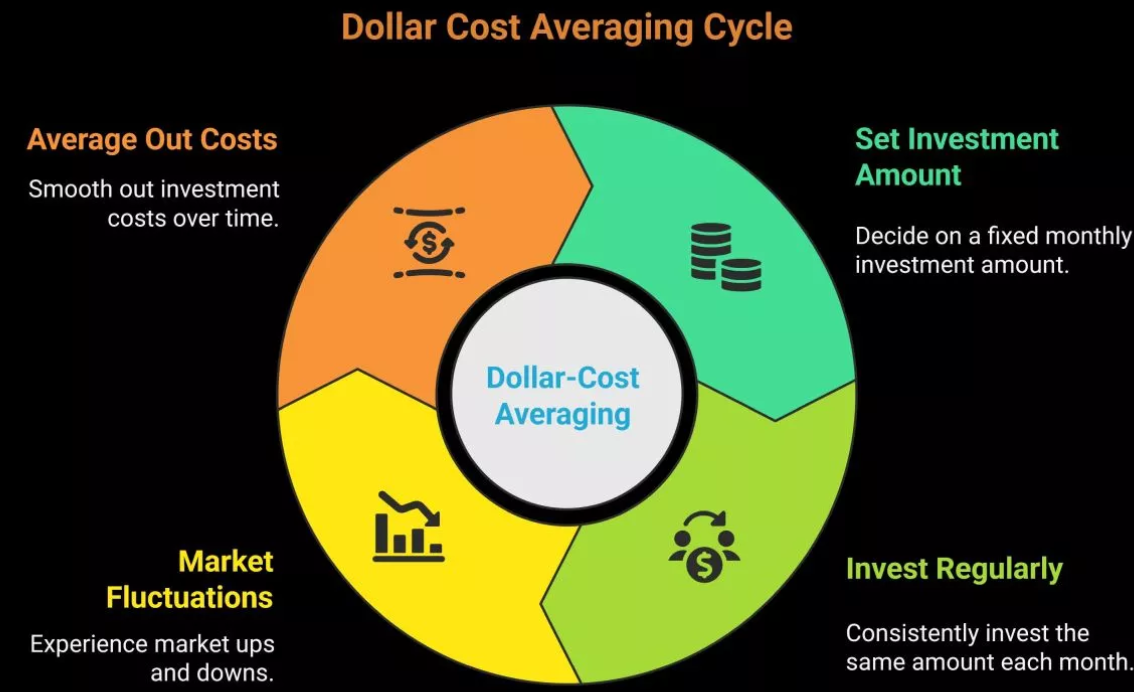
Building wealth through investing does not necessarily require substantial initial capital or the ability to predict market movements. For beginners, developing a consistent investment strategy can be an important step towards achieving long-term financial goals. Dollar-cost averaging (DCA) is one approach that enables investors to commit a fixed amount of money to an investment at regular intervals, regardless of prevailing market prices. Rather than attempting to identify the perfect time to enter the market, investors spread their purchases over time, potentially reducing the impact of short-term price volatility on their investment decisions. According to the United States Securities and Exchange Commission’s Investor.gov, this approach allows investors to purchase more units when prices are low and fewer when prices are high, helping them establish a disciplined investment routine.

The principal advantage of dollar-cost averaging for beginners is its potential to reduce emotional decision-making. Financial markets can experience sharp price movements in response to interest rate changes, inflation, corporate earnings and broader economic developments. Investors who attempt to time the market may delay investing while waiting for prices to fall or rush into investments after observing strong gains. Both approaches can result in inconsistent decisions. By establishing a predetermined investment schedule, dollar-cost averaging encourages investors to remain focused on their financial objectives rather than reacting to every market movement. The Financial Industry Regulatory Authority (FINRA) identifies this consistency as a potential benefit, particularly for investors who might otherwise make impulsive decisions during periods of uncertainty.

Another important benefit is accessibility. Individuals who earn regular salaries or operate small businesses can allocate a manageable portion of their income towards investments without waiting to accumulate a large sum. Depending on their financial circumstances, they may consider suitable investment vehicles such as diversified exchange-traded funds, unit trusts or other regulated investment products that permit recurring contributions. In Kenya, investors can investigate available collective investment schemes, including money market funds and equity-oriented funds, while assessing their investment objectives, liquidity requirements, fees and risk profiles. Regular contributions can also complement the long-term benefits of compounding, whereby investment earnings generate additional earnings over time. However, compounding depends on the returns achieved, the duration of the investment and whether earnings remain invested; it does not guarantee a particular outcome.


RELATEDPOSTS

US investors increase interest in kenya

November 11, 2026

Investing in USD Money Market Funds: A smart choice for stability and liquidity

November 10, 2026
Despite these benefits, dollar-cost averaging has limitations that investors should understand before adopting the strategy. First, purchasing more units when prices fall does not eliminate the risk of capital losses. If an investment continues to decline in value or its underlying fundamentals deteriorate, accumulating additional units may increase exposure to an under performing asset. The strategy also does not guarantee higher returns than investing a lump sum immediately. FINRA’s guidance published on 19 May 2026 highlights the opportunity cost associated with holding money in cash while gradually investing funds that are already available. When markets rise during the investment period, the uninvested portion may miss potential gains. Furthermore, transaction fees, applicable taxes and other investment costs can reduce returns, particularly where contributions involve frequent charges. Investors should therefore compare the total cost of recurring purchases with the alternatives available to them.
For beginners, implementing dollar-cost averaging requires a clear financial plan rather than simply committing to periodic purchases. Investors should first establish an emergency reserve, manage expensive debt and determine how much they can consistently invest without compromising essential expenses. They should then identify a financial objective, select investments appropriate to their risk tolerance and time horizon, and establish a realistic contribution schedule. Automating contributions, where supported, can help maintain consistency. Periodic portfolio reviews remain necessary to assess performance, investment costs, diversification and whether the selected assets continue to support the original objective. Investors should also verify that financial institutions and investment products are appropriately authorised by the relevant regulators.

Ultimately, dollar-cost averaging provides beginners with a structured method of entering financial markets through consistent contributions rather than relying on accurate market timing. Its effectiveness lies in supporting investment discipline and spreading purchases across different price levels, not in guaranteeing returns or eliminating risk. When combined with suitable asset selection, diversification, cost awareness and a long-term perspective, the strategy can form part of a practical investment framework. The decision to use it should nevertheless reflect an investor’s financial circumstances and the characteristics of the chosen investment, particularly when comparing regular contributions with investing an available lump sum.


Previous Post

From employer silence to candidate no shows: How hiring ghosting evolved

Next Post

The untapped potential of insurance funds in financing Kenya’s economy

Jane Kamau

Jane Kamau

Related Posts

Business

US investors increase interest in kenya

November 11, 2026
News

African Stablecoin Adoption Gains Momentum

November 10, 2026
News

How operational efficiency influences corporate value

November 9, 2026
News

The Growing Appeal of Government Bonds

November 6, 2026
News

US Midterms, Israel’s Political Shift and the Iran War: What Lies Ahead for Global Markets?

November 6, 2026
Business

Why kenyan investors are pouring billions into government bonds

November 6, 2026

LATEST STORIES

US investors increase interest in kenya

November 11, 2026

Investing in USD Money Market Funds: A smart choice for stability and liquidity

November 10, 2026

African Stablecoin Adoption Gains Momentum

November 10, 2026

Employers face final hours to file October PAYE returns

November 9, 2026

How operational efficiency influences corporate value

November 9, 2026

The Growing Appeal of Government Bonds

November 6, 2026

US Midterms, Israel’s Political Shift and the Iran War: What Lies Ahead for Global Markets?

November 6, 2026

How working past state pension age affects your pension

November 6, 2026
  • About Us
  • Meet The Team
  • Careers
  • Privacy Policy
  • Terms and Conditions
Email us: editor@thesharpdaily.com

Sharp Daily © 2024

No Result
View All Result
  • News
  • Business
  • Technology
  • Real Estate
  • Opinion
  • About Us

Sharp Daily © 2024