

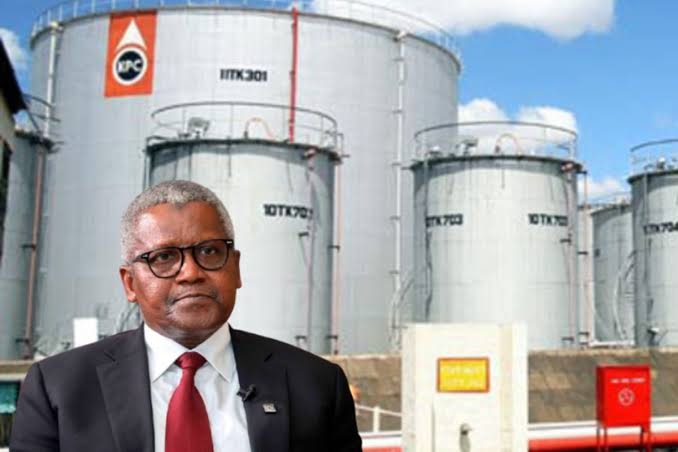
Aliko Dangote’s acquisition of a 24.76% stake in Kenya Pipeline Company (KPC) for approximately Kshs 42.5 bn marks a significant development in Kenya’s petroleum industry, bringing one of Africa’s largest industrialists into the country’s strategic energy infrastructure. The transaction involved approximately 4.5 bn shares acquired from institutional investors, making Dangote the company’s second-largest shareholder after the Government of Kenya, which retains a 35.0% stake. The acquisition also coincides with plans to establish a USD 16.0 bn petroleum refinery in Lamu, positioning the investment within a broader strategy to expand refining and distribution capacity across East Africa.
KPC plays a critical role in Kenya’s petroleum supply chain, transporting imported petroleum products from Mombasa to inland markets and neighboring countries through a pipeline network spanning approximately 1,300 kilometres. Dangote’s entry could support additional investment in storage, pipeline expansion and distribution infrastructure. He has announced plans to invest a further USD 1.5 bn in expanding KPC’s network. If implemented, these investments could improve distribution capacity, accommodate rising regional fuel demand and strengthen Kenya’s position as a petroleum logistics hub.
The acquisition could also strengthen the link between petroleum refining and distribution, particularly if the proposed Lamu refinery proceeds as planned. Local refining capacity could reduce reliance on imported refined petroleum products, while access to KPC’s infrastructure could facilitate the movement of fuel to domestic and regional markets. However, the extent to which this translates into lower fuel prices will depend on refinery production costs, crude oil sourcing, logistics expenses, competition and the pricing of petroleum products across the region.
For investors, Dangote’s entry has attracted attention to KPC, with its share price rising by 7.9% to Kshs 9.78 on 22 October 2026, from Kshs 9.06 at the previous close, following disclosure of the acquisition. The transaction could strengthen investor interest in the company’s growth prospects, although future returns will depend on earnings performance, capital expenditure and dividend sustainability.


Nevertheless, the acquisition raises important considerations around market concentration, transparency and the protection of public institutional investors’ interests. The transaction involved institutions that had acquired shares during KPC’s IPO earlier in 2026, making the commercial rationale and returns from their subsequent disposals’ important considerations.
Ultimately, Dangote’s entry could support the expansion of Kenya’s petroleum infrastructure and regional energy trade. Whether it becomes a game changer will depend on the execution of planned investments, competitive market conditions and the extent to which improved infrastructure delivers tangible benefits to consumers and investors.