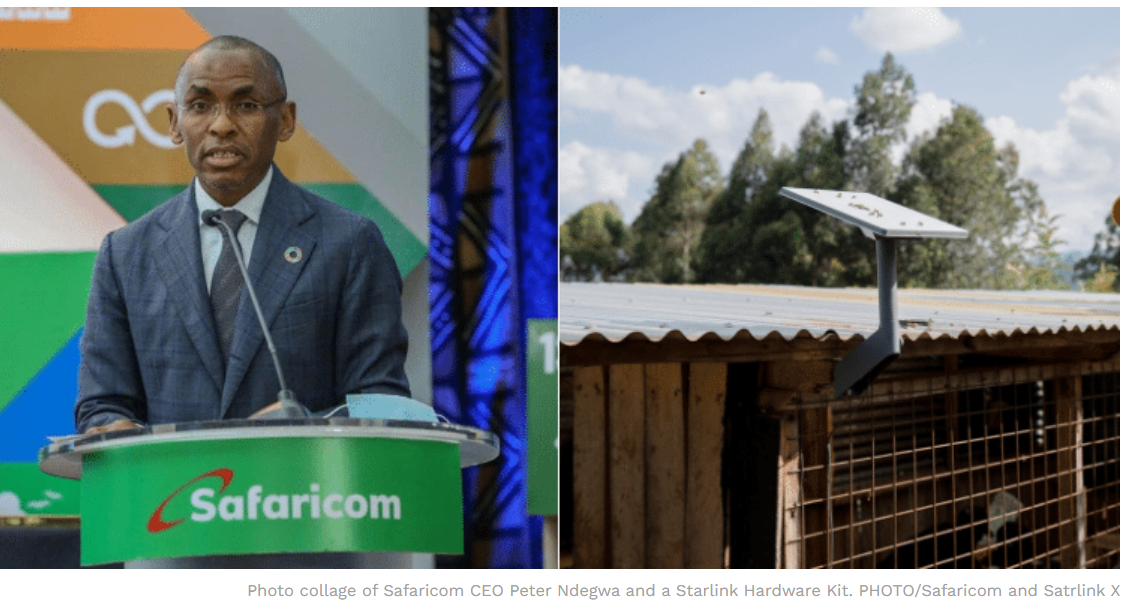
The recently announced Safaricom Starlink partnership represents a major development in Kenya’s fast-evolving digital ecosystem. The deal which was announced on November 12 2025, aims to merge Starlink’s satellite broadband capabilities with Safaricom’s widespread mobile and fiber infrastructure, the partnership positions Kenya for broader, more resilient, and more inclusive internet coverage.
This collaboration signals the beginning of a new connectivity model one where terrestrial and satellite solutions work together to close the digital gap.
Safaricom CEO Peter Ndegwa captured the spirit of the agreement, stating:
“From a satellite perspective, we have to partner with Starlink to the extent that they complement what we are offering.”
His comment reflects a shift from competition toward synergy, especially in regions where Safaricom’s traditional infrastructure faces limitations.
What the partnership aims to achieve
1. Expanding connectivity to marginalized areas
The combined network is expected to improve access in rural, remote, and marginalized areas where building fiber networks or mobile towers remains costly or impractical. Starlink’s low-earth-orbit satellites offer coverage that does not depend on geography, making them ideal for regions with terrain-related barriers.


2. Blended internet packages and local distribution
Safaricom could integrate Starlink hardware and satellite plans into its own ecosystem allowing customers to access satellite internet through familiar channels such as M-Pesa, Safaricom Shops, and the telco’s customer support operations.
This lowers adoption barriers for Kenyans who might not have been able to engage directly with Starlink before.
3. Enhancing network reliability
Satellite backhaul has the potential to boost network resilience during fiber cuts, infrastructure downtime, or climate-related disruptions. Combining Safaricom’s 4G/5G footprint with Starlink’s satellite links could create a stronger and more stable nationwide network.
4. Supporting Kenya’s digital economy
Better connectivity in rural regions means broader participation in digital education, fintech, small business growth, and remote work — all key pillars of Kenya’s Vision 2030 digital transformation goals.
Potential challenges to watch
While the partnership offers strong potential, some hurdles remain:
-
Hardware Affordability: Starlink equipment costs may still pose a challenge despite Safaricom’s distribution and payment flexibility.
-
Capacity and Scale: Starlink must ensure adequate bandwidth availability as demand grows.
-
Regulatory Alignment: Both companies will need to work within Kenya’s evolving satellite and spectrum governance frameworks.
-
Market Dynamics: The partnership may intensify competition, pushing Safaricom to balance collaboration with protecting its core offerings.
Why this partnership matters for Kenya’s future
The Safaricom Starlink collaboration stands to become one of the most impactful connectivity developments in Kenya over the next decade. It blends global satellite innovation with the strength of Kenya’s most established telecom operator creating a hybrid model of access that could dramatically reduce the digital divide.
If executed well, this partnership could establish a blueprint for how African telecoms integrate satellite broadband into their national networks.
Coordinated cyberattack disrupts multiple Kenyan government websites