Sharp Daily
No Result
View All Result
Saturday, June 13, 2026
  • Home
  • News
    • Politics
  • Business
    • Banking
  • Investments
  • Technology
  • Startups
  • Real Estate
  • Features
  • Appointments
  • About Us
    • Meet The Team
Sharp Daily
  • Home
  • News
    • Politics
  • Business
    • Banking
  • Investments
  • Technology
  • Startups
  • Real Estate
  • Features
  • Appointments
  • About Us
    • Meet The Team
No Result
View All Result
Sharp Daily
No Result
View All Result
Home Economy

Inflation bites as schools reopens for May 2025

Brian Otieno by Brian Otieno
May 5, 2025
in Economy
Reading Time: 2 mins read

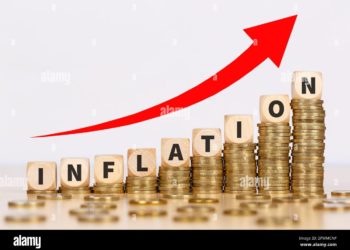
Kenyan parents are currently beset by challenges as schools prepare to reopen in May 2025, The effects of inflation recorded at 4.1% by the Kenya National Bureau of Statistics is casting a long shadow over the education sector, squeezing household budgets and straining school operations. Rising costs for essentials like food, fuel, and materials are driving up education expenses, making it harder for parents to afford fees, uniforms, and supplies, while schools grapple with increased operational costs. This inflationary pressure threatens access to education for Kenya’s 13.0 million students, particularly in low income communities

For households, inflation has reduced their purchasing power, with the rising cost of living, schools too are adjusting fees in institutions to account for changes particularly the private schools. Public schools on the other hand, who are reliant on government capitation of KES 22,244.0 per secondary student, face delays in disbursements, forcing parents to cover gaps. The price of uniforms has climbed due to higher cotton and transport costs, while textbooks, critical for the newly rolled competency-based curriculum, have also been noted to cost more, leaving parents with no option but to borrow to meet education costs, with microfinance loans and digital lenders becoming a lifeline despite risks of default

Schools are not spared either. Energy costs and food prices, have gone up, inflating boarding school budgets. Rural schools, lacking economies of scale, face higher procurement costs, with some cutting extracurricular activities to stay afloat. Teacher and lecturer salaries, remain stagnant against a 4.1% inflation rate, fuel demands for raises, with unions like UASU threatening and calling for strikes that disrupt learning.

The economic ripple effects are stark. Inflation-driven fee hikes contribute to dropout in schools, particularly in arid regions. Microfinance institutions report a 20.0% surge in education loan applications, but 6.5% of these loans risk default, up from 5.0% in 2023. Government efforts to cushion education through a KES 14.0 billion capitation boost are stalled by fiscal constraints, with public debt servicing consuming more than 60.0% of revenue

RELATEDPOSTS

Kenya’s private sector closes 2025 strong as PMI signals growth momentum

January 7, 2026

As schools reopen, inflation’s impact underscores the need for targeted subsidies and innovative financing to safeguard education access. Without swift intervention, Kenya risks widening inequality and stunting its human capital development


Previous Post

KNQA leads charge in harmonizing Africa’s education standards

Next Post

Diaspora remittances: The hidden engine of Kenya’s economy

Brian Otieno

Brian Otieno

Related Posts

Family Bank
Analysis

Family bank receives approval for NSE listing

June 12, 2026
Economy

Treasury faces Sh47.9 billion revenue gap as tax relief measures complicate Kenya’s Sh4.8 trillion budget

June 11, 2026
Business

Kenya expands local borrowing

June 5, 2026
Business

CBK seeks ksh 40 billion through government securities

June 4, 2026
Economy

Kenya’s new fuel pricing formula delays relief as global oil costs fall

June 3, 2026
Analysis

HF group rebrands to HFCB in strategic transformation move

May 28, 2026

LATEST STORIES

June 12, 2026

Where Fintech Companies Actually Make Their Real Profits: Beyond Payments and Transaction Fees

June 12, 2026

Why Revenue Growth in Fintech Can Be Misleading: The Hidden Economics Behind Digital Payments

June 12, 2026

Finance bill 2026: key tax reforms and economic impact in kenya

June 12, 2026

INVISIBLE TRANSACTIONS: THE FUTURE OF PAYMENTS

June 12, 2026

Kenya’s Growing Reliance on Domestic Borrowing: Opportunity or Crowding-Out Risk?

June 12, 2026

Family Bank’s NSE Listing: A Long-Overdue Milestone for Kenya’s Capital Markets

June 12, 2026

Kenya’s Small Banks Given Until 2032 to Meet Kshs 10 Billion Core Capital Requirement

June 12, 2026
  • About Us
  • Meet The Team
  • Careers
  • Privacy Policy
  • Terms and Conditions
Email us: editor@thesharpdaily.com

Sharp Daily © 2024

No Result
View All Result
  • Home
  • News
    • Politics
  • Business
    • Banking
  • Investments
  • Technology
  • Startups
  • Real Estate
  • Features
  • Appointments
  • About Us
    • Meet The Team

Sharp Daily © 2024