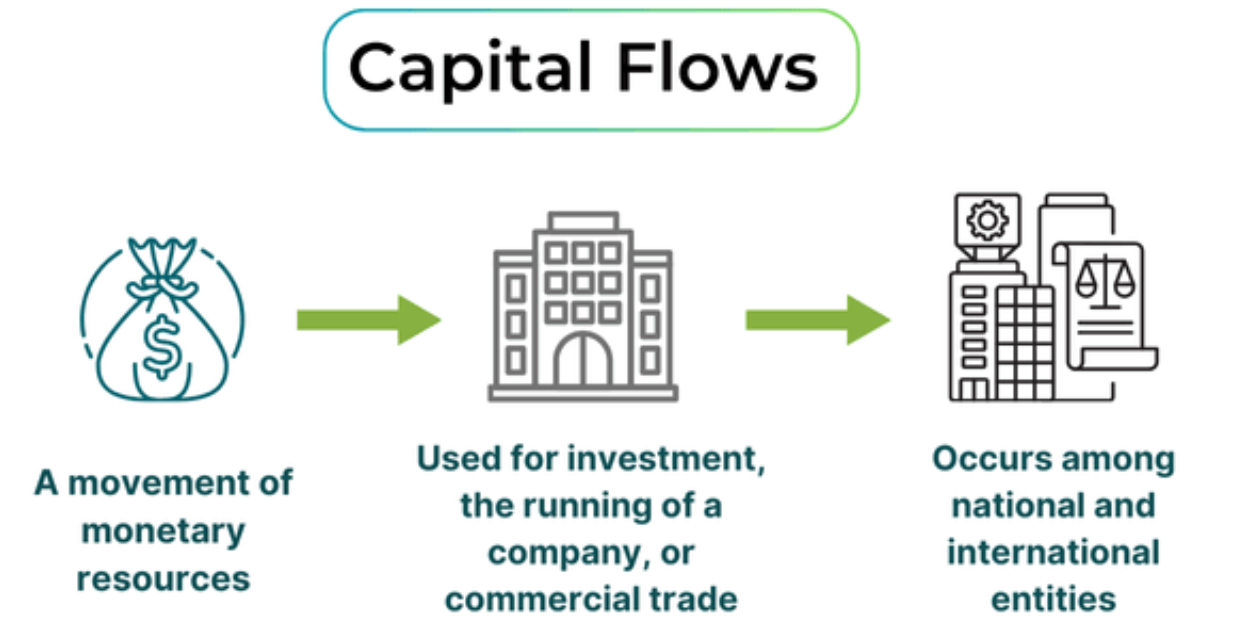
Capital flows refer to the movement of financial resources across borders for the purpose of investment, trade, or business operations. These flows play a critical role in shaping investment opportunities, particularly in emerging and developing economies where external financing can supplement domestic resources. For investors, understanding the dynamics of capital flows is essential in assessing market conditions, identifying opportunities, and managing risk.
Capital flows are broadly categorized into foreign direct investment (FDI), portfolio investment, and other financial flows such as loans and banking capital. Foreign direct investment typically involves long-term investments in physical assets, such as establishing businesses or acquiring stakes in companies. These investments are often associated with technology transfer, job creation, and capacity building, making them an important driver of economic development.
Portfolio investment, on the other hand, involves the purchase of financial assets such as equities and bonds. These flows are generally more liquid and can move quickly in response to changes in global market conditions. While portfolio inflows can enhance market liquidity and support asset prices, they can also introduce volatility, particularly if investors rapidly withdraw funds during periods of uncertainty.
Global economic conditions play a significant role in influencing capital flows. Interest rate differentials between countries, economic growth prospects, and risk perceptions all affect how investors allocate capital internationally. For example, higher interest rates in advanced economies may attract capital away from emerging markets, leading to reduced inflows and potential currency pressures. Conversely, strong growth prospects and stable macroeconomic environments can attract foreign investment, supporting economic expansion.


Exchange rate movements are closely linked to capital flows. Increased inflows of foreign capital can lead to currency appreciation, while outflows may contribute to depreciation. These changes can affect the competitiveness of exports, the cost of imports, and the overall balance of payments. For investors, exchange rate dynamics are an important consideration when evaluating returns on cross-border investments.
Capital flows also influence domestic financial markets. Inflows can increase liquidity, lower borrowing costs, and support the development of capital markets. This can create opportunities for businesses to raise funds and expand operations. However, excessive reliance on external financing may expose economies to external shocks, particularly if global conditions change abruptly.
Policy frameworks play a crucial role in managing capital flows. Governments and central banks may implement measures to attract stable, long-term investment while mitigating the risks associated with short-term and volatile flows. These measures can include regulatory policies, capital controls, and macroprudential tools aimed at maintaining financial stability.
For investors, capital flows provide both opportunities and risks. Strong inflows may signal confidence in an economy and create favorable investment conditions, while sudden outflows can lead to market volatility and asset price declines. Diversification and careful analysis of macroeconomic trends are therefore essential in navigating environments influenced by shifting capital movements.
In conclusion, capital flows are a key factor in shaping investment landscapes. By influencing liquidity, exchange rates, and market conditions, they play a central role in determining the availability and attractiveness of investment opportunities. Understanding these dynamics enables investors to make more informed decisions and adapt to changing global financial environments.