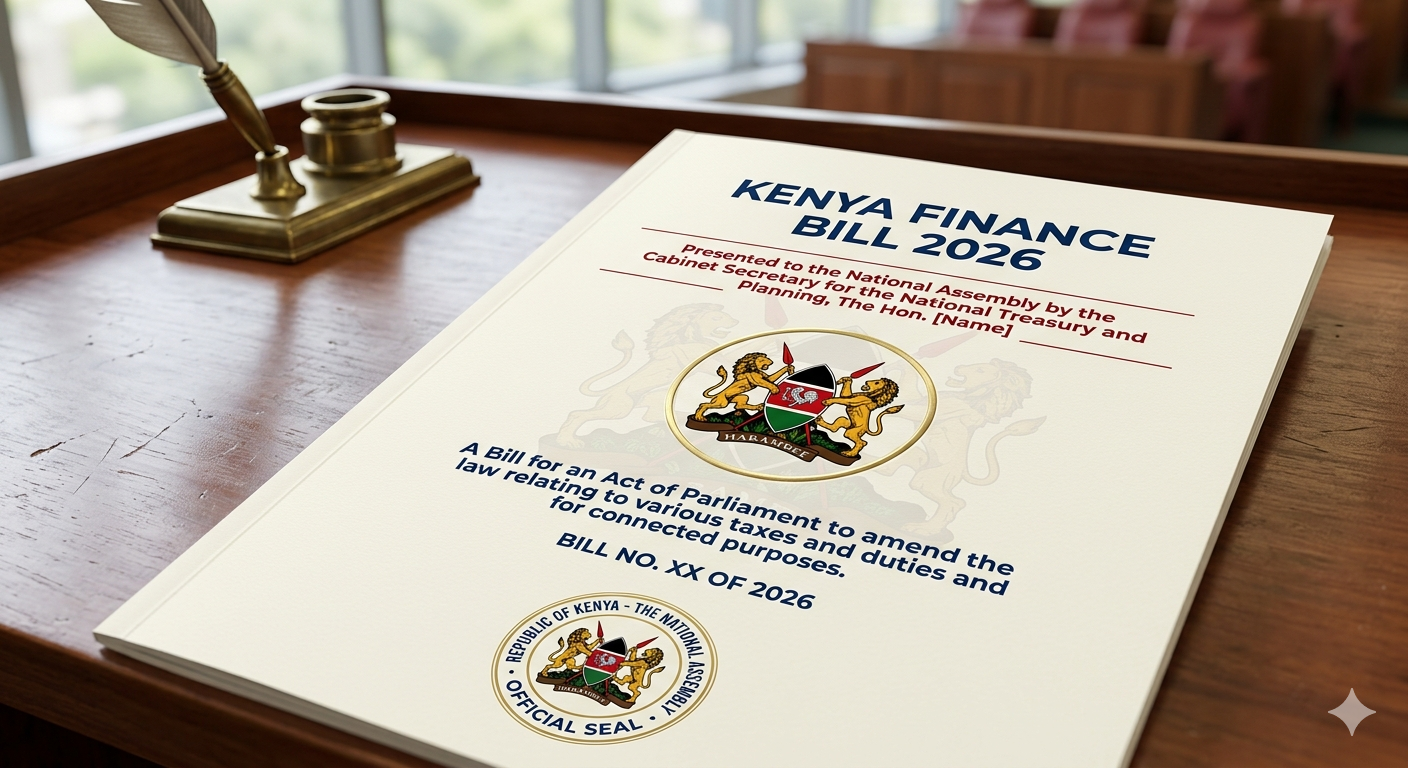
Kenya’s proposed Finance Bill 2026 marks another major shift in the government’s strategy to widen the tax base while tightening compliance across the digital economy. Unlike previous finance bills that focused heavily on direct tax increases, the 2026 proposals target transaction ecosystems, digital platforms, mobile payments, virtual assets and informal-sector compliance.
The proposed changes come as the government seeks to finance a projected Sh4.82 trillion budget while managing rising debt obligations and slower revenue growth. Analysts note that the Treasury is increasingly focusing on high-volume sectors such as mobile money, fintech platforms, betting, e-commerce and cryptocurrency trading because of their rapid expansion and relatively low historical taxation.
One of the most controversial proposals is the planned 16 percent VAT on digital payment platform services, including payment gateways and transaction-processing infrastructure linked to platforms such as Safaricom M-Pesa, Pesapal and Kenswitch. While the Treasury insists the VAT targets service providers rather than individual users, market analysts expect the additional tax burden to eventually be passed to consumers through higher transaction fees.
The timing is significant because Kenya’s digital payment ecosystem has grown into one of Africa’s largest financial networks. M-Pesa alone processed 46.4 billion transactions valued at Sh41.7 trillion in the year to March 2026, representing an 8.9 percent increase in transaction value and a 25.1 percent jump in transaction volumes. M-Pesa revenues also rose 13.4 percent to Sh182.7 billion, underlining why the sector has become a key target for new tax measures.


The Finance Bill 2026 also signals Kenya’s strongest move yet toward regulating cryptocurrency and virtual asset transactions. Under the proposals, virtual asset service providers and crypto exchanges will be required to submit annual transaction reports to the Kenya Revenue Authority (KRA), including user activity and transaction records. Kenya is also seeking powers to enter international agreements for automatic exchange of crypto-related tax information.
The move reflects growing pressure on governments globally to monitor digital assets more closely amid concerns over tax evasion, money laundering and cross-border financial flows. Kenya has emerged as one of Africa’s fastest-growing crypto markets over the past three years, driven largely by stablecoin adoption, online freelancing payments and peer-to-peer trading.
Beyond digital finance, the bill proposes higher excise duties on mobile phones, gambling winnings, tobacco products and selected imports. Smartphones could attract a proposed 25 percent excise duty, a move likely to increase retail prices in a country where smartphone penetration continues to expand rapidly.
For landlords, the proposed residential rental income tax would increase from 7.5 percent to 10 percent, potentially increasing pressure on rental pricing in urban areas already experiencing high living costs.
The bill also introduces stricter compliance rules. KRA is expected to gain expanded authority to generate pre-filled tax returns using electronic transaction records and eTIMS data. Filing deadlines for annual returns could also reduce from six months to four months after the end of the financial year, tightening compliance timelines for businesses and individuals alike.
For businesses, especially SMEs and digital entrepreneurs, the Finance Bill 2026 reflects a broader shift toward data-driven tax enforcement. Informal-sector traders, online businesses and fintech users are increasingly becoming visible through transaction analytics, mobile payment trails and automated invoicing systems.
Economically, the proposals highlight the government’s balancing act between raising revenue and protecting consumer spending power. While the Treasury argues the measures will improve fairness and close loopholes, critics warn that additional taxes on digital transactions and consumer technology could raise the overall cost of living at a time when households are already facing inflationary pressure.
The Finance Bill 2026 is still undergoing parliamentary review and public participation, meaning some proposals may be amended before final approval. However, the direction is increasingly clear: Kenya’s tax system is rapidly shifting toward digital surveillance, automated compliance and taxation of high-frequency financial activity.