Africa’s aviation industry is increasingly seeking revenue opportunities beyond passenger ticket sales as airlines commercialise technical capabilities developed to support their own fleets. The expansion of maintenance, repair and overhaul (MRO) operations provides airlines with an alternative revenue stream while creating opportunities to retain a greater share of aviation-related expenditure within the continent.
Jambojet’s first third-party MRO contract with Ghanaian carrier PassionAir illustrates this shift. The Kenyan airline is expanding its maintenance capabilities into heavy maintenance services and is initially supporting De Havilland Dash 8 Q400 aircraft. The development converts an operational capability that traditionally served Jambojet’s own fleet into a service that can generate revenue from external customers.
The investment case for MRO is linked to the recurring nature of aircraft maintenance. Airlines must undertake scheduled inspections, component repairs and other maintenance activities throughout an aircraft’s operating life. Developing MRO capabilities therefore allows carriers to potentially monetize engineering expertise, specialized facilities and technical capacity that would otherwise represent primarily an operating cost.
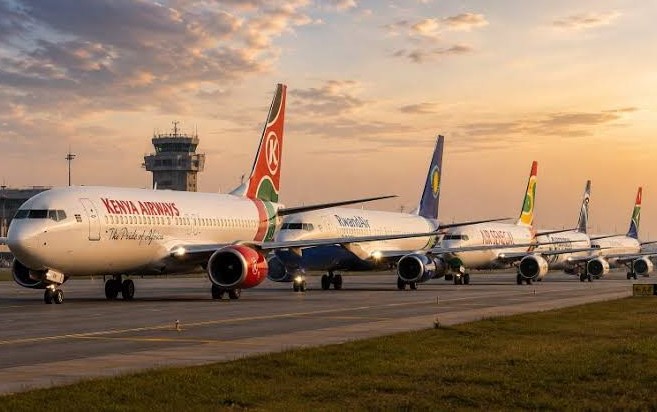
Kenya Airways provides an established example of this model. According to its FY2025 investor briefing, the airline completed 16 heavy maintenance checks and 38,000 component repairs in 2025. During the year, it also secured four additional civil aviation authority approvals and nine new MRO partnerships. The operation serves both Kenya Airways and third-party customers, demonstrating how airline engineering capabilities can develop into a separate commercial activity.


The opportunity is particularly relevant because African airlines continue to incur substantial maintenance expenditure outside the continent. Retaining a larger share of this spending locally could reduce reliance on overseas facilities while creating demand for engineering, technical training and aviation support services. For airlines with sufficient scale, third-party MRO can therefore provide an additional source of foreign-currency revenue while improving utilization of existing technical infrastructure.
Ethiopian Airlines’ MRO business demonstrates the potential scale of the model. Established in 1957, the operation now maintains aircraft for Ethiopian Airlines and third-party carriers. It operates six main aircraft maintenance hangars and employs more than 3,000 technical staff, with approvals from multiple international aviation authorities. Its capabilities include the Dash 8-400, highlighting the importance of aircraft-specific expertise as African MRO providers compete for contracts.
For investors, MRO changes the way aviation businesses can be assessed. Traditional airline earnings remain sensitive to fuel prices, foreign exchange movements, aircraft leasing costs and passenger demand. MRO introduces a different revenue opportunity based on the continuing maintenance requirements of aircraft already operating in the market. The diversification can potentially reduce dependence on passenger traffic while allowing airlines to monetize specialized assets and technical expertise.
However, MRO expansion does not automatically translate into higher profitability. Facilities require significant investment in specialized equipment, engineering training and regulatory certifications. Returns also depend on maintaining sufficient aircraft volumes to achieve high utilization of expensive infrastructure. The ability to secure recurring third-party contracts is therefore critical to generating attractive returns on invested capital.
Jambojet’s expansion consequently represents more than the addition of a new service line. It reflects a broader opportunity for African aviation companies to capture value from activities surrounding air transport. As airlines expand into MRO, cargo, training and other aviation services, their investment propositions could increasingly depend on how effectively they diversify revenue and utilize technical infrastructure rather than solely on passenger growth.