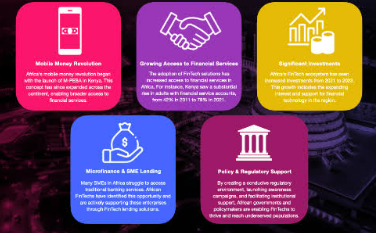
Financial inclusion is becoming an increasingly important component of Africa’s economic transformation as more households and businesses gain access to formal and digital financial services. Access to bank accounts, mobile money, digital payments, credit, savings, insurance, and investment products enables individuals to manage their finances more effectively while giving businesses greater capacity to invest and expand. As financial access widens, more economic activity moves into formal financial systems, creating stronger links between households, businesses, and capital markets.
Digital technology has accelerated this transformation. Mobile phones and fintech platforms have expanded financial access in areas where conventional banking infrastructure remains limited. Mobile money allows users to transfer funds, make payments, save, and access financial services without relying on a traditional bank branch. Fintech companies have also introduced digital lending, payment, investment, and insurance products that address the needs of consumers and small businesses. This expansion has reduced some of the geographical and cost barriers that previously limited participation in formal financial services.
Financial inclusion can also strengthen entrepreneurship and employment. Small and medium-sized enterprises (SMEs) frequently face difficulties obtaining conventional bank financing because they lack adequate collateral, established credit histories, or sufficient financial records. Digital lending platforms and alternative credit-scoring models can broaden access to working capital by assessing transaction histories and other forms of financial information. When businesses secure financing, they can purchase inventory, acquire equipment, employ additional workers, and expand into new markets. These activities can increase productivity and stimulate economic activity beyond the individual businesses receiving funding.
At the household level, financial services can improve economic resilience. Savings products allow individuals to build financial reserves for education, healthcare, housing, and other major expenses. Insurance can protect households from financial losses caused by unexpected events, while digital payments can make transactions faster and reduce the costs associated with handling cash. Greater access to these services can therefore improve households’ ability to manage economic shocks and participate more actively in the formal economy.


Despite significant progress, financial inclusion across Africa still faces structural challenges. Limited digital literacy, unreliable internet connectivity, high transaction costs, and inadequate consumer protection can restrict access and reduce trust in digital financial services. The expansion of digital finance also increases exposure to cybersecurity threats and data privacy concerns. Regulators and financial institutions therefore need to strengthen consumer protection, cybersecurity frameworks, financial education, and responsible lending practices as digital services expand.
For financial inclusion to generate sustainable economic benefits, access must also translate into the effective use of appropriate financial products. Governments, financial institutions, and technology companies can support this process by improving digital infrastructure, expanding financial education, strengthening regulatory frameworks, and encouraging responsible innovation.
Looking ahead, financial inclusion will remain an important driver of Africa’s economic development. By connecting households and businesses to payments, savings, credit, insurance, and investment opportunities, broader financial access can support entrepreneurship, strengthen resilience, and expand participation in economic activity. For Africa, building an accessible and responsible financial ecosystem will therefore remain important not only for financial-sector development but also for achieving more inclusive and sustainable economic growth.