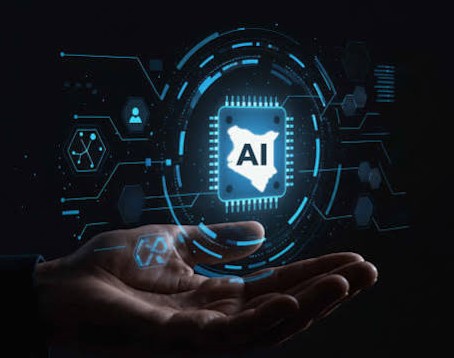
Kenya is strengthening its position as one of Africa’s leading digital innovation hubs as investment in artificial intelligence (AI) and digital infrastructure continues to accelerate. Growing adoption of AI-powered solutions across financial services, healthcare, agriculture and manufacturing is driving demand for advanced technologies that improve productivity, enhance decision-making and support business growth. At the same time, both government and private sector initiatives are expanding the country’s digital capabilities, creating new opportunities for innovation, investment and high-skilled employment.
The digital economy has been identified as one of the key pillars of Kenya’s Bottom-Up Economic Transformation Agenda (BETA), reflecting its growing importance in supporting long-term economic development. This strategy has been reinforced by significant private sector investments. In July 2025, Microsoft and G42 announced plans to invest USD 1.0 bn in Kenya’s digital infrastructure through the development of a geothermal-powered data centre and cloud region, alongside digital skills training programmes. The investment is expected to improve access to cloud computing services, lower data processing costs and accelerate the adoption of artificial intelligence by businesses, government institutions and technology start-ups.
Investment in digital infrastructure is becoming increasingly important as demand for AI-enabled applications expands across the economy. According to the International Finance Corporation (IFC), Africa’s digital economy was projected to contribute USD 180.0 bn, equivalent to 5.2% of the continent’s Gross Domestic Product (GDP) by 2025. The IFC further projects that this contribution will increase to USD 712.0 bn, representing 8.5% of Africa’s GDP by 2050, driven by rising internet penetration, expanding cloud computing services and continued digital innovation. These projections highlight the significant economic potential of technology-led growth across the continent.
Kenya is well positioned to benefit from this expansion due to its relatively advanced digital payments ecosystem, growing fibre optic connectivity and vibrant innovation landscape. Artificial intelligence is already being integrated into several sectors of the economy. Financial institutions are deploying AI to strengthen fraud detection, automate customer service and improve credit risk assessment. Healthcare providers are using AI-supported tools to enhance disease diagnosis and medical imaging, while agricultural technology companies are leveraging AI for weather forecasting, crop monitoring and precision farming to improve productivity and resource efficiency.


The continued expansion of AI is also expected to stimulate investment in supporting infrastructure, including data centres, cybersecurity services and digital skills development. Through the National Digital Master Plan 2022–2032, the Ministry of Information, Communications and the Digital Economy is implementing initiatives aimed at strengthening digital infrastructure, improving digital literacy and promoting innovation-led economic growth. Expanding these capabilities is expected to attract additional technology investment while supporting local enterprises developing AI-enabled products and services.
Artificial intelligence also presents opportunities beyond the technology sector itself. Wider adoption of AI has the potential to improve operational efficiency across manufacturing, banking, logistics and public services, enabling organizations to reduce costs, optimize processes and enhance productivity. These efficiency gains can strengthen business competitiveness while supporting broader economic growth as companies increasingly integrate digital technologies into their operations.
Overall, continued investment in artificial intelligence is reinforcing Kenya’s position as a leading digital economy in Africa. Supported by initiatives such as the USD 1.0 bn Microsoft and G42 investment, the implementation of the National Digital Master Plan 2022–2032, and expanding adoption of AI across multiple industries, the country is building a stronger foundation for innovation, productivity and long-term economic growth.