Kenya’s plan to reduce domestic borrowing over the medium term is expected to improve credit availability for businesses by reducing competition between the government and the private sector for financial resources. For many years, government borrowing has absorbed a significant share of funds available in the domestic financial market, as commercial banks allocated substantial portions of their portfolios to Treasury bills and Treasury bonds due to their relatively low risk. A gradual reduction in government borrowing could encourage financial institutions to increase lending to businesses and households, supporting private investment, job creation and economic growth.
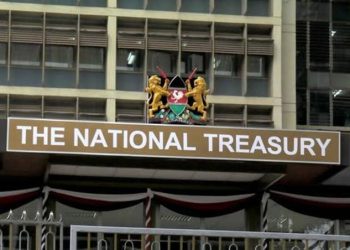
The National Treasury projects Kenya’s fiscal deficit to narrow to 3.8% of Gross Domestic Product (GDP) in FY2027/28 from 4.8% of GDP in FY2025/26, supported by stronger revenue collection and expenditure rationalization. As part of its medium-term fiscal consolidation strategy, the government also plans to reduce net domestic borrowing, lowering its financing requirements in the local debt market. A smaller fiscal deficit reduces the government’s reliance on domestic borrowing, allowing a greater share of financial resources to be directed toward productive private sector activities rather than financing public expenditure.
Lower government borrowing could also reduce upward pressure on domestic interest rates. When governments borrow heavily from local financial markets, commercial banks often prefer investing in government securities because they offer attractive risk-adjusted returns with relatively low credit risk. This phenomenon, commonly referred to as the crowding-out effect, limits the amount of credit available to businesses, particularly small and medium-sized enterprises (SMEs), which depend on bank financing to expand their operations. As government demand for domestic financing moderates, banks may have greater incentive to extend credit to productive sectors such as manufacturing, agriculture, trade and real estate, supporting broader economic activity.
The outlook is further supported by recent monetary policy developments. During its June 2026 meeting, the Central Bank of Kenya (CBK) maintained the Central Bank Rate (CBR) at 8.75%, citing stable inflation and a relatively balanced macroeconomic environment. Stable policy rates provide greater certainty for financial institutions when pricing loans while creating more predictable financing conditions for businesses planning long-term investments. Combined with lower domestic borrowing, a stable monetary policy environment could improve lending conditions across the economy.


Greater access to private sector credit has the potential to generate significant economic benefits. Improved financing enables businesses to invest in new machinery, expand production capacity, increase inventories and create additional employment opportunities. Manufacturers can finance factory expansion, agricultural enterprises can invest in mechanization and irrigation systems, while service providers can adopt new technologies to improve operational efficiency. Higher business investment also contributes to stronger tax revenues, increased household incomes and greater domestic demand, creating positive spillover effects throughout the economy.
Maintaining these benefits, however, will depend on continued fiscal discipline and prudent debt management. Sustained improvements in revenue collection, efficient public expenditure and transparent fiscal policy will be essential to ensure that lower borrowing levels do not compromise public service delivery or critical infrastructure development. At the same time, commercial banks will need to maintain sound credit assessment practices to ensure that increased lending supports sustainable economic growth while managing credit risk effectively.
Overall, Kenya’s strategy to gradually reduce domestic borrowing represents an important step toward strengthening the country’s financial system. With the fiscal deficit projected to decline from 4.8% of GDP in FY2025/26 to 3.8% of GDP in FY2027/28, alongside a stable Central Bank Rate of 8.75%, the policy has the potential to improve access to private sector credit, encourage business investment and support long-term economic growth by reducing the crowding-out effect that has historically constrained private sector financing.