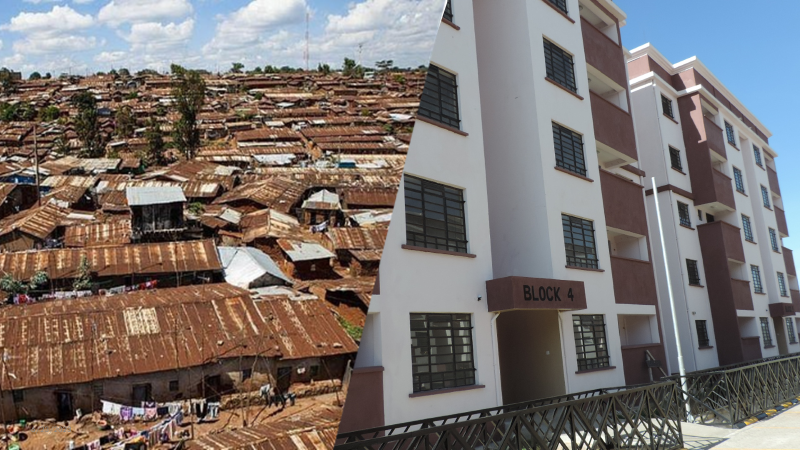
Kenya’s housing deficit remains a significant challenge, with the Ministry of Housing estimating a shortage of over 2.0 million housing units as of 2024, growing annually by 200,000 units. Rapid urbanization and population growth have outpaced the development of affordable housing, leading to a surge in informal settlements across major cities such as Nairobi, Mombasa and Kisumu. The lack of affordable and decent housing is pushing more people into overcrowded and substandard living conditions, where access to clean water, sanitation and electricity remains inconsistent.
At the heart of this crisis is the disconnect between income levels and the cost of housing. In urban centers, the average rent for a 1-bedroom apartment is around KES 25,000.0 per month, far beyond the reach of most low-income earners who live on less than KES 20,000.0 monthly. Homeownership is even further out of reach, with median home prices in Nairobi averaging KES 7.0 million. This disparity forces many into informal settlements, where basic services and infrastructure are lacking.
To address this gap, the Kenyan government has prioritized affordable housing under the Big Four Agenda, targeting the development of 500,000 low-cost houses by 2026. Through public-private partnerships (PPPs) and incentives for developers, the initiative aims to reduce construction costs and fast-track project completion. Additionally, the establishment of the Kenya Mortgage Refinance Company (KMRC) has enhanced access to affordable mortgages, allowing more Kenyans to achieve homeownership with interest rates as low as 9.0%. However, uptake remains slow due to stringent eligibility criteria and high down payments that exclude many potential homeowners.
Private developers are also exploring innovative solutions. Concepts like modular housing and container homes have emerged as cost-effective alternatives, reducing construction time and material costs. Green building techniques, including solar energy and rainwater harvesting, are being incorporated to lower long-term utility costs, making homeownership more sustainable. Moreover, partnerships with financial institutions to offer flexible mortgage plans could make homeownership more attainable for the average Kenyan.

For investors, the affordable housing drive presents untapped opportunities. Real estate investment trusts (REITs) focused on residential properties are gaining traction, offering a way to tap into this market with lower capital outlay and reduced risk. Additionally, the demand for ancillary services such as building materials, interior design and property management offers diverse entry points into the housing sector.
Solving Kenya’s housing crisis will require more than just building homes, it demands a multi-faceted approach involving policy reform, financial innovation and private sector engagement. With the right mix of government support and private investment, Kenya can bridge the housing gap and provide dignified living spaces for its growing urban population. As the country works toward inclusive development, addressing the housing challenge will be key to promoting social equity and economic resilience