

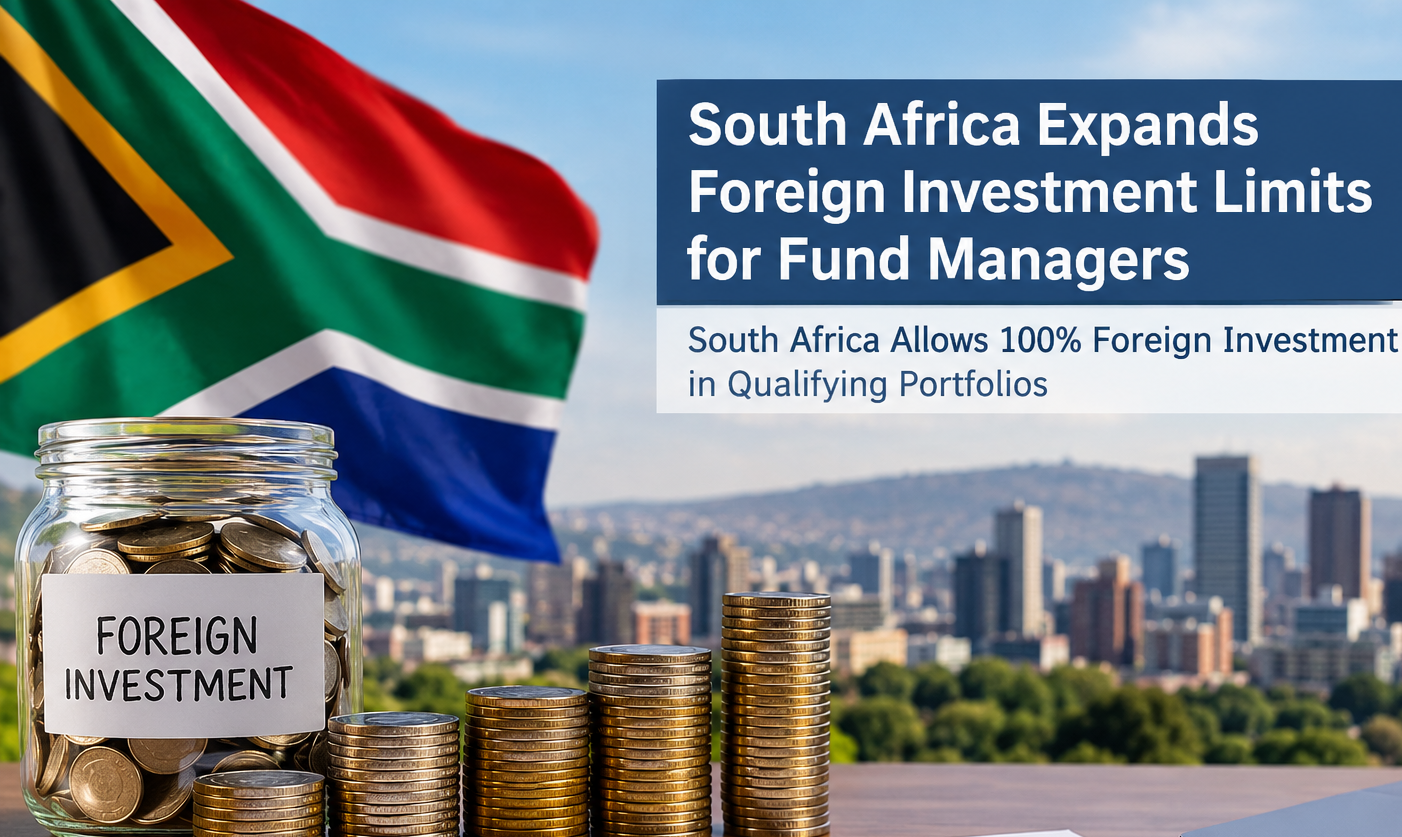
South Africa has expanded fund managers’ investment flexibility by allowing qualifying portfolios to allocate up to 100% of their assets to foreign investments, subject to their mandates. The reform removes previous foreign investment limits under ring fenced mandates, widening access to international financial markets while increasing the importance of currency and portfolio risk management.
The initiative involves South Africa’s National Treasury, the Johannesburg Stock Exchange (JSE) and the National Financial Services Centre (NFSC). Its objective is to modernise the investment framework and provide fund managers with greater flexibility to respond to international market opportunities.
The revised rules could support portfolio diversification by enabling managers to access industries, companies and asset classes that may be less represented in domestic markets. Investing across different economies can reduce dependence on South Africa’s market performance, although diversification does not eliminate investment risk or guarantee higher returns.
Greater offshore investment flexibility also allows managers to adjust allocations according to market conditions, valuations and income opportunities. However, investment outcomes will continue to depend on asset selection, timing, transaction costs and risk assessment. Fund mandates and individual investment objectives will remain important in determining appropriate allocations.


Currency exposure is a key consideration. For instance, an investment denominated in US dollars may appreciate in dollar terms but generate a lower return in South African rand if the rand strengthens. Geopolitical uncertainty, differences in economic conditions, foreign market regulations and transaction costs can further affect returns and portfolio volatility.
The reform could also influence domestic capital allocation. Fund managers may increase offshore exposure where international opportunities align with their strategies, potentially intensifying competition between South African and foreign markets for investment capital. However, the extent of any shift will depend on market conditions and managers’ decisions.
For investors, the practical implications extend beyond access to a wider range of assets. Evaluating fund mandates, foreign currency exposure, fees and risk adjusted performance will be essential when assessing investment options.
South Africa’s revised framework expands the choices available to fund managers without guaranteeing improved performance. Its effectiveness will depend on how managers balance international opportunities against currency fluctuations, market risks and investors’ long-term financial objectives.