Sharp Daily
No Result
View All Result
Thursday, May 14, 2026
  • Home
  • News
    • Politics
  • Business
    • Banking
  • Investments
  • Technology
  • Startups
  • Real Estate
  • Features
  • Appointments
  • About Us
    • Meet The Team
Sharp Daily
  • Home
  • News
    • Politics
  • Business
    • Banking
  • Investments
  • Technology
  • Startups
  • Real Estate
  • Features
  • Appointments
  • About Us
    • Meet The Team
No Result
View All Result
Sharp Daily
No Result
View All Result
Home Opinion

How investors can safeguard wealth amid inflationary pressures

Faith Ndunda by Faith Ndunda
February 13, 2025
in Opinion
Reading Time: 2 mins read

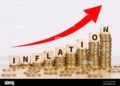
Inflation is a persistent concern for investors and understanding how to hedge against it is crucial. Inflation erodes the purchasing power of money, making it important for investors to invest in assets that preserve or increase value over time. Both financial and real assets offer avenues to hedge against inflation, each with distinct characteristics and implications.

Financial assets, such as stocks and bonds are liquid investments. They can provide returns that outpace inflation, but their performance is closely tied to market conditions. The belief that stocks can hedge against inflation since they represent ownership in real business assets may not always be true. Inflation can increase operating costs for businesses, reducing profitability and dividends, which may lead to a decline in stock prices. Higher inflation rates lower equity returns. Alternatively, bonds offer fixed returns, but their real value can be eroded by inflation if the interest rates do not keep up with inflation rates.

Real assets, including real estate and commodities, have intrinsic value and often appreciate with inflation, making them effective hedges. In the real estate sector, if the appreciation rate outweighs the inflation rate, real estate is an effective investment avenue to hedge against inflation.

Commodities, such as precious metals and agricultural products, also serve as hedges against inflation. Their prices typically rise with increasing inflation, preserving the investor’s purchasing power. Investing in commodities can be achieved through direct purchase or via commodity funds. Gold, in particular, has been a traditional store of value. In Kenya, gold prices have seen upward trends, reflecting global market conditions with a 133.0% increase in price per ounce to KES 369,099.0 in February 2025 from KES 158,416.0 in February 2020. This outpaces the annual inflation rate ranging between 5.0% and 8.0% from 2020 to 2024 translating to a high real return. Agricultural products, such as maize and tea, are also significant contributors to the Kenyan economy and can provide inflation protection through price increases during inflationary periods.

RELATEDPOSTS

Kenya’s inflation surges to two year high amid fuel crisis and global turmoil

April 30, 2026

Kenya private sector contracts as costs and demand weaken

April 9, 2026

Real assets like real estate and commodities have historically provided more reliable protection against inflation compared to financial assets. While stocks and bonds offer growth and income potential, their performance can be adversely affected by rising inflation. Therefore, investors aiming to safeguard their portfolios against inflation should consider a diversified approach, incorporating a mix of asset classes to balance risk and return effectively.


Previous Post

Classical wage theory and the endogeneity of subsistence prices in Kenya

Next Post

JKIA set for major upgrades as cabinet approves KES 4.2 trillion budget

Faith Ndunda

Faith Ndunda

Related Posts

Economy

How global supply chains feed Kenya’s fake drug market

May 7, 2026
Analysis

Taifa gas eyes kenyan market with major LPG investment

May 6, 2026
Analysis

Safaricom maintains growth momentum as digital services drive earnings

May 5, 2026
Analysis

Kenya’s infrastructure push leans on private investment

April 30, 2026
Economy

How a regional refinery could reshape East Africa’s trade deficit

April 24, 2026
Analysis

Kenya airways narrows losses amid recovery efforts and expansion plans

April 24, 2026

LATEST STORIES

Kenya Airways and Rubis Energy sign deal to build Africa’s first sustainable aviation fuel refinery in Nairobi

May 13, 2026

Kenya opens electricity market to direct power sales in major shift from Kenya Power monopoly

May 13, 2026

EPRA ends kenya power monopoly in major energy sector shift

May 13, 2026

The relationship between fiscal deficits and financial market performance

May 13, 2026

Kenyan crypto traders face identity disclosure requirements under proposed Finance Bill 2026 changes

May 12, 2026

The role of consumer confidence in financial market performance

May 12, 2026

84,000 small investors buy NSE shares through M-Pesa’s Ziidi Trader in just two months

May 11, 2026

Kenya’s delayed Safaricom stake sale hands treasury unexpected Sh16.1 billion dividend boost

May 11, 2026
  • About Us
  • Meet The Team
  • Careers
  • Privacy Policy
  • Terms and Conditions
Email us: editor@thesharpdaily.com

Sharp Daily © 2024

No Result
View All Result
  • Home
  • News
    • Politics
  • Business
    • Banking
  • Investments
  • Technology
  • Startups
  • Real Estate
  • Features
  • Appointments
  • About Us
    • Meet The Team

Sharp Daily © 2024