The National Housing Corporation estimates that the housing deficit in Kenya stands at 2.0 million housing units, with the current supply of units at 50,000 per year against the annual demand of 250,000 units. The mismatch between demand and supply has led to an annual deficit of 200,000 units.
Read more: Housing Finance Company (HFC) Partners with Kigutha Farmers to Develop The 58.0-Acre Land
The Government of Kenya, through the State Department for Housing and Urban Development, is working on delivering 250,000 affordable housing units on an annual basis to ease the housing deficit in the country. To achieve this, the National Treasury has proposed that Kshs 35.5 billion of the Financial year 2023-2024 be allocated to the Affordable Housing Program, up from the 27.7 billion allocated in the financial year 2022-2023.
Read more: The Housing Development Fund: Transforming Kenya’s Real Estate Landscape, but Challenges Ahead
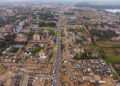
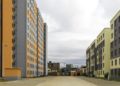
Assuming the cost of production for a unit is Kshs 2.0 million, with an allocation of Kshs 35.5 billion, the government will only be able to deliver 17,750 units without collaboration with Private sector players. This means that the private sector players need to contribute around 232,250 units per year to achieve the set target supply of 250,000 units per year.
This means that the private sector will have to access at least Kshs 464.5 billion per year to be able to construct the needed units. The financing for construction in Kenya is mainly sourced from the banking sector, with banks contributing 95.0% of the needed capital while capital markets contributed only 5.0%, further highlighting the overreliance on banks.
Read more: Affordable Housing Program – A Step in The Right Direction
In the Central Bank of Kenya’s (CBK) Quarterly Economic Review Report January–March 2023, it was highlighted that the gross loans advanced to the real estate sector declined by 0.8% to Kshs 419.3 billion in Q1’2023, from Kshs 422.5 billion in Q4’2022. With the Non-performing loans from the real estate sector increasing by 9.7% in Q1 2023 to Kshs 88.1 billion from Kshs 80.3 billion, the credit risk rises, and banks may limit their lending to real estate development.
This points to the need to diversify sources of funding to help plug the existing housing deficit in Kenya. One way to promote our capital markets to raise the funds needed to help alleviate this problem is by allowing the organic growth of Real Estate Investment Trusts (REITs) and private offers to fund real estate projects, void of overregulation.
The REIT market in Kenya has continued to face numerous obstacles, as evidenced by the low REIT market cap to GDP ratio of less than 0.1% compared to more developed countries such as South Africa and Australia at 7.8% and 7.9%, respectively. The REIT market in Kenya has the potential for growth with increased government support and public sector sensitization of the REITs.