Sharp Daily
No Result
View All Result
Monday, December 22, 2025
  • Home
  • News
    • Politics
  • Business
    • Banking
  • Investments
  • Technology
  • Startups
  • Real Estate
  • Features
  • Appointments
  • About Us
    • Meet The Team
Sharp Daily
  • Home
  • News
    • Politics
  • Business
    • Banking
  • Investments
  • Technology
  • Startups
  • Real Estate
  • Features
  • Appointments
  • About Us
    • Meet The Team
No Result
View All Result
Sharp Daily
No Result
View All Result
Home Analysis

The Psychology of Money: How emotions shape investment choices in Kenya

Ivy Mutali by Ivy Mutali
September 26, 2025
in Analysis
Reading Time: 2 mins read

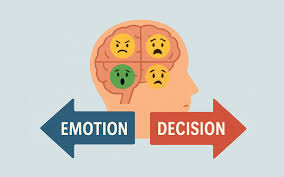
When it comes to investing, many people believe decisions are purely rational, based on data, projections and financial goals. In reality, emotions play a far bigger role than most investors would like to admit. Behavioral finance, a field that studies the psychology behind money decisions, is increasingly relevant in Kenya’s fast-changing investment space.

Take, for example, the “herd mentality.” When one asset class starts trending, be it cryptocurrency, land in Syokimau, or a hot IPO, there is often a rush of buyers, many driven by fear of missing out rather than thorough research. This can inflate prices and lead to disappointment when markets inevitably correct.

Loss aversion is another psychological trap. Many investors in the Nairobi Securities Exchange have held onto losing stocks for years, hoping they will rebound, simply because selling feels like admitting defeat. Ironically, this behavior often locks capital into underperforming assets while better opportunities pass by.

Overconfidence is equally common. During bull markets, some investors double down on risky bets, assuming past gains will always continue. When the cycle turns, losses feel sharper because they clash with earlier optimism, leading to panic selling at the worst possible time.


RELATEDPOSTS

Activists freed as Kenya faces IMF talks and rift valley disaster

November 11, 2025

Navigating money markets

November 10, 2025

Understanding these emotional biases is crucial. Successful investors build systems that remove or reduce emotion from decision-making. This can include automating savings and investments, setting strict entry and exit rules for trades and regularly rebalancing portfolios based on data, not gut feeling.

Financial education also helps investors focus on long-term goals instead of short-term noise. Knowing that markets move in cycles allows individuals to see corrections not as disasters but as opportunities to buy quality assets at discounted prices.

Kenya’s growing investment community stands to benefit greatly from embracing behavioral finance principles. Whether you are in stocks, real estate or unit trust funds, controlling emotional impulses can mean the difference between steady wealth accumulation and costly mistakes.

At the end of the day, money is as much about mindset as it is about math. The smartest investors are not those who avoid all risk, but those who can stay calm, rational and consistent even when everyone else is panicking or celebrating.


Previous Post

Argentina’s crisis and Kenya’s lessons on political economy and market confidence

Next Post

What’s driving cost escalation in construction and how to mitigate

Ivy Mutali

Ivy Mutali

Related Posts

Analysis

Is Government a Facilitator or an Investor? Rethinking the State’s Role in Economic Development

December 19, 2025
Analysis

Starlink direct-to-Cell expansion to transform mobile connectivity in Kenya and Africa

December 18, 2025
Analysis

When Liquidity Becomes Policy

December 17, 2025
Analysis

African Development Bank, KCB Bank Seal $150M Green Finance Deal

December 16, 2025
Analysis

Kenya shilling hits 16-month high against dollar as Central Bank builds reserves

December 16, 2025
Analysis

Special funds vs money market funds Kenya: The complete 2026 investment comparison

December 15, 2025

LATEST STORIES

Why markets turn before the economy does

December 22, 2025

Understanding the difference between volatility and risk

December 22, 2025

Evaluating the decision between to rent or to buy

December 22, 2025

The Difference Between Information and Surprise in Investing

December 22, 2025

How lower fuel prices shape transport costs and daily living

December 21, 2025
1049795356

The Impact of Interest Rates, Inflation, and Exchange Rates on Kenyan Pension Schemes

December 20, 2025

Are Pension Funds in Kenya Too Conservative for a Growing Economy?

December 19, 2025

Are We Saving or Just Surviving? The New Meaning of Savings

December 19, 2025
  • About Us
  • Meet The Team
  • Careers
  • Privacy Policy
  • Terms and Conditions
Email us: editor@thesharpdaily.com

Sharp Daily © 2024

No Result
View All Result
  • Home
  • News
    • Politics
  • Business
    • Banking
  • Investments
  • Technology
  • Startups
  • Real Estate
  • Features
  • Appointments
  • About Us
    • Meet The Team

Sharp Daily © 2024