As fiscal pressures mount, securitization is increasingly presented as an innovative tool for reducing public debt. By converting future government revenues into immediate cash through structured financial instruments, it offers short-term liquidity without appearing to increase conventional borrowing. Yet beneath this appeal lies a critical question: does securitization genuinely reduce public debt, or merely repackage it?
At its core, securitization involves pledging future income streams, such as fuel levies, road tolls, or tax revenues, to a “Special Purpose Vehicle (SPV)”, which then raises funds from investors. These investors are repaid using the earmarked revenues over time. From a narrow accounting perspective, especially where the SPV is legally distinct and lacks an explicit government guarantee, such obligations may sit off the sovereign balance sheet. This can create the impression of declining public debt ratios.


However, from an economic standpoint, the reality is less reassuring. Securitization does not eliminate liabilities, it shifts them forward. By pre-committing future revenues, the government effectively reduces its fiscal flexibility, constraining future budgets. In this sense, securitized obligations resemble what the IMF and other institutions classify as contingent or quasi-fiscal liabilities, obligations that may not appear in headline debt figures but still carry real economic weight.
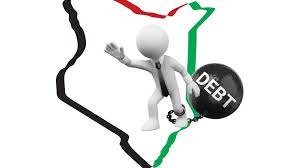
For Kenya, the implications are particularly significant. The government’s revenue base is already under pressure from rising debt servicing costs and competing expenditure demands. Securitizing key revenue streams could provide immediate budgetary relief and ease short-term financing constraints. It may also reduce reliance on expensive external borrowing, especially in periods of tight global financial conditions.
Yet the long-term trade-offs are substantial. First, future governments inherit reduced revenue discretion, as portions of income are locked into servicing structured obligations. Second, securitized instruments often carry higher costs than traditional sovereign debt, reflecting their complexity and perceived risk. Third, and perhaps most critically, extensive use of off-balance-sheet financing can undermine fiscal transparency, making it harder for investors and policymakers to accurately assess the country’s true debt position.
There is also a regulatory dimension. Institutions such as the Central Bank of Kenya and the National Treasury must ensure that securitization frameworks are transparent, well-governed, and fully disclosed within broader public debt reporting. Without this, the risk is not merely financial but reputational, potentially affecting investor confidence and sovereign risk premiums.
Ultimately, securitization should be understood not as a solution to public debt, but as a financing strategy with distinct intertemporal trade-offs. It improves liquidity today at the cost of fiscal space tomorrow. For policymakers, the lesson is clear, reducing public debt requires structural fiscal adjustment, not financial engineering.
Start your investment journey today with the Cytonn Money Market Fund. Call + 254 (0)709101200 or email sales@cytonn.com