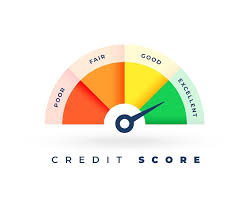
Credit scores play a central role in modern financial systems because they condense an individual’s borrowing history into a single, standardized measure of creditworthiness. A typical FICO score, which is a score that is calculated from a person’s credit report to predict the likelihood of paying back a loan, ranges from 300 to 850 with higher scores indicating lower estimated risk. It was developed by the Fair Isaac Corporation (FICO). According to explanations provided by the Consumer Financial Protection Bureau (CFPB), this score is built from several key elements such as payment history, credit utilization, length of credit history, credit mix, and recent credit inquiries. Payment history alone accounts for the largest share, reflecting decades of research showing that past on-time payments strongly predict future repayment behavior.
Banks rely on credit scores because they offer a fast, consistent, and data-driven way to evaluate risk. The Federal Deposit Insurance Corporation (FDIC) has noted in its discussions of risk-based lending that credit scores help banks set interest rates in proportion to expected default likelihood. For instance, borrowers with higher scores generally receive lower rates because statistical models show they are significantly less likely to miss payments. By contrast, applicants with lower scores are placed in higher-risk categories, prompting lenders to charge higher interest to offset potential losses. This system allows banks to stay profitable while still extending credit to a broad spectrum of borrowers.
The importance of standardized scoring has also been emphasized in federal regulatory commentary. According to policy analyses from the Office of the Controller of the Currency, objective scoring models improve fairness by reducing the influence of subjective judgment and enforcing uniform criteria across applicants. This helps maintain transparency in lending decisions and reduces disparities that might arise from inconsistent manual reviews.
For consumers, the consequences of these scores are far-reaching. A strong credit score can lower borrowing costs, expand access to mortgages, and even affect insurance premiums, since insurers often use credit-based measures to estimate risk. The CFPB has reported that individuals who maintain low credit utilization often below 30 percent, tend to achieve higher scores over time, illustrating how everyday habits directly shape financial opportunities.


Ultimately, credit scores serve as both a reflection of financial behavior and a gateway to economic mobility. As digital underwriting expands and automated decision systems become more common, the accuracy and influence of credit scores are likely to grow even further, making financial literacy and responsible credit management essential tools for long-term stability. (start your investment journey today with the cytonn money market fund. Call +254(0)709101200 or email sales@cytonn.com)