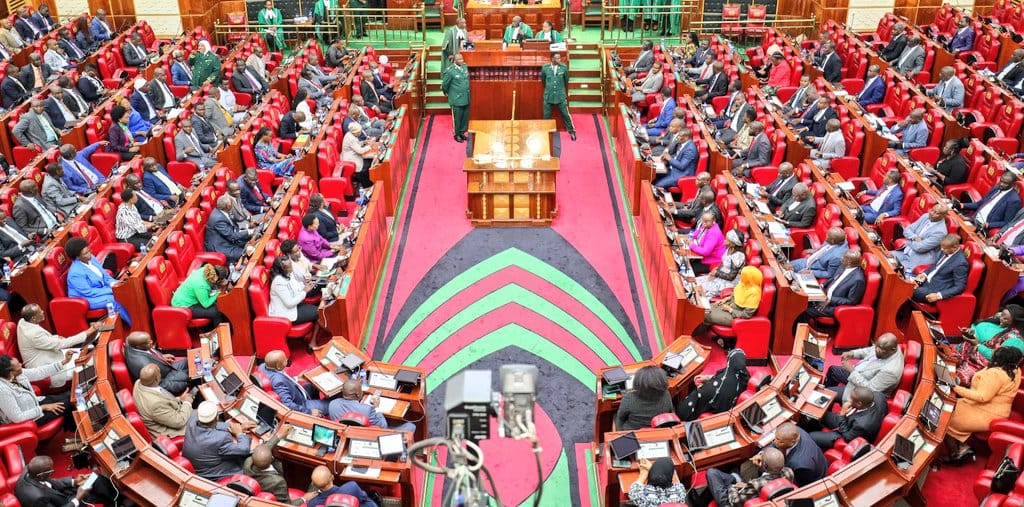
The National Assembly has rejected the controversial Mung Beans Bill (Senate Bill No. 13 of 2022) during its second reading, setting the stage for a mediation process. The Bill, which aimed to regulate and promote the mung bean industry, had previously passed in the Senate in February 2024 but faced backlash on social media and among lawmakers over its proposed regulations.
The Mung Beans Bill, co-sponsored by Hon. Paul Nzengu in the National Assembly and introduced by Senator Enoch Wambua in the Senate, was designed to establish a legal framework for the development of Kenya’s mung bean sector. The Bill sought to encourage the use of mung beans in national feeding programs and introduce modern farming techniques to boost productivity and cost efficiency.
However, its provision for registration and licensing requirements sparked significant controversy. Under the proposed law, it would be an offense to cultivate mung beans without a valid license, with penalties including fines of up to KES 1 million or two years in prison. The stringent measures drew widespread criticism online, with many citizens expressing concerns over the potential burden on smallholder farmers.
“The Bill mandates small and medium-sized mung bean farmers to register with their respective County Executive Committee (CEC) member,” Senator Wambua clarified in a public statement following the backlash.
According to Wambua, the registration was intended to help the government maintain an accurate register of mung bean growers, record essential details such as farm size and crop variety, and assess the industry’s potential nationwide. “This practice is already common for other crops like tea and coffee,” Wambua noted, countering claims that the Bill would penalize small farmers.
Critics, however, remained unconvinced, questioning whether the registration requirement was necessary and expressing concern about the bureaucratic hurdles it could impose. According to Clause 9 (1) of the Bill, only individuals or entities involved in the commercial marketing, processing, or large-scale trading of mung beans would be required to obtain a license. Small-scale farmers would only need to register, a measure the Bill’s proponents argue is crucial for collecting data to support the industry’s development.
Despite these reassurances, the Bill faced resistance in the National Assembly, where some members questioned its feasibility and the financial implications for county governments tasked with its implementation. Others expressed concern that the Bill did not adequately address the needs of smallholder farmers, who might struggle with the additional paperwork and compliance requirements.
Following the rejection, the Bill will now proceed to a mediation committee, as outlined in Article 113 of the Constitution. The Speakers of the National Assembly and Senate will appoint an equal number of members to this committee to attempt to resolve the differences between the two houses. The committee has 30 days to negotiate a mediated version of the Bill, which will then be presented to both chambers for approval. If the two houses pass the mediated version, the Bill will be deemed as having been passed.
However, if the mediation process fails to deliver an acceptable version of the Bill within 30 days, the legislation will be considered defeated, forcing proponents to reassess their strategy for regulating the mung bean industry.