
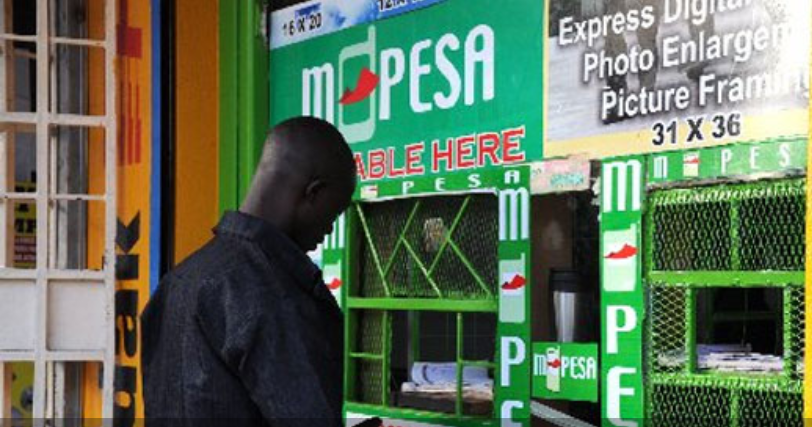
The value of cash handled by mobile money agents in Kenya fell by a record Sh430.3 billion in the first 11 months of last year, pointing to a major shift in how Kenyans move and store money.
Data from the Central Bank of Kenya (CBK) shows that agents processed Sh7.514 trillion between January and November, down from Sh7.944 trillion over the same period in 2024. The decline marks the sharpest drop since the introduction of mobile money and agency banking.
Tighter Liquidity Changes Consumer Behaviour
Bankers attribute the slowdown to a tighter liquidity environment and elevated interest rates. These conditions encourage households and businesses to keep funds in interest-bearing accounts instead of withdrawing cash.
“We are seeing tighter liquidity and a relatively high interest rate environment,” said a senior banker who oversees digital payments at a local bank. “People prefer to hold money in accounts rather than in cash.”


Digital Payments Reduce Need for Cash Withdrawals
Kenya’s payments landscape has also changed significantly. Small-value transactions such as matatu fares, groceries, and utility bills are increasingly settled directly through mobile phones.
This shift reduces the need for customers to visit agents for cash withdrawals. At the same time, banks have intensified competition in digital payments by offering lower transaction fees than telecom operators in some cases.
Rare Decline in Agent Cash Volumes
Since the launch of M-Pesa in 2007 and the spread of agency banking, cash handled by agents has declined only once before. That happened in 2023, when volumes dipped by a modest Sh35 billion.
The latest drop therefore, represents a structural shift rather than a temporary slowdown.
Economic Activity Remains Strong
Despite fewer trips to mobile money agents, broader economic indicators suggest that Kenya’s economy performed better last year than in 2024.
Data from the Kenya National Bureau of Statistics (KNBS) shows faster GDP growth in the first nine months of the year. Other indicators, including money supply, stock market performance, exchange rate stability, and cement consumption, also point to increased economic activity.
Pandemic Years Drove Agent Activity Higher
The sharpest increases in agent cash volumes occurred during the COVID-19 period. In 2021 alone, transactions surged by Sh1.639 trillion after the CBK introduced emergency measures, including zero fees on mobile wallet-to-bank transfers.
At the time, customers used M-Pesa extensively to move funds into bank accounts at no cost. Agents benefited from higher commissions, earning Sh28.21 billion in the year to March 2021.
Free mobile-to-bank transfers ended in December 2022, reversing part of that trend.
Tax Scrutiny Discourages Cash Use
Increased tax enforcement has also influenced behavior. Some traders now avoid frequent cash withdrawals for fear of being tracked.
“Stronger scrutiny of large cash transactions discourages high-value cash usage,” said the banker. “Businesses are shifting toward traceable electronic channels.”
The Kenya Revenue Authority (KRA) has intensified the use of digital transaction data to widen the tax base, especially among small and medium-sized enterprises.
More Accounts, Less Cash Activity
The decline in cash handling comes despite strong growth in mobile money infrastructure. By November 2025, mobile money accounts had risen by 7.21 million to 89.1 million, while active agents grew by 26 percent to 4.7 million.
The divergence highlights weakening cash-in and cash-out activity, which forms the core revenue stream for agents.
New Growth Areas Emerge
As cash handling declines, growth opportunities are shifting elsewhere. Analysts point to merchant payments, embedded finance, digital lending, and SME-focused payment platforms as the next drivers of revenue.
Regulators face a balancing act. They want to promote digital payments for efficiency and transparency while avoiding enforcement measures that could push small traders back into cash-heavy operations.