

Sharp Daily
No Result
View All Result
Thursday, September 10, 2026
  • Home
  • News
    • Politics
  • Business
    • Banking
  • Investments
  • Technology
  • Startups
  • Real Estate
  • Features
  • Appointments
  • About Us
    • Meet The Team
Sharp Daily
  • Home
  • News
    • Politics
  • Business
    • Banking
  • Investments
  • Technology
  • Startups
  • Real Estate
  • Features
  • Appointments
  • About Us
    • Meet The Team
No Result
View All Result
Sharp Daily
No Result
View All Result
Home Insurance

Safaricom says SHA can deduct money from M-Pesa accounts without a pin when standing orders are active

Explanation follows user concerns over automatic payments through the  M-Pesa Ratiba service

Sharon Busuru by Sharon Busuru
January 15, 2026
in Insurance, News
Reading Time: 2 mins read

RELATEDPOSTS

Kenya’s telecom regulator moves to penalise poor network quality

May 28, 2026

Court to decide on Kenya’s Sh204 billion Safaricom stake sale

May 18, 2026

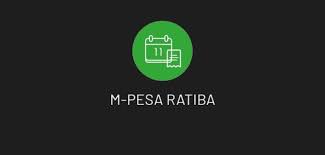
Safaricom PLC has clarified how the Social Health Authority can deduct money from a user’s M-Pesa account without prompting for the usual personal identification number when the user has activated the M-Pesa  Ratiba standing order service. The explanation follows public concerns raised by an M-Pesa subscriber in January 2026 who questioned unexpected deductions from his mobile money wallet after registering for SHA contribution payments.

In a response issued on January 12, 2026, Safaricom said the deductions were not the result of a system error or unauthorised access. Instead, they were linked to the user’s prior activation of the M-Pesa Ratiba service, which allows selected paybills such as SHA to collect scheduled payments automatically without requiring a PIN each time.

“If you have activated M-Pesa Ratiba and enabled SHA to auto deduct, this can happen without prompting for the pin,” Safaricom said in its explanation.

 M-Pesa Ratiba is Safaricom’s standing order service for mobile money users. It was introduced in October 2024 to help customers make regular automated payments such as insurance contributions, subscriptions, rent, school fees, and other recurring obligations. The service allows users to set payment schedules that can run daily, weekly, monthly, or annually.

When setting up a Ratiba standing order, customers are required to enter their M-Pesa pin once to authorise the arrangement. After this initial approval, future deductions are processed automatically on the scheduled dates. This means users do not receive the usual pin  prompt for every transaction because the system treats the standing order as pre approved.

Safaricom explained that the service only works if the user has enough money in their M-Pesa wallet at the time of the scheduled deduction. If the balance is insufficient, the transaction does not go through. Customers also have the option to view, pause, or cancel their standing orders through the USSD menu or the M-Pesa  app.

The explanation comes amid growing use of automated digital payments in Kenya, especially for government related services such as health insurance contributions. While many users appreciate the convenience of automatic payments, some have raised concerns about transparency and the feeling of losing control when funds are deducted without a pin prompt.


Previous Post

Minority EABL investors lose Sh12 billion in paper gains after share price pullback

Next Post

Mobile money agents’ cash transfers drop by Sh430 billion amid shift to digital payments

Sharon Busuru

Sharon Busuru

Related Posts

News

Understanding what investors are really paying for (Enterprise value vs. Equity value)

September 7, 2026
Analysis

Kenya holds central bank rate at 8.75%

September 4, 2026
News

The Power of Compound Interest in Building Your Retirement Fund

September 4, 2026
News

Election Cycles and Investments in Kenya: Positioning Ahead of 2027

September 4, 2026
News

A Strong Brand Does Not Always Make a Strong Investment

September 4, 2026
News

When Weak Financial Controls Become an Investment Risk

September 4, 2026

LATEST STORIES

Kenya’s regulator schedules stakeholder meeting on proposed import permit fees

September 10, 2026

Umbrella vs Standalone Pension Scheme: Which Is Better for Your Business?

September 10, 2026

Meta launches Muse, a personal AI agent that acts on users’ behalf

September 9, 2026

StanChart Kenya gives Nakumatt 30 days to settle Sh1.9 Billion debt

September 8, 2026
KRA

KRA now cross checks your tax returns against eTIMS, customs and withholding data

September 7, 2026

Understanding what investors are really paying for (Enterprise value vs. Equity value)

September 7, 2026

Kenya holds central bank rate at 8.75%

September 4, 2026

How financial institution failures affect the wider economy

September 4, 2026
  • About Us
  • Meet The Team
  • Careers
  • Privacy Policy
  • Terms and Conditions
Email us: editor@thesharpdaily.com

Sharp Daily © 2024

No Result
View All Result
  • Home
  • News
    • Politics
  • Business
    • Banking
  • Investments
  • Technology
  • Startups
  • Real Estate
  • Features
  • Appointments
  • About Us
    • Meet The Team

Sharp Daily © 2024