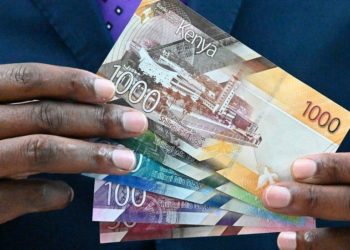
The International Monetary Fund (IMF) has once again raised eyebrows over the behavior of the Kenyan shilling. Despite a weaker US dollar and improved domestic fundamentals, the shilling has remained stubbornly stable at around KES 129 per dollar for nearly a year. To the IMF, this level of stability is not a sign of resilience but of possible intervention. The Fund’s concern is that the exchange rate appears “too stable” to be market-driven, implying that the Central Bank of Kenya (CBK) may be managing the currency more actively than it admits.
This is not the first time the IMF has questioned Kenya’s exchange rate regime. In its October 2018 report, the Fund estimated that the shilling was overvalued by about 17.0%, using its EBA-lite methodology, a model that compares a country’s real effective exchange rate (REER) to its economic fundamentals. The CBK, then under Governor Patrick Njoroge, dismissed the finding as exaggerated, arguing that the deviation was closer to 5.0% and accusing the IMF of making Kenya a “guinea pig” for its new assessment approach. The debate then, as now, was not only technical but also political: how much control should the CBK exert over the currency in an economy so dependent on imports and foreign debt?
The REER, which tracks the shilling’s value against a basket of trading partners’ currencies adjusted for inflation differentials, offers the most intuitive lens. If Kenya’s domestic prices rise faster than those of its trading partners, the REER appreciates, making Kenyan goods relatively expensive and imports cheaper. Over time, such a pattern erodes competitiveness and widens the trade deficit, an outcome the IMF worries undermines external sustainability. Indeed, the Fund’s models have long suggested that Kenya’s external position is weaker than fundamentals justify.
The CBK, however, maintains that the shilling’s current level reflects genuine market balance, supported by diaspora remittances, export earnings, and investor confidence. It insists that interventions are limited to smoothing volatility, not defending a target rate. Governor Kamau Thugge points to Kenya’s improved balance of payments, narrowing current account deficit, and strong foreign exchange reserves as evidence that the stability is earned, not engineered.


Yet the IMF’s skepticism may not be entirely misplaced. A stable shilling conveniently cushions the government from higher debt-service costs on its sizeable foreign-currency obligations. Every shilling of depreciation adds billions to the annual interest bill on Eurobonds and external loans. In that sense, maintaining a strong shilling can be fiscally expedient, even if it dulls export competitiveness and encourages imports. It also keeps inflation in check, an attractive outcome in a politically sensitive environment.
The standoff between the IMF and CBK thus goes beyond econometrics. It reflects a deeper tension between external credibility and domestic stability. The IMF prioritizes exchange rate flexibility as a signal of market discipline and sustainable policy. The CBK, facing domestic fiscal pressures and political expectations, prizes stability as a bulwark against volatility and public discontent.
Whether the shilling is overvalued by 5.0% or 17.0% may be less important than whether the underlying structure of Kenya’s external finances can sustain this calm. For now, remittances, portfolio inflows, and official borrowing plug the gaps. But as the global cycle turns and Kenya negotiates a new IMF facility, the question remains: how long can the country afford a “too stable” shilling?