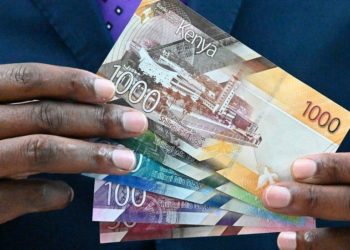
Central bank governors from the East African Community have renewed their pledge to launch a single regional currency by 2031, following a review of progress toward the long-delayed East African Monetary Union. The commitment came during the 29th Ordinary Meeting of the EAC Monetary Affairs Committee in Kampala on July 24, chaired by Bank of Uganda Governor Michael Atingi Ego, and brought together governors and senior officials from partner state central banks alongside representatives of the EAC Secretariat.
The single currency is intended to unify trade across the bloc’s eight member states, lower the cost of moving money between them, and streamline cross border transactions. The broader payment integration strategy behind the plan aims to modernize and integrate regional payment infrastructure by tackling high transaction costs, slow settlement times, limited interoperability between national systems, and a fragmented payment landscape, with the ultimate goal of enabling seamless cross-border transactions while boosting financial inclusion and intra-regional trade.
The 2031 target is itself a revision. EAC member states signed the original protocol establishing the East African Monetary Union in November 2013, intending to build the groundwork for union within a decade, but the bloc’s Secretary General confirmed in 2024 that the process originally due in 2024 had slipped to 2031.
Progress toward that goal remains inconsistent. Governors acknowledged that convergence toward the union remains uneven, with no EAC partner state having met all four primary macroeconomic benchmarks required. These benchmarks, agreed under the 2013 protocol, are designed to pave the way for a common currency by harmonizing monetary and exchange rate policies, payment and settlement systems, financial sector supervision, and statistical frameworks.


Despite the gaps, officials point to tangible groundwork already laid. Central banks have made progress in modernizing and harmonizing monetary policy frameworks, strengthening data and risk-management systems, deepening policy coordination, promoting use of the East African Payment System, and building institutional capacity. To keep the process on track, the meeting resolved to fast track implementation by establishing a peer review mechanism for macroeconomic surveillance and developing operational frameworks to support the roadmap.
The regional economic backdrop offers some encouragement. The EAC economy is projected to grow 5.2% in 2026, ahead of the projected 4.3% average for Sub Saharan Africa, while regional headline inflation eased to 6.7% in the 2025/26 financial year from 9.6% the year before.
Whether the bloc can meet its 2031 deadline after already missing one target date remains an open question, but officials maintain the ambition is still very much alive.