Kenya’s capital markets continued to show encouraging signs of recovery in 2025, with improvements observed in key performance indicators across the Nairobi Securities Exchange (NSE), during the third quarter. According to the Capital Markets Authority (CMA) through their Quarterly Statistical Bulletin, equity turnover increased by 55.3% to KES 46.2 billion in Q3’2025from KES 29.8 billion in Q2’2025, while market capitalization grew by 15.2% to reach KES 2.8 trillion in Q3’2025from KES 2.7 trillion in Q2’2025. These gains reflect renewed confidence among domestic investors and a generally improving macroeconomic environment. Even so, the structure of participants within the market has shifted, with foreign investor activity moderating over the period.
Average foreign participation declined to 30.1% in Q3’2025 from 46.7% in Q2’2025, representing a quarter-on-quarter decrease of 16.6% points. Foreign purchases amounted to KES 11.8 billion, while foreign sales reached KES 15.1 billion, resulting in continued net outflows. Cumulatively, from January to September 2025, foreign portfolio flows recorded a net outflow of KES 7.3 billion, compared to a net inflow of KES 122.0 million during the same period in 2024, indicating that offshore investors have taken a more cautious approach to Kenyan equities in 2025.
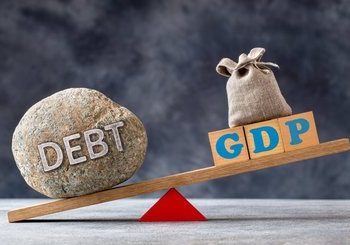
The slowdown in foreign trading aligns with global capital allocation dynamics. Higher yields in developed markets have prompted international investors to rebalance portfolios towards lower risk environments. Meanwhile, Kenya continues to manage elevated public debt, with total debt standing at KES 11.8 trillion as at June 2025 according to CBK’s Monthly Economic Indicators Report Meanwhile, external debt-servicing obligations remain a key consideration for global fund managers assessing frontier-market exposure. However, inflation eased to 4.6% in September 2025, contributing to the macroeconomic outlook and helping to stabilize domestic purchasing power.
Despite moderating foreign inflows, overall trading activity has remained strong, underpinned by growing domestic investor engagement. Local individual investor accounts increased to 1,248,543 in Q3’2025 up from 1,245,681 in the previous quarter, while local corporate investors maintained a dominant share of equity trading activity, representing above 67.6% of market participation. Recent regulatory reforms such as the rollout of single unit share trading have also encouraged broader market accessibility, allowing greater number of retail investors to actively participate.


The shift presents both advantages and important considerations for the future of the market. On one hand, deeper participation from local investors may help strengthen resilience, reducing reliance on short term global capital trends. Domestic capital providers often take a longer-term view and are closely attuned to local economic conditions, which may support valuation stability. On the other hand, foreign investors have historically contributed significantly to liquidity, market depth, price discovery and international visibility. A balanced market structure that attracts both domestic and global investors remains essential for long-term growth.
To support future growth, continued efforts to diversify investment products and strengthen the listings pipeline will be important. Enhancements such as increased promotion of derivatives, exchange traded funds and new equity offerings may attract both institutional and retail capital. Kenya’s capital markets remain well positioned for long-term expansion, with a broader investor base and a more resilient market structure.