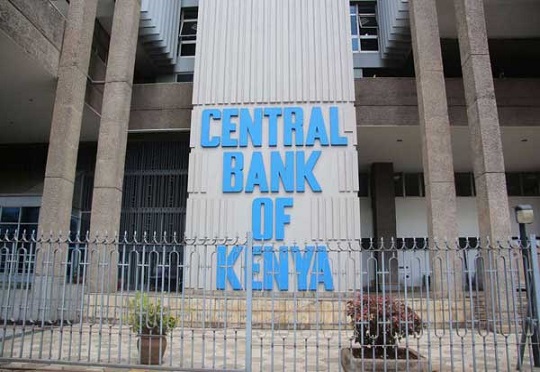
In the last five years, Kenya’s monetary policy stance, largely steered by the Central Bank of Kenya (CBK), has undergone significant shifts, especially in response to both global and domestic shocks. But a pressing question arises: is the CBK too reactive in its policy implementation, or is it responding with calculated precision?
To evaluate this, we examine the CBK’s handling of inflation, interest rates, and the exchange rate since 2020. The pandemic era brought a clear loosening bias, CBK slashed the Central Bank Rate (CBR) to 7.0% in April 2020 and kept it there until March 2022 to cushion the economy. While this appeared appropriate in the short run, it arguably overstayed. As global inflation surged and central banks like the U.S. Fed pivoted aggressively in 2022, Kenya’s policy remained largely accommodative, creating a lag in addressing imported inflation and currency pressures.
When the CBK finally began tightening, starting with a modest 50 basis point hike in May 2022, it was arguably behind the curve. Inflation had already crossed the 7.5% threshold and the Kenyan shilling was beginning its steep depreciation against the dollar. In 2023 and early 2024, the CBK accelerated rate hikes, eventually pushing the CBR to 13.0% by June 2024, the highest in recent memory. While this finally tamed inflation to below 5%, it came at a cost credit growth slowed, government domestic borrowing costs soared, and private sector access to capital was severely squeezed.
A closer look reveals a pattern: CBK tends to wait for inflation to breach the upper band of its 5.0% ±2.5% target before acting decisively. The risk of such reactivity is twofold: first, delayed tightening often requires steeper hikes later, magnifying the economic shock. Second, market participants, especially in the bond and forex markets, begin to lose confidence in policy foresight, which can trigger speculative pressure.


To its credit, CBK does face structural constraints. Kenya’s inflation is often driven by supply-side shocks, droughts, global oil prices, and currency pass-through. In such cases, rate hikes have limited impact. Moreover, fiscal dominance, where the government’s appetite for cheap borrowing indirectly influences monetary policy, can limit the CBK’s room to maneuver. A more proactive stance, however, would involve tightening before inflationary expectations become entrenched, even at the cost of short-term growth sacrifice.
The CBK must strengthen its forward guidance and market communication. Recent measures, such as publishing inflation forecasts and holding post-MPC press conferences, are steps in the right direction but remain inadequate. To move beyond its reactive image, the CBK should anchor its policy decisions on pre-emptive indicators like core inflation trends, expected global interest rate movements, and exchange rate projections, rather than focusing mainly on realized headline inflation.
Ultimately, the CBK’s recent policy history reveals a bias toward reactive tightening rather than pre-emptive positioning. While this may reflect underlying economic and political complexities, it risks amplifying shocks instead of mitigating them. A more data-driven, forward-looking policy framework, supported by institutional independence, would strengthen the CBK’s credibility and its effectiveness in guiding Kenya’s macroeconomic stability.