Sharp Daily
No Result
View All Result
Thursday, August 20, 2026
  • Home
  • News
    • Politics
  • Business
    • Banking
  • Investments
  • Technology
  • Startups
  • Real Estate
  • Features
  • Appointments
  • About Us
    • Meet The Team
Sharp Daily
  • Home
  • News
    • Politics
  • Business
    • Banking
  • Investments
  • Technology
  • Startups
  • Real Estate
  • Features
  • Appointments
  • About Us
    • Meet The Team
No Result
View All Result
Sharp Daily
No Result
View All Result
Home News

Mutual Funds in First- World Markets vs. Kenya: A Clear Comparison

Susan by Susan
November 21, 2025
in News
Reading Time: 2 mins read

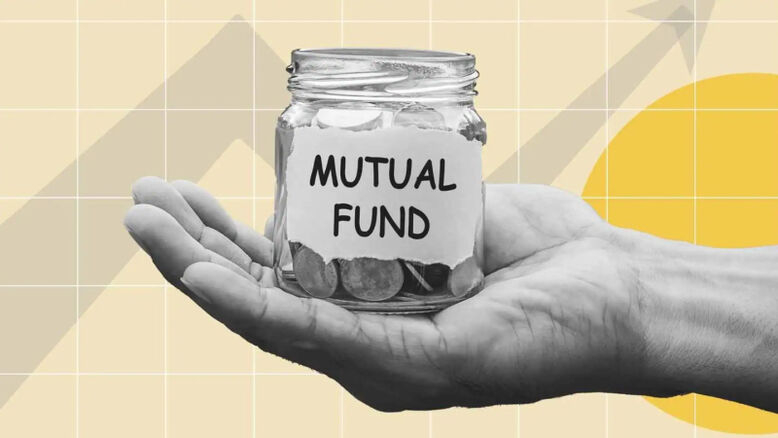
Mutual Funds in first-world countries and unit trust funds in Kenya share a similar foundation, pooling investor’s money into diversified portfolios. However, the level of maturity, scale and structure in each market differs significantly. Looking at these differences provide valuable lessons for Kenya’s growing investment landscape.

Developed markets in the first- world countries have a long and established mutual fund culture backed by decades of trust, participation and regulations. For instance, the U.S. mutual fund industry reached USD 27 trillion in assets in 2021, with 52.0% of household owning mutual funds. This scale supports lower fees, production innovation and wider diversification. First- world investors enjoy access to a wide range of funds; equity, bond, money market thematic, ESG, and passive index funds. Passive investing alone accounts for nearly 45.0% of total U.S. funds charging between 0.03% and 0.1% annually. This affordability increases accessibility for small investors.

Kenya’s unit trust has expanded impressively, showing a 3-year CAGR of 52.2% and reached KES 596.3 billion in AUM as of Q2 2025. This growth demonstrates increasing financial literacy and investor confidence among Kenyans seeking investment options. Kenyan investors mainly prefer low risk MMF which make up 62.0% of total AUM. Funds such as the Cytonn Money Market Fund (CMMF) have historically delivered strong returns, with yields around 11.1% outperforming the industry average of 9.8%. Its minimum investment of KES 100 also widens participation.

Kenya can strengthen its investment market by introducing more passive, low cost unit trusts that track indices in the NSE 25, giving investors an affordable and transparent market exposure. Additionally, expanding digital distribution through mobile apps, USSD, and online banking would make investing more accessible and encourage long- term saving and wealth building. Kenya can build on its momentum and keep on creating a more inclusive, resilient investment ecosystem that mirrors global best practices while remaining tailored to local needs.


RELATEDPOSTS

Why Kenya’s capital gains tax collections just hit a record Sh26.8 billion

August 20, 2026

Kenya’s banks lend KSh 245.1 billion to MSMEs in H1 2026

August 20, 2026
Previous Post

Why digital ecosystems need backup pathways for continuity

Next Post

The Next Face of African Development.

Susan

Susan

Related Posts

News

The role of investment research in identifying mispriced assets

August 17, 2026
News

How Influencers Are Reshaping the Economics of Business Growth

August 14, 2026
News

CBK Holds Rates

August 14, 2026
News

Kenya Stablecoin Regulations Shape Digital Finance

August 14, 2026
News

Circle Arc Blockchain Validators Reshape Institutional Finance

August 14, 2026
News

Stablecoin Treasury Infrastructure Reshapes African Corporate Finance

August 14, 2026

LATEST STORIES

Why Kenya’s capital gains tax collections just hit a record Sh26.8 billion

August 20, 2026

Kenya’s banks lend KSh 245.1 billion to MSMEs in H1 2026

August 20, 2026

Global payment firms restrict services to Kenya amid money laundering scrutiny

August 20, 2026

YouTube to count views from the first frame starting August 24

August 18, 2026

Kenya’s Sh1 trillion trade deficit: Why the import bill is becoming a bigger problem

August 18, 2026
John Mbadi, Kenya's treasury secretary, during an interview in Nairobi, Kenya, on Wednesday, Aug. 20, 2025. Kenya is in talks with China to convert dollar-denominated debt the East African nation owes its biggest bilateral lender to yuan and extend the repayment period, Mbadi said. Photographer: Kang-Chun Cheng/Bloomberg via Getty Images

Treasury’s Sh78.6 billion tax cut: relief or more government borrowing?

August 17, 2026

YouTube doubles watch hour requirements for partner program

August 17, 2026

NSSF Eyes Global Markets

August 17, 2026
  • About Us
  • Meet The Team
  • Careers
  • Privacy Policy
  • Terms and Conditions
Email us: editor@thesharpdaily.com

Sharp Daily © 2024

No Result
View All Result
  • Home
  • News
    • Politics
  • Business
    • Banking
  • Investments
  • Technology
  • Startups
  • Real Estate
  • Features
  • Appointments
  • About Us
    • Meet The Team

Sharp Daily © 2024