

Sharp Daily
No Result
View All Result
Monday, July 6, 2026
  • Home
  • News
    • Politics
  • Business
    • Banking
  • Investments
  • Technology
  • Startups
  • Real Estate
  • Features
  • Appointments
  • About Us
    • Meet The Team
Sharp Daily
  • Home
  • News
    • Politics
  • Business
    • Banking
  • Investments
  • Technology
  • Startups
  • Real Estate
  • Features
  • Appointments
  • About Us
    • Meet The Team
No Result
View All Result
Sharp Daily
No Result
View All Result
Home Analysis

Kenya T-Bill yields drop after CBK interest rate cut

serena wayua by serena wayua
December 11, 2025
in Analysis, Counties, Economy, Features, Healthcare, Investments, Money
Reading Time: 2 mins read

RELATEDPOSTS

CBK holds benchmark rate at 8.75% for the second consecutive time

June 10, 2026

Kenya’s MPC faces its toughest call yet as inflation and growth pull in opposite directions

June 5, 2026

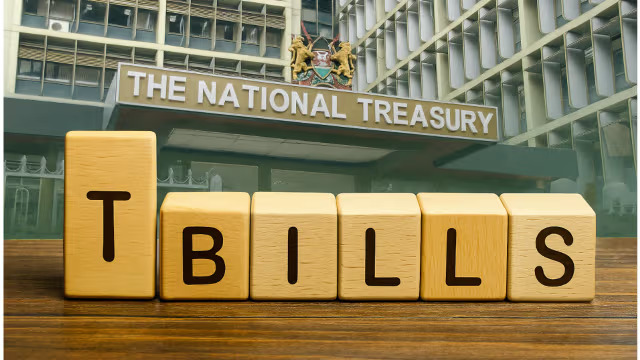
Treasury bill yields in Kenya have recorded a noticeable decline following the recent decision by the Central Bank of Kenya (CBK) to lower the benchmark lending rate. The drop in yields has impacted short-term government securities across the 91-day, 182-day, and 364-day T-bills, reshaping investor strategies in the fixed-income market.During the most recent auction, the 91-day T-bill settled around 7.7%, while the 182-day paper hovered at approximately 7.8%. The 364-day T-bill stood near 9.36%, a rate still lower than earlier periods when yields trended above 10%. These declines occurred shortly after CBK reduced the main lending rate by 25 basis points, part of an ongoing monetary policy shift aimed at easing credit conditions and stimulating economic activity.

Interest rates set by the CBK typically influence government securities. When benchmark rates fall, borrowing becomes cheaper for the government, leading to lower yields on short-term T-bills. Investors who previously enjoyed higher returns from short-term papers are now reconsidering their positions due to the softened yields.As T-bill rates drop, investor appetite is shifting toward long-term Treasury bonds, which currently offer significantly higher coupon rates. For instance, the recently reopened 25-year bond carries a coupon of 14.188%, while a 15-year bond offers 12.340%. These returns are more attractive to investors seeking stable, long-term income, especially at a time when short-term returns are less competitive.

Market analysts also note that lower T-bill yields may not keep pace with inflation, reducing real returns for investors seeking short-term, low-risk options. This makes long-term bonds, despite their extended maturity timelines, more appealing for those willing to accept reduced liquidity in exchange for higher income.The government’s strategy also appears geared toward longer-term financing. By encouraging investors to shift from short-term securities to long-term bonds, the Treasury can reduce constant refinancing pressure and stabilize public debt management.While the drop in T-bill yields may disappoint short-term investors, it presents an opportunity for those interested in long-term fixed-income assets. Investors are advised to assess their liquidity needs, risk tolerance, and long-term financial goals before making portfolio adjustments.In summary, the decline in T-bill yields following the CBK rate cut marks a significant moment for Kenya’s fixed-income market. It reflects a changing monetary environment and is prompting investors to rebalance their strategies toward higher-yielding long-term government bonds.


Previous Post

How state aid is hurting Kenya’s private sector

Next Post

Post-Retirement Medical Funds in Kenya

serena wayua

serena wayua

Related Posts

Analysis

Kenya’s exports to the US rise as AGOA boost masks growing trade uncertainty

July 2, 2026
Analysis

Diaspora remittances remain a pillar of Kenya’s economy despite moderation in 2026

July 2, 2026
Business

Kenya misses out on billions as safaricom stake sale nears completion

July 2, 2026
Analysis

Kenya’s inflation eases to 6.4% in June 2026 as cost of living pressures persist

July 2, 2026
Analysis

Rising medical Loans highlight Kenya’s health insurance gap

July 2, 2026
Women work at the front desk of the Centum Investment Company Limited in Nairobi, Kenya, file.  REUTERS/Siegfried Modola
Analysis

Centum sells 60% stake in nabo capital to rock investment bank

July 2, 2026

LATEST STORIES

Kenya cuts Chinese loan repayments by Sh21.6 Billion After SGR debt restructuring

July 6, 2026

Kenya Moves to Centralize Agricultural Lending

July 6, 2026

Environmental, Social, and Governance (ESG) Investing

July 6, 2026

Absa Bank Kenya Leadership Transition

July 6, 2026

How Digital Payments Are Transforming East Africa’s Tourism Industry

July 5, 2026

How Phone Financing Is Expanding Insurance Access in Kenya

July 5, 2026

How Kenya’s Nuclear Power Plant Could Boost the Economy

July 5, 2026

Kenya’s New Cryptocurrency Rules Explained

July 5, 2026
  • About Us
  • Meet The Team
  • Careers
  • Privacy Policy
  • Terms and Conditions
Email us: editor@thesharpdaily.com

Sharp Daily © 2024

No Result
View All Result
  • Home
  • News
    • Politics
  • Business
    • Banking
  • Investments
  • Technology
  • Startups
  • Real Estate
  • Features
  • Appointments
  • About Us
    • Meet The Team

Sharp Daily © 2024