Sharp Daily
No Result
View All Result
Sunday, December 7, 2025
  • Home
  • News
    • Politics
  • Business
    • Banking
  • Investments
  • Technology
  • Startups
  • Real Estate
  • Features
  • Appointments
  • About Us
    • Meet The Team
Sharp Daily
  • Home
  • News
    • Politics
  • Business
    • Banking
  • Investments
  • Technology
  • Startups
  • Real Estate
  • Features
  • Appointments
  • About Us
    • Meet The Team
No Result
View All Result
Sharp Daily
No Result
View All Result
Home Opinion

Kenya’s power generation stalls as demand soars: Why rationing is back

Stagnant domestic electricity production, drought‑hit hydropower, and a freeze on new deals fuel renewed load‑shedding

Sharon Busuru by Sharon Busuru
November 20, 2025
in Opinion
Reading Time: 2 mins read
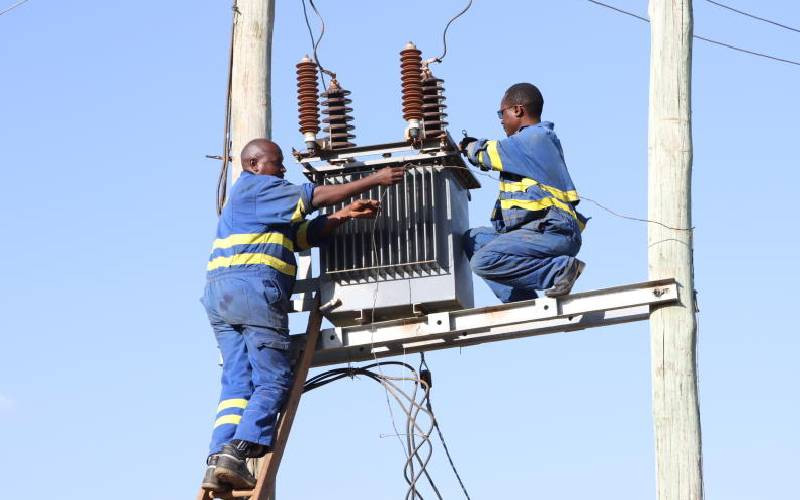
Kenya power technicians install a transformer at Ibutuka Village in Mbeere North in Embu County (Murithi Mugo, Standard)

Kenya power technicians install a transformer at Ibutuka Village in Mbeere North in Embu County (Murithi Mugo, Standard)

Kenya is once again implementing controlled power rationing, particularly during evening peak hours, as local electricity generation has failed to keep pace with rising demand. While demand growth continues to accelerate, the domestic capacity to meet that demand has remained stagnant for years, prompting renewed dependence on imported energy and raising serious questions about long-term energy security.

Stagnant local generation meets rising demand

Local power generation has hovered around 12.57 billion kWh over the past three years, with little increase. Meanwhile, consumption has steadily risen – reaching 10.75 billion kWh in the most recent reporting period, up from 10.32 billion kWh earlier. This widening gap has forced Kenya Power to increase imports to fill the shortfall, contributing to the re-emergence of load‑shedding.

Power rationing returns amid supply shortfalls

In early November 2025, the government confirmed that rolling blackouts would be implemented between 5:00 p.m. and 10:00 p.m. during peak hours. Energy officials explained that the rationing is a deliberate step to stabilize the grid and avoid a total system collapse. The shortfall is primarily driven by reduced hydropower output, as dam levels fluctuate, compounded by surging demand in urban and industrial areas.

Underlying causes: Policy, infrastructure, and climate

A key structural issue is the moratorium on new Power Purchase Agreements (PPAs), in place since 2018, which halted onboarding of new independent power producers (IPPs). This has constrained the addition of fresh generation capacity from both renewable and non-renewable sources. Without new projects, existing plants – especially geothermal and hydropower – bear growing pressure to meet demand.

RELATEDPOSTS

Kenya and U.S. sign historic health pact under new government to government framework

December 5, 2025

In duplum rule Kenya: slain lawyer Mathew Kyalo Mbobu wins posthumous victory against Sh69M predatory loan demand.

December 3, 2025

Hydropower, a significant share of Kenya’s generation mix, is also under threat from siltation and climate-driven droughts. Many of the dams were built decades ago, and silt buildup has reduced their effectiveness. Key plants are aging, creating declining generation performance.

Transmission and distribution infrastructure also faces challenges. System losses – both technical and commercial –  remain high, limiting the effective delivery of generated power.

Dependence on imports grows

To plug the gap, Kenya is increasingly importing electricity from neighboring countries. In the year to June 2025, Ethiopia supplied a large portion of Kenya’s imported electricity. These imports are relatively cost-effective but cannot fully substitute for domestic capacity, and they introduce supply-side vulnerability and geopolitical risk.

Calls for action and future risks

Kenya Power has called for an increase in local production to restore a safer reserve margin – ideally around 15%. Industry observers argue that without policy reform, infrastructure investment, and renewed commitment to domestic power generation, the current rationing could persist or worsen.

Critics also warn that relying too heavily on imports and short-term fixes undermines long-term energy independence and economic stability. As urbanization and industrialization accelerate, the stakes for Kenya’s energy sector continue to rise.

Kenya government confirms nationwide electricity rationing amid supply shortfalls

Previous Post

Employers face criminal charges over unpaid pension deductions.

Next Post

Rural banking expansion: how financial literacy drives economic inclusion in Kenya

Sharon Busuru

Sharon Busuru

Related Posts

Analysis

Vodafone Safaricom acquisition: KES 204 billion deal sparks national sovereignty debate in Kenya

December 5, 2025
Opinion

Policy Reforms Needed to Curb Abuse of Customer Data in Kenya

December 5, 2025
The up arrow shows the inflation rate. Interest rates increase, home loan, mortgage, house tax. investment and asset management concept. percentage for increasing interest rates with stacks coins
Opinion

The Real Estate Fallacy

December 5, 2025
Business

Social media management for companies

December 5, 2025
Analysis

In duplum rule Kenya: slain lawyer Mathew Kyalo Mbobu wins posthumous victory against Sh69M predatory loan demand.

December 3, 2025
Money

End of year money audit: Key financial steps to take before 2026

December 3, 2025
Please login to join discussion

LATEST STORIES

Buy-Now-Pay-Later Craze: Convenience or Debt Trap?

December 6, 2025

The Rise of Agency Banking in Kenya

December 6, 2025

The Future of Saccos: Digital Transformation and Competitive Pressures

December 6, 2025

Vodafone Safaricom acquisition: KES 204 billion deal sparks national sovereignty debate in Kenya

December 5, 2025

Policy Reforms Needed to Curb Abuse of Customer Data in Kenya

December 5, 2025

The importance of credit scores and how banks use them

December 5, 2025
The up arrow shows the inflation rate. Interest rates increase, home loan, mortgage, house tax. investment and asset management concept. percentage for increasing interest rates with stacks coins

The Real Estate Fallacy

December 5, 2025

Catalysts for Capital: The Strategic Role of Development Finance Institutions in Kenya

December 5, 2025
  • About Us
  • Meet The Team
  • Careers
  • Privacy Policy
  • Terms and Conditions
Email us: editor@thesharpdaily.com

Sharp Daily © 2024

No Result
View All Result
  • Home
  • News
    • Politics
  • Business
    • Banking
  • Investments
  • Technology
  • Startups
  • Real Estate
  • Features
  • Appointments
  • About Us
    • Meet The Team

Sharp Daily © 2024