When people hear the phrase “printing money,” they often imagine governments simply creating wealth out of thin air. While this isn’t entirely true, the Kenyan government can generate revenue through a process tied to the creation of currency. This concept, known as seigniorage, refers to the profit a government earns from issuing money.
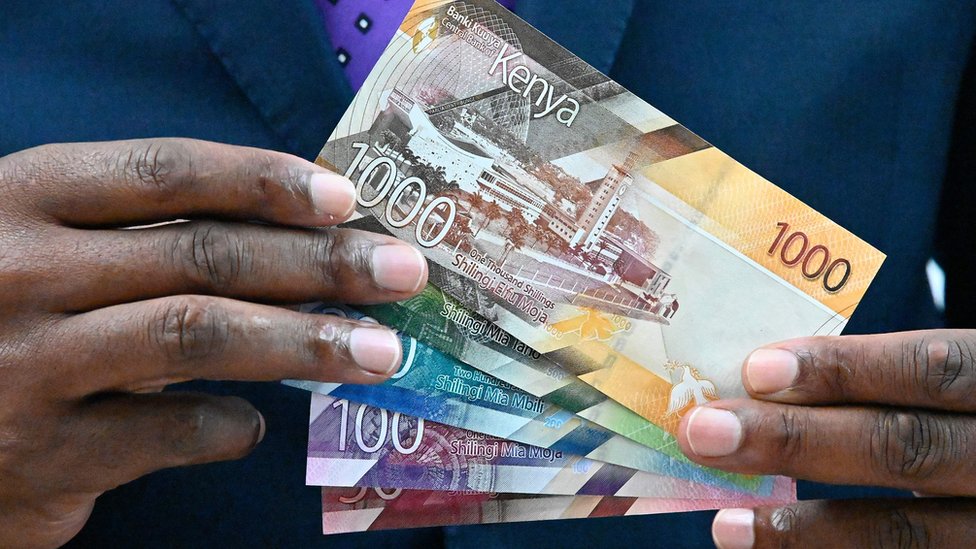
Here’s how it works: when the Central Bank of Kenya (CBK) prints money, the cost of producing a banknote is much lower than its face value. For instance, printing a KES 1,000 note may cost only a few shillings, but its value in circulation remains KES 1,000. The difference between the cost of production and the currency’s value is the profit the government earns.
However, the CBK doesn’t print money and distribute it randomly. Instead, newly created money is typically used to purchase government bonds, pay off existing debt, or fund public projects. For example, during a cash shortfall, the government may request the CBK to create more money to help finance infrastructure projects, pay salaries, or settle domestic obligations. This allows the government to meet its financial needs without immediately raising taxes or borrowing from external lenders.
But there’s a catch: printing too much money can lead to inflation. If there is more money in circulation than the goods and services available in the economy, prices begin to rise. Inflation erodes the purchasing power of money, making life more expensive for ordinary Kenyans. In extreme cases, such as Zimbabwe in the 2000s, unchecked money printing led to hyperinflation, where prices skyrocketed, and the currency lost almost all its value.


In some cases, printing money can help address crises. For example, during the COVID-19 pandemic, governments around the world, including Kenya, used newly created money to fund stimulus packages that supported businesses and vulnerable households. While this measure helped stabilize the economy in the short term, it had to be carefully managed to avoid triggering long-term inflation.
It’s also essential to note that the Kenyan government does not rely solely on printing money to fund its operations. Most of its revenue comes from taxes, such as income tax and value-added tax (VAT), and borrowing through treasury bonds and external loans. Printing money is generally used as a last resort or to address short-term liquidity challenges.
Printing money allows the Kenyan government to generate revenue through seigniorage, the profit from issuing currency. While this can provide temporary relief or fund essential projects, overuse risks inflation and economic instability. For Kenya’s economy to remain stable, printing money must be used sparingly and responsibly, with a careful balance between funding government needs and maintaining the purchasing power of the currency.