Sharp Daily
No Result
View All Result
Saturday, June 13, 2026
  • Home
  • News
    • Politics
  • Business
    • Banking
  • Investments
  • Technology
  • Startups
  • Real Estate
  • Features
  • Appointments
  • About Us
    • Meet The Team
Sharp Daily
  • Home
  • News
    • Politics
  • Business
    • Banking
  • Investments
  • Technology
  • Startups
  • Real Estate
  • Features
  • Appointments
  • About Us
    • Meet The Team
No Result
View All Result
Sharp Daily
No Result
View All Result
Home News

Kenya’s Monetary Policy Turns Cautious as Inflation Pressures Re-Emerge Ahead of June MPC Meeting

Ruth Atieno by Ruth Atieno
May 22, 2026
in News
Reading Time: 2 mins read

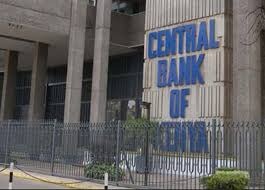
Kenya’s monetary policy stance has shifted significantly over the past two years, reflecting changing inflation dynamics, exchange-rate pressures, and evolving global risks. The Central Bank Rate (CBR) reached 13.0% in June 2024 after the Central Bank of Kenya (CBK) tightened policy aggressively to contain inflationary pressures and support a weakening shilling. At the time, tighter monetary conditions were intended to stabilise prices, anchor inflation expectations, and restore confidence in the foreign exchange market.

As inflation moderated and exchange-rate conditions improved, the CBK gradually shifted toward monetary easing. Between August 2024 and February 2026, the Monetary Policy Committee (MPC) implemented a series of rate cuts that cumulatively reduced the benchmark rate by 4.25% points to 8.75%. By January 2026, headline inflation had eased to 4.4%, below the midpoint of the CBK’s target range of 5.0% ± 2.5%, creating room for a more accommodative policy stance. Lower rates were also expected to support private sector credit growth and broader economic activity following an extended period of tight financial conditions.

The April 2026 MPC meeting marked a pause in that easing cycle, with the Committee leaving the benchmark rate unchanged at 8.75%. The decision came against a backdrop of rising global oil prices linked to renewed conflict in the Middle East. International crude prices reportedly increased from about USD 63.8 per barrel in late 2025 to close to USD 100.0 per barrel by April 2026, contributing to higher domestic fuel costs. Petrol prices in Kenya rose to KSh 197.6 per litre, while headline inflation accelerated to 5.6% in April. Food prices also remained elevated, with non-core inflation rising sharply in preceding months.

External sector pressures also intensified. Higher import costs, combined with softer remittance inflows and weaker export earnings, contributed to a widening current account deficit estimated at around 3.0% of GDP. In its April communication, the MPC indicated that it would closely monitor potential second-round inflation effects before determining the future policy path.


RELATEDPOSTS

June 12, 2026

Where Fintech Companies Actually Make Their Real Profits: Beyond Payments and Transaction Fees

June 12, 2026

Attention now turns to the June 9 MPC meeting. With inflation already above the 5.0% midpoint target and risks from global energy markets still elevated, market expectations have shifted toward the possibility of a policy tightening move. (Start your investment journey today with the cytonn MMF, call+2540709101200 or email sales@cytonn.com)

 

Previous Post

Reading between the numbers in Q1’2026 banking financials

Next Post

President halts NTSA crackdown on graffiti-branded matatus amid growing creative economy debate

Ruth Atieno

Ruth Atieno

Related Posts

News

June 12, 2026
News

Where Fintech Companies Actually Make Their Real Profits: Beyond Payments and Transaction Fees

June 12, 2026
News

Why Revenue Growth in Fintech Can Be Misleading: The Hidden Economics Behind Digital Payments

June 12, 2026
News

Finance bill 2026: key tax reforms and economic impact in kenya

June 12, 2026
News

INVISIBLE TRANSACTIONS: THE FUTURE OF PAYMENTS

June 12, 2026
News

Kenya’s Growing Reliance on Domestic Borrowing: Opportunity or Crowding-Out Risk?

June 12, 2026

LATEST STORIES

June 12, 2026

Where Fintech Companies Actually Make Their Real Profits: Beyond Payments and Transaction Fees

June 12, 2026

Why Revenue Growth in Fintech Can Be Misleading: The Hidden Economics Behind Digital Payments

June 12, 2026

Finance bill 2026: key tax reforms and economic impact in kenya

June 12, 2026

INVISIBLE TRANSACTIONS: THE FUTURE OF PAYMENTS

June 12, 2026

Kenya’s Growing Reliance on Domestic Borrowing: Opportunity or Crowding-Out Risk?

June 12, 2026

Family Bank’s NSE Listing: A Long-Overdue Milestone for Kenya’s Capital Markets

June 12, 2026

Kenya’s Small Banks Given Until 2032 to Meet Kshs 10 Billion Core Capital Requirement

June 12, 2026
  • About Us
  • Meet The Team
  • Careers
  • Privacy Policy
  • Terms and Conditions
Email us: editor@thesharpdaily.com

Sharp Daily © 2024

No Result
View All Result
  • Home
  • News
    • Politics
  • Business
    • Banking
  • Investments
  • Technology
  • Startups
  • Real Estate
  • Features
  • Appointments
  • About Us
    • Meet The Team

Sharp Daily © 2024