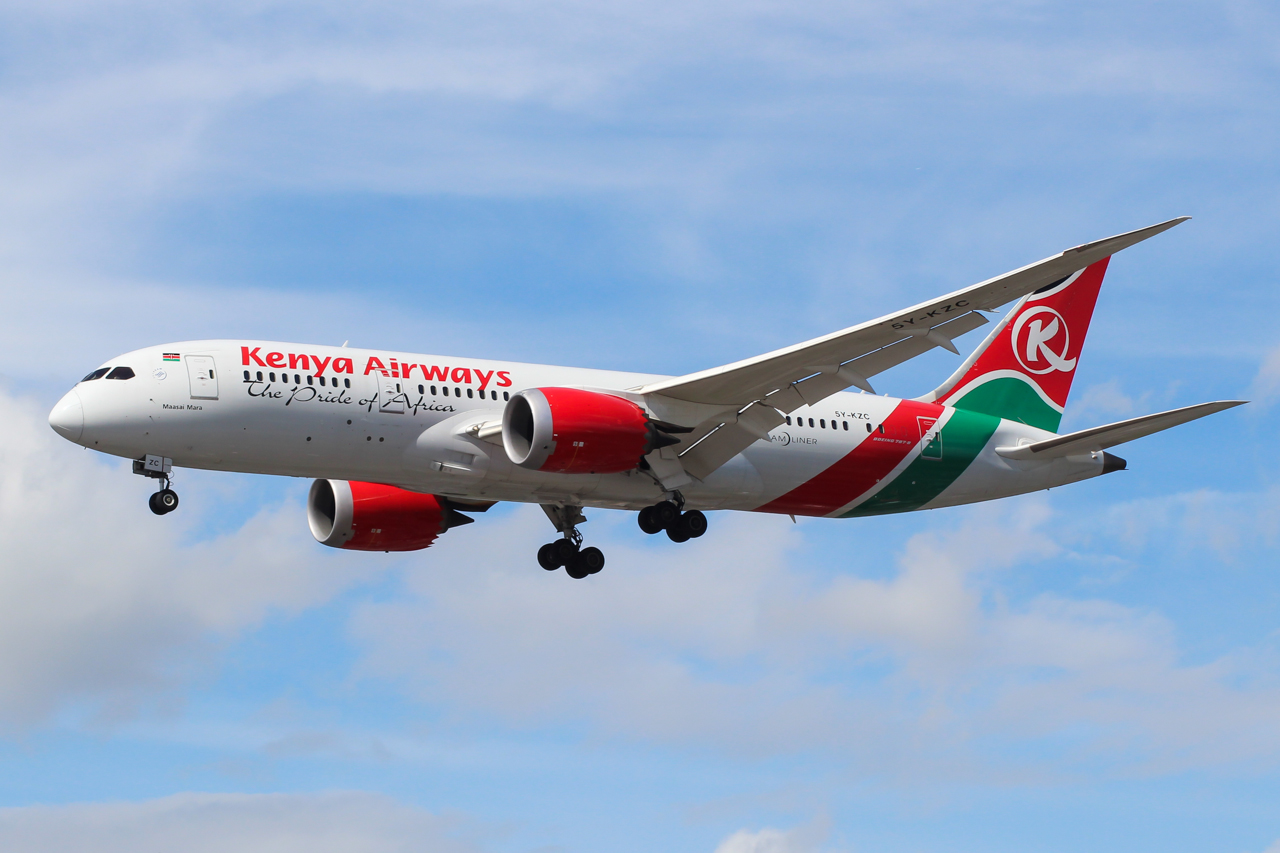
On May 12, 2026, Kenya Airways and Rubis Energy Kenya signed a Memorandum of Understanding to develop the first dedicated sustainable aviation fuel refinery on the African continent. The agreement, reached during the Africa Forward Summit in Nairobi, marks one of the most consequential steps the country’s aviation sector has taken toward energy independence and climate accountability.
Once completed, the refinery is expected to have a production capacity of 32,000 metric tonnes, with an estimated investment in the region of 60 million to 70 million Euros, roughly Ksh10 billion. The proposed facility will produce lower carbon aviation fuel from local waste feedstocks, including used cooking oil, waste animal fats, and other vegetable oils, using modular technology from Dragonfly, a clean energy company that builds smaller format refineries for sustainable aviation fuel and hydrotreated vegetable oil.
Jomo Kenyatta International Airport consumes 2.9 million litres of jet fuel every day, an amount equal to filling the tanks of 52,727 family cars, and every drop of that fuel arrives through imports. That dependency exposes both the airline and the broader economy to price shocks, supply disruptions, and an ever growing carbon liability as global aviation regulations tighten.
Kamal noted that switching to sustainable aviation fuel is the most commercially viable, technologically mature, and lowest risk solution to significantly decarbonize aviation, and that renewable biogenic fuel is the optimal route for airlines working toward the International Civil Aviation Organization’s goal of net-zero carbon emissions by 2050.
What makes sustainable aviation fuel particularly attractive is that it does not require airlines to overhaul their fleets or redesign their operations. Once certified, it can be blended with conventional jet fuel and used in existing aircraft engines and airport fueling systems, and the International Air Transport Association estimates that SAF can reduce lifecycle CO₂ emissions by up to 80 percent compared to conventional jet fuel, depending on the feedstock.


For Rubis Energy Kenya, the deal is a natural extension of an existing relationship with the aviation sector. The company already operates aircraft refueling facilities at Jomo Kenyatta International Airport, Wilson Airport in Nairobi, and Moi International Airport in Mombasa, servicing most major passenger and cargo airlines to standards set by the International Air Transport Association. Building a SAF refinery in proximity to that existing infrastructure is not a leap into the unknown but a deepening of capabilities the company has spent years building.
Karl Feilder, CEO of Dragonfly, noted that the critical advantage of this configuration is that a modular refinery can be sited close to both the feedstock and the consumers of the fuel, allowing it to utilize existing Rubis infrastructure to provide a long term daily supply of sustainable aviation fuel to Kenya Airways at Jomo Kenyatta International Airport.
Regionally, the timing aligns with a growing continental push. The ICAO’s plans for sustainable aviation fuel in Africa by 2030 focus on establishing regulatory frameworks, building production capacity, and fostering regional partnerships, with the African Union’s SAF Continental Strategy and Action Plan targeting a five per cent emissions reduction from cleaner aviation energy by 2030. Regulatory approvals, feedstock agreements, financial close, and construction still lie ahead.