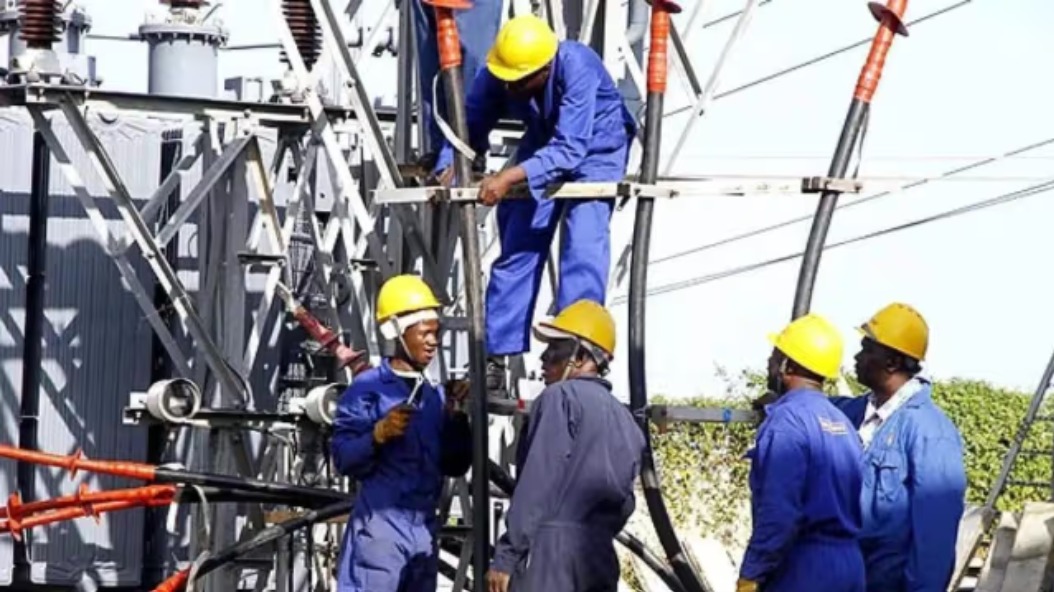
Kenya Power is facing the most significant competitive challenge in its history after the Kenyan government formally opened the electricity market to direct sales between power producers and large consumers. The move, introduced through the Energy (Electricity Market, Bulk Supply and Open Access) Regulations of 2026, marks a major restructuring of Kenya’s power sector and signals the gradual end of the utility’s long-standing monopoly in electricity distribution.
The new regulations allow electricity producers without existing power purchase agreements (PPAs) with Kenya Power to directly supply industries, factories, commercial enterprises, and other high-consumption users. The producers will access transmission and distribution infrastructure owned by Kenya Electricity Transmission Company (KETRACO) and Kenya Power through wheeling arrangements, where access fees are paid for use of the network.
The reforms introduce a competitive retail electricity framework that could fundamentally alter Kenya’s energy pricing structure, investment landscape, and industrial competitiveness. Large consumers currently account for approximately 70 percent of Kenya Power’s electricity sales, purchasing 7,313 Gigawatt-hours (GWh) out of the 10,570 GWh sold during the financial year ending June 2025.
Kenya Power’s total electricity sales have continued to grow steadily, increasing by 8.2 percent to 11,330.84 GWh in the year ended June 2025 from 10,473 GWh the previous year. Compared to 9,186 GWh recorded in June 2021, the utility’s sales have risen by 23.4 percent over four years, underlining the growing national demand for electricity.


However, the World Bank has raised concerns over the long-term financial consequences of liberalizing the electricity market. The institution warned that allowing profitable industrial and commercial customers to migrate away from Kenya Power could weaken the utility’s revenue base and increase electricity costs for domestic users.
Large industrial customers currently pay higher tariffs and demand charges, which help subsidize lower-income residential consumers. If those high-paying users shift to direct supply agreements with independent power producers, Kenya Power may struggle to maintain cross-subsidization mechanisms that have historically kept household electricity prices relatively lower.
The new regulations establish minimum load thresholds for direct access arrangements. Consumers connected to distribution systems must have a minimum demand of one megavolt-ampere (1MVA), while those using transmission infrastructure must consume at least 10 megavolt-amperes (10MVA). These thresholds effectively target large factories, industrial parks, commercial hubs, and high-density mixed-use developments.
The reforms also create new opportunities for power generators seeking to reduce dependence on Kenya Power as the sole off-taker. KenGen, Kenya’s largest electricity producer, has repeatedly expressed interest in directly supplying consumers as part of efforts to diversify revenue streams and reduce exposure to delayed payments from the utility.
KenGen supplied 8,482 GWh to Kenya Power during the year ended June 2025, accounting for 59 percent of the 14,472 GWh purchased by the distributor from producers. Despite remaining the country’s largest generator, the company and other producers have faced persistent cash flow pressure due to delayed settlements from Kenya Power.
The reforms are also expected to accelerate private investment in renewable and alternative energy infrastructure. Many industrial consumers have increasingly adopted solar and biomass backup systems in response to concerns over blackouts, unstable supply, and rising electricity costs. Direct power agreements could now allow these businesses to negotiate customised pricing structures and improve energy reliability.
Still, existing producers tied to long-term PPAs with Kenya Power may initially miss out on the new market opportunities. Most contracts extend for at least 20 years, requiring suppliers to continue meeting obligations to the utility until the agreements expire.
The liberalisation of Kenya’s electricity market reflects a broader regional trend toward open access energy systems designed to increase efficiency, attract investment, and improve service delivery. However, the success of the transition will largely depend on how regulators balance competition, affordability, infrastructure access, and the financial sustainability of existing State-backed utilities.