Sharp Daily
No Result
View All Result
Friday, May 1, 2026
  • Home
  • News
    • Politics
  • Business
    • Banking
  • Investments
  • Technology
  • Startups
  • Real Estate
  • Features
  • Appointments
  • About Us
    • Meet The Team
Sharp Daily
  • Home
  • News
    • Politics
  • Business
    • Banking
  • Investments
  • Technology
  • Startups
  • Real Estate
  • Features
  • Appointments
  • About Us
    • Meet The Team
No Result
View All Result
Sharp Daily
No Result
View All Result
Home News

Jua-Kali Artisans Key To Kenya’s Industrialization Efforts

Anslem Murimi by Anslem Murimi
March 16, 2023
in News
Reading Time: 1 min read
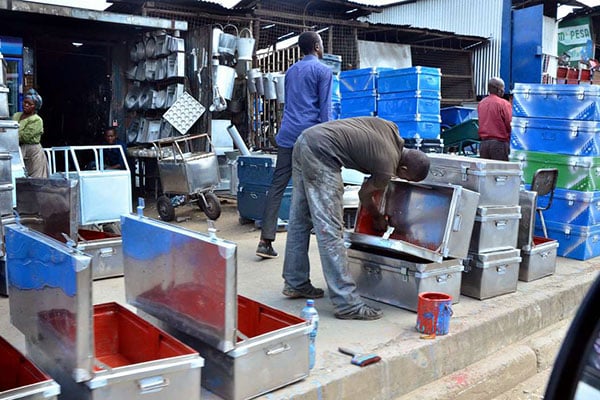
Jua Kali Industry

Jua Kali Industry [Photo/Courtesy]

Instead of starting a textile industry and hiring and training a labour force, recognition of prior learning can be extended beyond construction and similar industries.

Jua-kali tailors can be brought into formal labour markets and their prior skills can be formalised and recognised, providing a significant labour force for the textile industry. This applies to many industries including metalwork, shoe repair and woodwork.

A key intention of the Kenya Kwanza government is to boost Kenyan manufacturing, with the China Square saga indicating the zeal with which the government intends to reduce our dependence on manufactured imports. Similarly, there is a strong desire to increase the tax base in the informal sector.

Read: Jua Kali-Kenya’s Potential In Handcrafted Textiles

RELATEDPOSTS

Kenya’s inflation surges to two year high amid fuel crisis and global turmoil

April 30, 2026

Amazon seeks License to offer satellite internet in Kenya

April 29, 2026

By bringing jua-kali artisans to the table, the State does not have to start at zero when training the workforce necessary for Kenya’s rapid industrialisation. 

This also boosts the tax base by increasing income tax received as more Kenyans would enter the formal economy, providing a ready workforce and allowing for more firms to be formed hence more corporate tax to be collected. An added benefit would be growth in Government revenue without hiking tax rates, which hamper Kenyan consumers and producers alike.

As such, the Government should consider collaborating with cottage industry artisans in its industrialisation efforts.

Email your news TIPS to editor@thesharpdaily.com
Previous Post

Co-orperative Bank Announces Ksh 8.8 Billion Dividend In Their FY’2022 Results

Next Post

Absa Spends KSh 1Bn On Litigation For The Year Ended December 31, 2022

Anslem Murimi

Anslem Murimi

Related Posts

News

Why some startups fail within the first year

April 30, 2026
News

Investing in off-plan properties

April 30, 2026
News

Kenya’s growth slows to five-year low as drought exposes economic fragility

April 30, 2026
News

Kenya’s financial lifeline amid Iran war fallout: treasury’s bold moves

April 30, 2026
Healthcare

Kenya’s SHA faces sustainability test as claims outpace contributions

April 30, 2026
Analysis

Kenya’s infrastructure push leans on private investment

April 30, 2026

LATEST STORIES

2026 International Labour Day

May 1, 2026

Why some startups fail within the first year

April 30, 2026

Investing in off-plan properties

April 30, 2026

Kenya’s growth slows to five-year low as drought exposes economic fragility

April 30, 2026

Kenya’s financial lifeline amid Iran war fallout: treasury’s bold moves

April 30, 2026

Kenya’s SHA faces sustainability test as claims outpace contributions

April 30, 2026

Kenya’s inflation surges to two year high amid fuel crisis and global turmoil

April 30, 2026

Kenya’s infrastructure push leans on private investment

April 30, 2026
  • About Us
  • Meet The Team
  • Careers
  • Privacy Policy
  • Terms and Conditions
Email us: editor@thesharpdaily.com

Sharp Daily © 2024

No Result
View All Result
  • Home
  • News
    • Politics
  • Business
    • Banking
  • Investments
  • Technology
  • Startups
  • Real Estate
  • Features
  • Appointments
  • About Us
    • Meet The Team

Sharp Daily © 2024