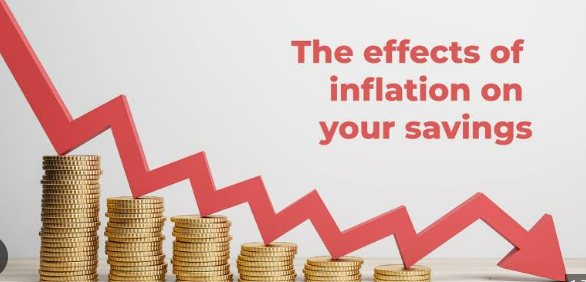
Inflation remains one of the most significant challenges to long-term wealth preservation because it gradually reduces the purchasing power of money held in cash. While keeping funds in a bank account provides liquidity and security, idle cash often fails to generate returns that match the rising cost of living. As prices increase, the same amount of money buys fewer goods and services over time, reducing the real value of savings. With Kenya’s inflation rate standing at 6.4%, investors increasingly need strategies that preserve purchasing power while generating sustainable long-term returns.
A common misconception among savers is that avoiding investment risk automatically protects wealth. In reality, maintaining large cash balances for extended periods can expose investors to inflation risk, particularly when returns from traditional savings accounts remain below the prevailing inflation rate. In such circumstances, savers experience negative real returns because the growth in their savings does not keep pace with rising prices. Building long-term financial security therefore requires balancing liquidity with investments capable of delivering returns above inflation.
One practical approach involves allocating emergency savings to relatively low-risk investment instruments that offer higher yields than ordinary deposit accounts. Money Market Funds (MMFs) and government infrastructure bonds provide opportunities to preserve liquidity while generating competitive returns. In Kenya, MMFs pool capital from multiple investors and invest primarily in short-term government securities, treasury instruments, commercial paper, and other high-quality fixed-income assets. This diversified structure allows investors to earn regular income while maintaining relatively easy access to their funds. Government infrastructure bonds also provide an alternative for investors seeking stable returns while contributing to the financing of national development projects.
Although fixed-income investments support capital preservation, equities remain an important asset class for long-term wealth creation. Purchasing shares in fundamentally strong companies listed on the Nairobi Securities Exchange (NSE) or diversified global equity markets enables investors to participate in business growth over time. Companies with strong market positions often possess greater pricing power, allowing them to adjust product prices when production costs increase. As revenues and earnings grow, shareholders may benefit through rising dividends and long-term capital appreciation. Equities therefore provide investors with an opportunity to build wealth while maintaining exposure to productive sectors of the economy.


Real estate also continues to serve as a widely recognized hedge against inflation. Property values and rental income often increase over time as urbanization, population growth, and economic development drive demand for residential and commercial space. These characteristics allow real estate to generate returns through both rental income and capital appreciation. However, direct property ownership requires substantial financial resources and ongoing management responsibilities. Investors who prefer lower capital requirements can obtain exposure to the property market through Real Estate Investment Trusts (REITs), which allow individuals to invest in professionally managed real estate portfolios while benefiting from income distributions and potential capital growth.
Effective wealth management ultimately depends on evaluating financial progress in real rather than nominal terms. The size of a bank balance alone does not accurately measure financial success if inflation continues to reduce its purchasing power. Instead, investors should assess whether their portfolios generate returns that preserve and increase real wealth over time. A diversified investment strategy that combines money market funds, government infrastructure bonds, equities, and real estate can help balance liquidity, income generation, and long-term capital growth while reducing overall investment risk.
As inflation continues to influence household finances and investment decisions, preserving purchasing power requires a disciplined and forward-looking approach to capital allocation. Investors who diversify across multiple asset classes and prioritize investments capable of generating positive real returns are better positioned to protect their wealth, strengthen financial resilience, and achieve sustainable long-term financial growth despite changing economic conditions.