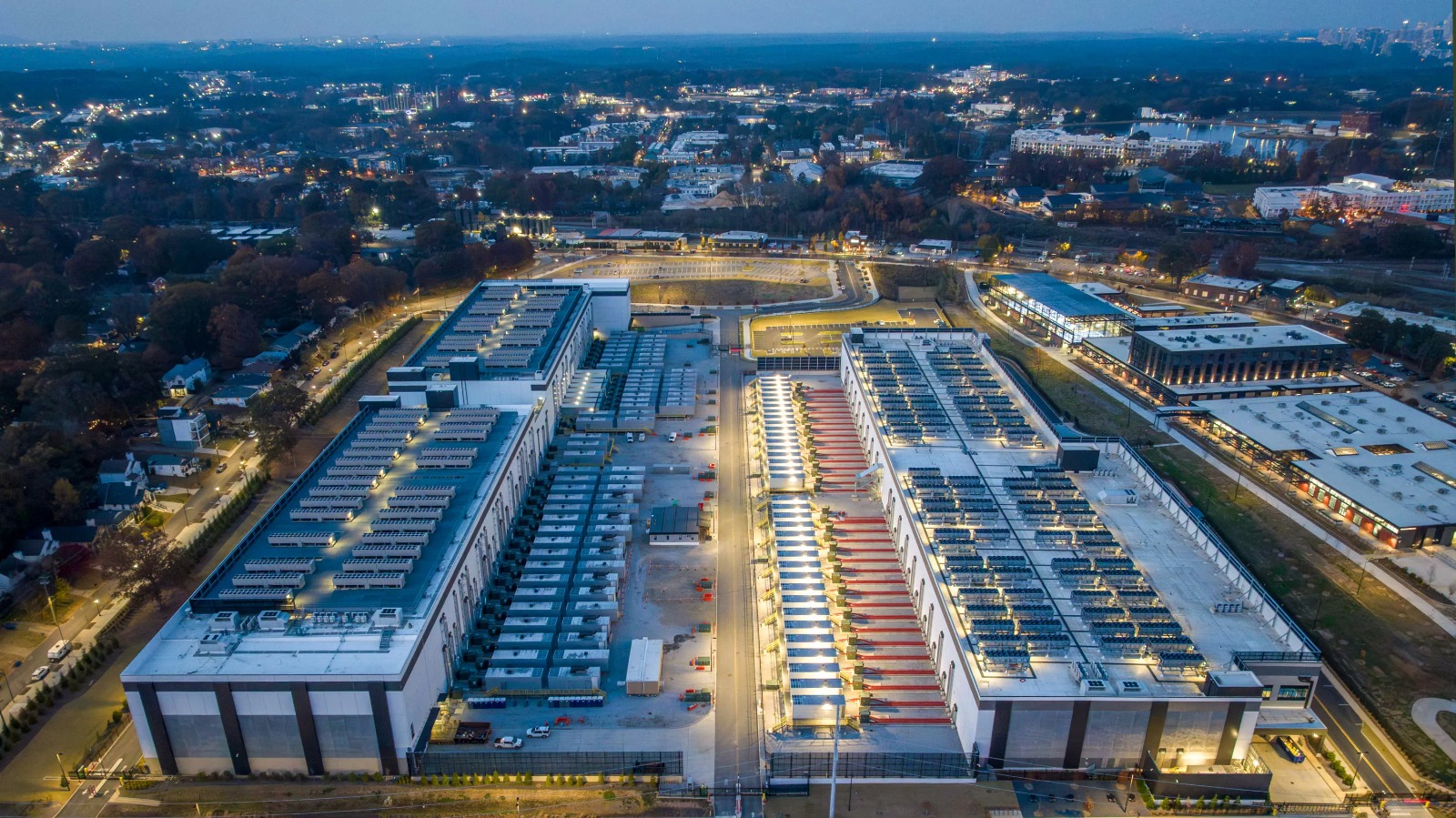
For decades, economic development has been measured by investments in roads, ports, railways, and power plants. Today, another form of infrastructure is rapidly gaining strategic importance: data centers. Often overlooked by the public, these facilities have become the backbone of the digital economy, supporting cloud computing, artificial intelligence (AI), e-commerce, financial services, and government operations. In many ways, data centers are becoming the modern equivalent of factories during the Industrial Revolution.
The surge in AI adoption has dramatically increased demand for computing power. Every AI model, online transaction, streamed video, or digital payment relies on servers housed in data centers. As businesses digitize their operations, countries with advanced digital infrastructure are better positioned to attract investment, foster innovation, and enhance productivity. Increasingly, access to computational capacity is becoming a competitive economic advantage rather than merely a technological asset.
This transformation is also reshaping investment priorities. Governments are offering tax incentives and regulatory support to attract hyperscale data centers, recognizing their potential to create skilled employment, stimulate construction, and encourage the growth of technology ecosystems. Private investors are similarly viewing digital infrastructure as a long-term growth sector, comparable to traditional investments in transportation or energy.
However, the expansion of data centers comes with significant economic trade-offs. These facilities require vast amounts of electricity and cooling systems, placing pressure on energy grids and water resources. In some regions, concerns have emerged over whether scarce energy should prioritize households, manufacturing, or the rapidly expanding AI industry. As a result, energy security is becoming increasingly linked to digital competitiveness.


For emerging economies, the rise of data centers presents both an opportunity and a challenge. Countries that invest in reliable electricity, high-speed internet connectivity, and clear regulatory frameworks can position themselves as regional digital hubs. At the same time, they must ensure that rapid digital expansion aligns with environmental sustainability and long-term resource management.
Ultimately, data centers represent more than rows of servers, they are critical economic assets that enable modern commerce, innovation, and public services. Just as highways once connected markets and accelerated industrialization, digital infrastructure now underpins economic resilience and growth. In the coming years, nations that successfully integrate robust digital infrastructure with sustainable energy systems are likely to gain a decisive advantage in an increasingly data-driven global economy. (Start your investment journey today with the cytonn MMF, call+2540709101200 or email sales@cytonn.com)