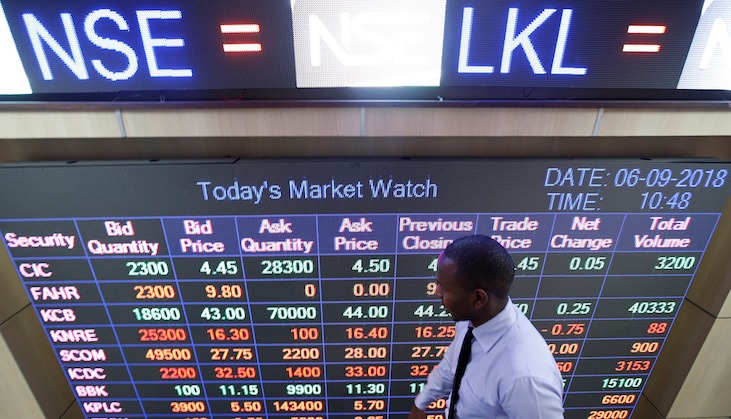
For the roughly 15,800 minority shareholders of East African Cables (EA Cables), 2025 delivered what seemed increasingly unlikely — a way out that doesn’t end in a total wipeout. The announcement that Cable Experts Limited (CEL), controlled by businessman Nilesh Vasantkumar Jasani, has agreed to acquire a 68.37 percent controlling stake in the beleaguered cables manufacturer is more than a corporate transaction. It is a lifeline for thousands of retail investors who had been watching their holdings gather dust since June last year when the company’s shares were suspended from the Nairobi Securities Exchange (NSE) following the seizure of its assets by Equity Bank Kenya.
The suspension followed EA Cables’ failure to service a Sh1.94 billion debt, which ultimately led to the company being placed under administration, managed by joint administrators from PricewaterhouseCoopers Kenya. The company’s controlling shareholder, TransCentury Plc — itself in receivership after defaulting on Equity Bank credit facilities — was effectively forced out. In one stroke, two of Kenya’s most prominent corporates found themselves at the mercy of their lenders.
From Sh85 Highs to Sh1.71 Lows: A Story of Institutional Collapse
The backstory of EA Cables is a sobering lesson in how rapidly corporate value can erode. At its peak in 2006, EA Cables shares traded at Sh85.5 apiece. By the time of the suspension, the price had cratered to Sh1.71 — a decline of nearly 98 percent over roughly two decades. The company’s total market capitalization at suspension stood at just Sh432.8 million, with the minority shareholders’ portion valued at Sh136.8 million.
These numbers aren’t just statistics; they represent the retirement savings, investment portfolios, and financial hopes of thousands of ordinary Kenyans. The collapse of EA Cables — and its parent TransCentury — was particularly painful because both entities were closely associated with a generation of high-profile Kenyan investors who rode the wave of optimism during the Mwai Kibaki administration. TransCentury’s 2011 IPO was priced at Sh50 per share, valuing the founding shareholders’ combined stakes at approximately Sh7.8 billion at the time of listing. That wealth has since largely evaporated.
Why This Rescue Acquisition Matters for NSE Confidence
The significance of the CEL deal extends well beyond EA Cables itself. Kenya’s capital markets have been rattled in recent years by high-profile corporate failures, including the bankruptcy of ARM Cement and Deacons East Africa — both of which left shareholders with nothing. EA Cables’ situation is different, and that difference matters.
By pursuing a “rescue acquisition” structure — a term CEL itself used in its public notice — the incoming owner is explicitly positioning the deal as a going-concern transaction rather than a liquidation. CEL has committed to investing in the company’s revival and repaying the outstanding Equity Bank debt. Crucially, it has also communicated directly with the Capital Markets Authority (CMA) about a structured pathway for resuming public trading of the remaining 31.63 percent minority stake.
This kind of engagement with regulators sends a positive signal to the market. It suggests that the new controlling shareholder understands that acquiring a listed company carries obligations beyond pure commercial interest, including responsibilities to public shareholders and to the integrity of the exchange itself.
The Mandatory Takeover Exemption: Regulatory Nuance Worth Watching
One aspect of this deal that deserves careful attention is CEL’s application for an exemption from the CMA’s mandatory takeover offer rules. Under current regulations, any acquirer that crosses the 25 percent threshold — thereby gaining effective control of a listed entity — is required to extend a purchase offer to all remaining minority shareholders. CEL is seeking to be relieved of this obligation.
The rationale for granting such an exemption in a rescue scenario is well-established in comparable jurisdictions; a mandatory offer requirement can deter potential rescuers by adding significant cost and complexity to an already fragile transaction. However, the CMA will need to balance this against its core mandate of protecting retail investors. The terms under which the exemption is granted — and the conditions attached to the eventual resumption of trading — will be closely watched by market participants and could set a precedent for how future distressed acquisitions of NSE-listed firms are handled.
Who Is Nilesh Jasani? A Reclusive Player Steps into the Spotlight
The deal also shines a light on the man behind Cable Experts Limited. Nilesh Vasantkumar Jasani is not a household name in Kenya’s business press, but the connections are substantive. He is a shareholder in Cable Connect Limited, which has undertaken significant works with the Rural Electrification Authority, and is associated with Thames Electricals, a cables and electrical wholesale distributor. The fact that Cable Experts Limited was only registered in December 2024 — just months before the acquisition was announced — strongly suggests it was purpose-built as a vehicle for this specific transaction.
Whether Jasani’s entry proves to be the transformative moment EA Cables needs remains to be seen. What is clear is that his industry background in cables and electrical infrastructure gives him relevant operational context — a factor that could matter enormously as the company attempts to rebuild its balance sheet and reclaim its position in the East African cables market.