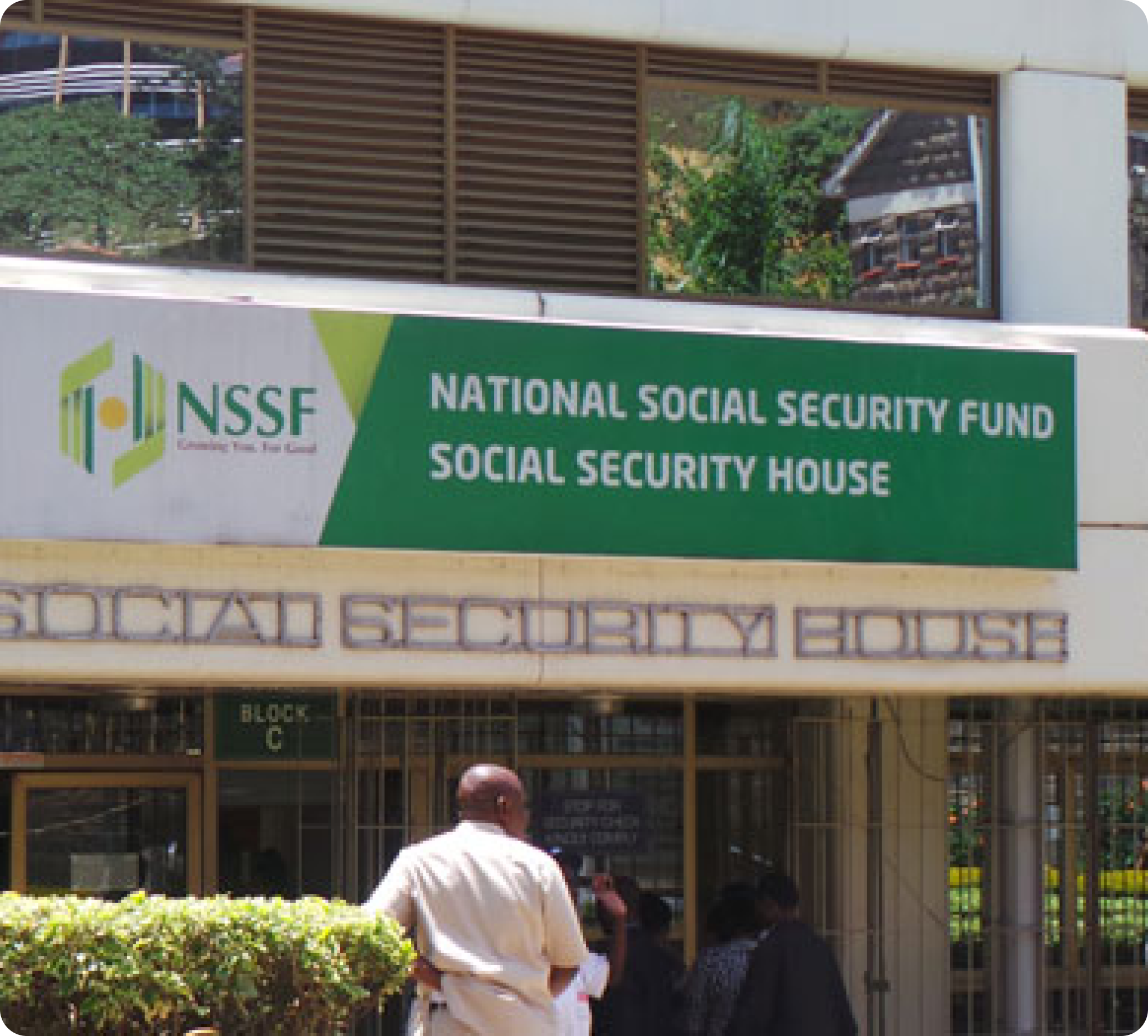
The National Social Security Fund (NSSF) is Kenya’s statutory retirement savings institution, established to provide workers with financial protection in old age, during periods of disability, or to their dependents upon death. Its core purpose is to ensure that every Kenyan worker, regardless of income level, has access to a reliable, long-term savings mechanism that guarantees dignity and security in retirement. NSSF was restructured under the NSSF Act of 2013 to provide a more sustainable and earnings-based retirement savings system. The Fund was restructured from a lump-sum provident fund into a pension scheme, aligning it with global standards and placing it under the oversight of the Retirement Benefits Authority (RBA).
The Act introduced a two-tier contribution model, replacing the previous flat-rate structure with a system linked to an employee’s salary. Under this model, both employers and employees contribute 6.0% of pensionable earnings each, bringing the total to 12.0%. Tier I is mandatory for all formal sector employees earning above the Lower Earnings Limit (LEL). Contributions from both employer and employee are remitted directly to NSSF and invested collectively to provide a basic pension. This tier serves as a universal safety net, ensuring that all workers, especially those in lower-income brackets, have foundational retirement coverage.
Tier II applies to earnings above the LEL and introduces flexibility for employers. Instead of remitting these additional contributions to NSSF, employers may opt to direct them to private retirement schemes, provided these schemes offer benefits equal to or better than those provided by NSSF. This opt-out mechanism must be approved by the RBA and supported by a formal contract between the employer and the chosen scheme.
Contribution limits have been gradually increasing to reflect wage growth. In February 2025, the National Social Security Fund (NSSF) entered the third phase of implementing the NSSF Act of 2013. As part of this phase, the LEL was increased from KES 7,000.0 to approximately KES 8,000.0, while the UEL was raised from KES 36,000.0 to about KES 72,000.0. These adjustments aim to expand pension coverage and enhance retirement benefits for Kenyan workers.

The Cytonn Umbrella Scheme (CURBS) and the Cytonn Personal Scheme (CPRBS) are authorized schemes designed to accept and manage Tier II contributions. CURBS is ideal for employers seeking a pooled, multi-employer solution, while CPRBS offers personalized retirement planning for individuals. These schemes offer professional fund management, potential for higher returns, and transparent governance while meeting all regulatory requirements. By channeling Tier II contributions through CURBS or CPRBS, members enjoy compliance with the law and access to structured, performance-oriented retirement solutions.