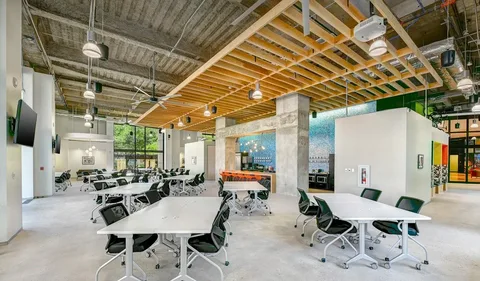
I walk into the Nairobi garage in Westlands, expectant and hopeful. How could George afford a working office in such a prime location? He must be rolling! I am greeted with a beautiful view yet professionally appealing. George, a high school friend and a recent graduate from University of Nairobi decided to see opportunities where others saw obstacles. With the high unemployment rates, George decided to make the bold move to venture into the gig economy fully utilizing his computer science degree. But George is not alone, the room is packed; young entrepreneurs and freelancers! I am introduced to a new concept – Co working spaces! The bustling capital of Nairobi was evidently making a shift from the traditional office spaces to shared spaces. What changed? Why the preference for shared spaces?
The city’s expanding tech economy led to a demand for affordable office solutions. Start ups which are majorly owned by the young adults were unable to commit to long term leases or afford the high costs of renting the traditional office spaces. For example, in prime locations like Westlands office spaces cost 103 KES per square feet as per the Nairobi Metropolitan Area Commercial Office Report 2025, while shared spaces would cost as comparatively lower . While the shared spaces cost only a fraction of the traditional offices they surprisingly offer a better deal compared to the latter, convenient and comfortable office spaces, high speed network and improved security systems. It’s therefore no brainer why their appeal has continued to increase.
Secondly, the shift to shared working spaces was also accelerated by the Covid – 19, post pandemic various businesses had to rethink their working models. Businesses had to downsize physical offices as they shifted to remote or hybrid systems. The shift to remote systems was also enabled by the advanced technologies that enabled communication and cooperation of various employees from different locations.
The impact of co shared spaces is also evident; job creation with up to USD 638.0 million being raised by Kenyan start ups as venture capital in 2024 as per the Kenya National Innovation Agency representing 29.0% of all African funding, revitalization of previously underutilized spaces and real estate development, broader professional networks as the spaces foster collaboration in different fields. It’s therefore safe to note that the embrace of shared working spaces was positive.
With the bulging youth population and the burning entrepreneurial spirit, it’s clear that the demand for co shared offices will not slow down any sooner! Real estate investors must now read the room and adjust to providing solutions which offer flexibility and are cost effective