Real estate markets do not move in a straight line. Instead, they follow recurring patterns known as real estate cycles, which reflect shifts in economic conditions, supply and demand, and investor behavior over time. Understanding these cycles is important for investors, developers, and policymakers, as it helps guide decision making and manage risk.
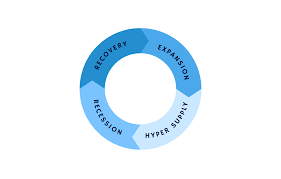
A typical real estate cycle consists of four main phases: recovery, expansion, hyper-supply, and recession. Each phase has distinct characteristics that influence property values, rental income, and development activity.
The recovery phase marks the period after a market downturn. During this stage, property prices and rents stabilize after a decline, and vacancy rates may still be relatively high. Investor confidence is usually low, and new development activity is limited. However, this phase often presents opportunities for long-term investors, as assets may be undervalued and positioned for future growth.
As the market improves, it moves into the expansion phase. This stage is characterized by rising property values, increasing rental demand, and declining vacancy rates. Economic growth, job creation, and improved consumer confidence contribute to stronger demand for real estate. Developers begin to initiate new projects to meet demand, and financing becomes more accessible. This phase is generally associated with strong returns and increased market activity.
The next phase, often referred to as hyper-supply, occurs when development activity continues beyond the level of actual demand. As more properties enter the market, supply begins to exceed demand, leading to rising vacancy rates. While prices and rents may still be growing, the pace of growth starts to slow. This stage can be difficult to identify in real time, as market optimism may still be high.
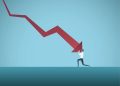
Eventually, the market enters the recession phase. During this period, oversupply becomes more evident, leading to declining property values, reduced rental income, and increased vacancies. Investor confidence weakens, and development activity slows or stops altogether. Economic factors such as reduced income levels or higher interest rates can further contribute to the downturn.
Real estate cycles are influenced by a range of factors, including economic growth, interest rates, population trends, and government policies. For example, lower interest rates can stimulate demand by making financing more affordable, while strong economic growth can increase demand for both residential and commercial properties. Conversely, economic downturns can reduce purchasing power and weaken demand.
Timing the market perfectly is often difficult, as cycles can vary in length and intensity. However, understanding the general pattern allows investors to make more informed decisions. For instance, acquiring property during the recovery phase and exiting during the expansion phase may enhance returns, while cautious investment during hyper-supply can reduce exposure to potential downturns.
It is also important to note that different property types and locations may experience cycles differently. Residential, commercial, and industrial properties can respond to economic changes at different speeds. Similarly, urban and emerging areas may not move in perfect alignment, creating opportunities for diversified investment strategies.
In conclusion, real estate cycles are a natural part of property markets, driven by the interaction of economic conditions, supply, and demand. By recognizing the phases of the cycle and understanding the factors that influence them, investors and stakeholders can better navigate market fluctuations and make more strategic decisions over the long term