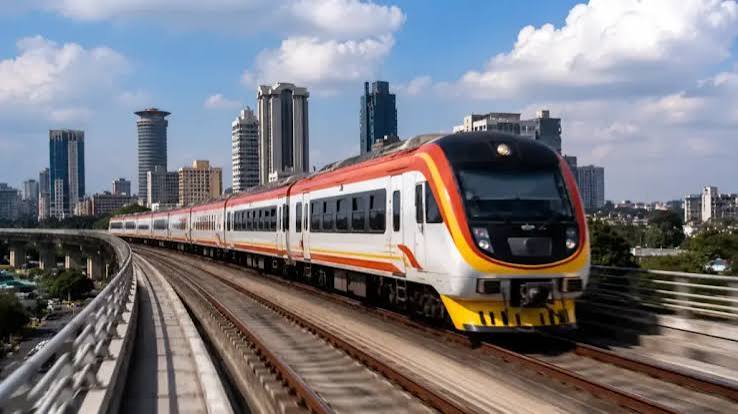
Expanding railway transport is emerging as one of the most critical solutions to Nairobi’s chronic traffic congestion and rapid population growth, offering a sustainable path to move people efficiently and reduce pressure on the city’s overburdened roads.
With a population exceeding 5 million and growing at over 4% annually, Nairobi suffers some of Africa’s worst traffic jams. Daily commutes that should take 30 minutes often stretch into hours, costing the economy billions in lost productivity, wasted fuel and environmental damage. Rail projects, including the Standard Gauge Railway (SGR) extension and commuter rail upgrades, aim to shift thousands of daily travelers from private cars and matatus onto trains.
A major step forward is the planned 15-kilometer SGR extension from the current Syokimau passenger terminus directly into Nairobi’s Central Business District. Once completed, the line will eliminate the frustrating last-mile journey that forces passengers to rely on matatus, taxis or the aging metre-gauge railway. Kenya Railways Corporation is seeking a contractor for the project, which will include new stations at Imara Daima, Makadara and the CBD, along with bridges and flood resilience upgrades.
This extension, together with the multibillion-shilling Nairobi Railway City project, will create a modern multimodal transport hub. It integrates commuter rail, bus rapid transit and pedestrian pathways, potentially reducing the number of vehicles entering the city center daily. Similar upgrades, including the Riruta–Ngong commuter line and World Bank-supported modernization of key corridors, are designed to serve fast-growing satellite areas and carry tens of thousands of passengers per day.


The benefits extend beyond easing traffic. Reliable, affordable rail services can help manage urban population pressures by making satellite towns like Syokimau, Athi River, Ruiru, Ngong and Juja more attractive for residential and commercial development. Shorter, predictable commutes encourage people to live farther from the crowded core while remaining economically connected to it — a key strategy for orderly urban expansion.
Rail transport also supports broader economic goals. Increased passenger numbers on the SGR — which rose 11% last year — and growing freight volumes demonstrate rising public confidence. By shifting both people and cargo off roads, railways reduce accidents, lower emissions and cut logistics costs, indirectly supporting housing affordability and business efficiency in a city strained by overpopulation.
Challenges remain, including project financing, timely execution and integration with other transport modes. Yet the momentum is clear: from SGR extensions to commuter rail rehabilitation, Nairobi is investing in rail as a foundational tool for livability.
As these projects advance, they offer real hope that Africa’s “Green City in the Sun” can reclaim efficiency, reduce hours lost in traffic and accommodate its growing population more sustainably — one train at a time.