Sharp Daily
No Result
View All Result
Wednesday, May 20, 2026
  • Home
  • News
    • Politics
  • Business
    • Banking
  • Investments
  • Technology
  • Startups
  • Real Estate
  • Features
  • Appointments
  • About Us
    • Meet The Team
Sharp Daily
  • Home
  • News
    • Politics
  • Business
    • Banking
  • Investments
  • Technology
  • Startups
  • Real Estate
  • Features
  • Appointments
  • About Us
    • Meet The Team
No Result
View All Result
Sharp Daily
No Result
View All Result
Home News

Is Mobile Money Making Kenyans Better Savers or Better Spenders

Ruth Atieno by Ruth Atieno
February 4, 2026
in News
Reading Time: 2 mins read

Mobile money has become a central feature of daily economic life in Kenya, shaping how individuals receive income, manage expenses, and interact with financial systems. Its widespread use has introduced new patterns of behavior that raise an important question. Does mobile money encourage saving, or does it primarily facilitate spending. Examining this issue requires moving beyond outcomes and focusing on how access, convenience, and design influence financial habits.

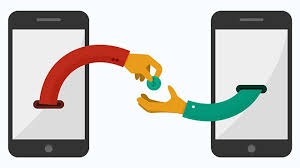
At its core, mobile money reduces friction in transactions. Sending, receiving, and storing value can occur instantly, often without the formal requirements associated with traditional banking. This ease of use changes how money is experienced. Funds become more fluid and more visible, which can alter decision making around when to hold and when to spend. Rather than forcing users to plan withdrawals or visits to physical locations, mobile money allows continuous interaction with cash balances.

From a saving perspective, mobile money introduces mechanisms that make small and irregular saving possible. Users can store modest amounts without minimum balance requirements or formal commitment. For individuals with variable income, this flexibility may allow saving to occur incrementally rather than through structured plans. At the same time, the same accessibility means saved funds are never fully separated from spending opportunities. Money intended for future use remains immediately available for current needs.

Spending behavior is also shaped by how mobile money integrates into everyday transactions. Payments for transport, food, utilities, and social obligations increasingly occur through mobile platforms. This integration embeds spending into routine actions, potentially making transactions feel less deliberate. When payment becomes a background activity rather than a distinct event, the psychological distinction between holding and using money may narrow.


RELATEDPOSTS

Cable Experts to acquire 68% stake in East African Cables from TransCentury

May 20, 2026
John Mbadi, Kenya's treasury secretary, during an interview in Nairobi, Kenya, on Wednesday, Aug. 20, 2025. Kenya is in talks with China to convert dollar-denominated debt the East African nation owes its biggest bilateral lender to yuan and extend the repayment period, Mbadi said. Photographer: Kang-Chun Cheng/Bloomberg via Getty Images

Finance bill 2026: Key changes set to shape kenya’s economy

May 20, 2026

Another dimension lies in how mobile money reframes financial visibility. Users can check balances frequently, track transaction histories, and receive real time confirmations. This constant feedback may influence behavior in different ways. For some, visibility supports monitoring and control. For others, it reinforces short term decision making by keeping available funds constantly in view. The same feature can therefore support both restraint and impulsivity depending on context.

Mobile money also operates within broader social and economic structures. It facilitates rapid transfers between individuals, supporting obligations such as family support or community contributions. These social flows blur the line between saving and spending, as funds may be held temporarily with the expectation of redistribution. In this setting, money functions less as a personal reserve and more as a circulating resource.

Rather than positioning mobile money as producing either savers or spenders, it may be more useful to view it as reshaping financial behavior altogether. It alters timing, accessibility, and social expectations around money use. Saving and spending become less distinct categories and more interconnected practices occurring within the same system.  (Start your investment journey today with the cytonn MMF, call+2540709101200 or email sales@cytonn.com)

 

Previous Post

Temporal Economics in the Age of Influencer Mediated Markets

Next Post

How international accreditation can strengthen healthcare training in Kenya

Ruth Atieno

Ruth Atieno

Related Posts

John Mbadi, Kenya's treasury secretary, during an interview in Nairobi, Kenya, on Wednesday, Aug. 20, 2025. Kenya is in talks with China to convert dollar-denominated debt the East African nation owes its biggest bilateral lender to yuan and extend the repayment period, Mbadi said. Photographer: Kang-Chun Cheng/Bloomberg via Getty Images
Analysis

Finance bill 2026: Key changes set to shape kenya’s economy

May 20, 2026
News

The relationship between interest rates and equity market performance

May 20, 2026
News

The impact of exchange rate volatility on investment decisions

May 19, 2026
Entertainment

The Spotify “Disco Ball” Branding Stunt

May 18, 2026
News

The influence of commodity prices on investment markets

May 18, 2026
News

Safaricom’s fuel strategy highlights growing energy risks facing Africa’s digital economy

May 15, 2026

LATEST STORIES

Cable Experts to acquire 68% stake in East African Cables from TransCentury

May 20, 2026
John Mbadi, Kenya's treasury secretary, during an interview in Nairobi, Kenya, on Wednesday, Aug. 20, 2025. Kenya is in talks with China to convert dollar-denominated debt the East African nation owes its biggest bilateral lender to yuan and extend the repayment period, Mbadi said. Photographer: Kang-Chun Cheng/Bloomberg via Getty Images

Finance bill 2026: Key changes set to shape kenya’s economy

May 20, 2026

The relationship between interest rates and equity market performance

May 20, 2026

The impact of exchange rate volatility on investment decisions

May 19, 2026

Equity Group Holdings move to extend its footprint across Southern Africa

May 19, 2026

The Spotify “Disco Ball” Branding Stunt

May 18, 2026

Court to decide on Kenya’s Sh204 billion Safaricom stake sale

May 18, 2026

The influence of commodity prices on investment markets

May 18, 2026
  • About Us
  • Meet The Team
  • Careers
  • Privacy Policy
  • Terms and Conditions
Email us: editor@thesharpdaily.com

Sharp Daily © 2024

No Result
View All Result
  • Home
  • News
    • Politics
  • Business
    • Banking
  • Investments
  • Technology
  • Startups
  • Real Estate
  • Features
  • Appointments
  • About Us
    • Meet The Team

Sharp Daily © 2024