Sharp Daily
No Result
View All Result
Wednesday, April 29, 2026
  • Home
  • News
    • Politics
  • Business
    • Banking
  • Investments
  • Technology
  • Startups
  • Real Estate
  • Features
  • Appointments
  • About Us
    • Meet The Team
Sharp Daily
  • Home
  • News
    • Politics
  • Business
    • Banking
  • Investments
  • Technology
  • Startups
  • Real Estate
  • Features
  • Appointments
  • About Us
    • Meet The Team
No Result
View All Result
Sharp Daily
No Result
View All Result
Home Opinion

Kenya’s informal sector

Ivy Mutali by Ivy Mutali
May 6, 2025
in Opinion
Reading Time: 2 mins read

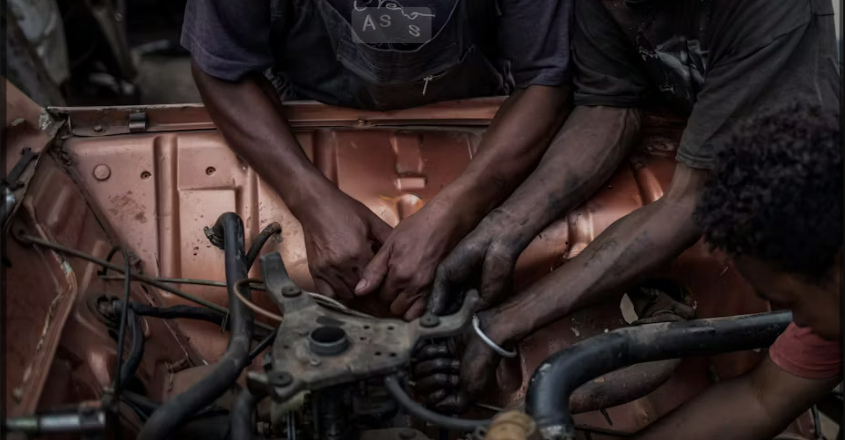
Kenya’s informal sector, often overlooked in mainstream economic discussions, remains the backbone of the country’s employment and micro-enterprise activity. From roadside vendors to boda boda operators and jua kali artisans, this sector accounts for over 80.0% of employment outside agriculture, contributing significantly to household incomes and local economies.

The informal economy thrives on flexibility, low entry barriers and community-driven demand. Many Kenyans turn to informal work due to limited access to formal jobs, leveraging skills, creativity and networks to survive and often thrive. Whether it’s small-scale manufacturing in Gikomba, mobile money agents across townships, or second-hand clothing traders in Gikuyu markets, the sector is alive with resilience and entrepreneurship.

Despite its vibrancy, the informal sector faces major structural challenges. Workers often lack access to social protection, pensions, credit or legal recognition. Their businesses operate outside formal tax systems and regulatory oversight, which limits their scalability and long-term sustainability. Informal entrepreneurs are also more vulnerable to economic shocks, such as inflation or currency fluctuations, as they lack buffers like savings or insurance.

The Kenyan government has made some efforts to integrate the informal economy into national development plans. Initiatives like the Hustler Fund and Ajira Digital Program aim to boost access to affordable credit and digital work opportunities. County governments have also rolled out licensing reforms and market infrastructure improvements to support small traders.

RELATEDPOSTS

No Content Available

However, more must be done to formalize and empower the sector without stifling its grassroots dynamism. This includes offering micro-pension schemes, creating cooperative financing models, and easing business registration processes. Public-private partnerships can play a pivotal role in training, financing, and equipping informal workers to grow their ventures.

For investors and development actors, the informal sector presents untapped potential. From fintech platforms serving micro-merchants to affordable health insurance tailored for gig workers, there’s a wide space for innovation. As Kenya seeks inclusive and sustainable growth, recognizing and supporting the informal sector is not just smart economics, it’s a necessity


Previous Post

May momentum: Why the CMMF remains a top performer

Next Post

Kenya’s new digital tax: Impact on businesses and consumers

Ivy Mutali

Ivy Mutali

Related Posts

Economy

How a regional refinery could reshape East Africa’s trade deficit

April 24, 2026
Analysis

Kenya airways narrows losses amid recovery efforts and expansion plans

April 24, 2026
Analysis

Kenya’s growth outlook 2026

April 21, 2026
Analysis

Why your account may be flagged by kenya revenue authority (KRA)

April 17, 2026
Economy

Bridging the gap between financial policy and practical use

April 16, 2026
Economy

How Kenyan SMEs Can Shift from Activity to Value Creation

April 10, 2026

LATEST STORIES

Iran conflict exposes Kenya’s economic fragility as growth slows and external risks rise

April 29, 2026

Life Cover Benefits Embedded in Retirement Schemes

April 29, 2026

When coverage fails at the point of care: why civil servants are pushing back on SHA

April 29, 2026

Amazon seeks License to offer satellite internet in Kenya

April 29, 2026

What Kenyan taxpayers must do before KRA’s 2026 filing season closes

April 28, 2026

Electrifying the SGR(Standard Gauge Railway): Kenya’s next big rail bet could redefine regional trade

April 28, 2026

The role of credit ratings in investment risk assessment

April 28, 2026

Why Kenyans are shifting to life insurance over general insurance

April 27, 2026
  • About Us
  • Meet The Team
  • Careers
  • Privacy Policy
  • Terms and Conditions
Email us: editor@thesharpdaily.com

Sharp Daily © 2024

No Result
View All Result
  • Home
  • News
    • Politics
  • Business
    • Banking
  • Investments
  • Technology
  • Startups
  • Real Estate
  • Features
  • Appointments
  • About Us
    • Meet The Team

Sharp Daily © 2024