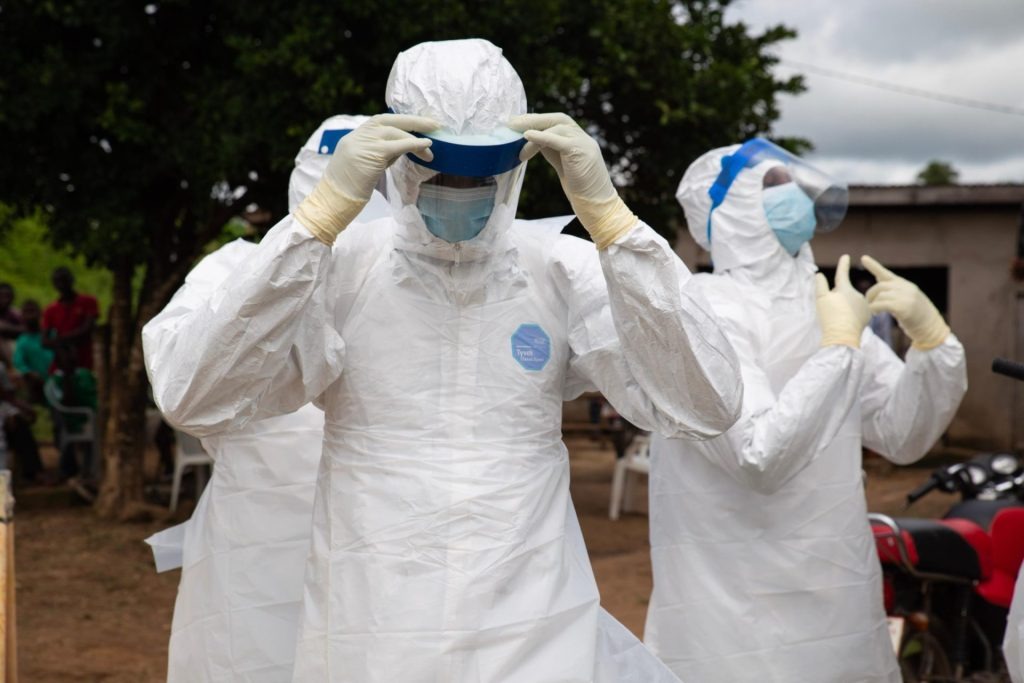
The eastern Democratic Republic of Congo is no stranger to health crises unfolding in the shadow of conflict. But the country’s 17th Ebola outbreak, driven by the Bundibugyo strain, for which there is neither an approved vaccine nor a proven treatment, is testing the limits of international goodwill, logistical ingenuity, and political will in ways that should disturb every policymaker and global health stakeholder paying attention.
With over 1,077 confirmed infections and a death toll surpassing 223 across 11 health zones in Ituri, North Kivu, and South Kivu provinces, the scale of this outbreak is alarming. Equally alarming is the terrain in which it is spreading: remote communities severed by impassable roads, displaced populations caught in the crossfire of armed conflict, and healthcare infrastructure that was fragile long before the virus arrived.
A mobilisation unlike previous outbreaks, but with cracks
The international community’s response has been swift by historical standards. The United States committed $112 million in bilateral assistance, $80 million announced on May 27 alone, earmarked for protective equipment, border screening, contact tracing, diagnostics, and up to 50 Ebola response clinics. The European Union pledged an additional €15 million, the United Kingdom committed up to £20 million, and Belgium organized a humanitarian air bridge delivering nearly 100 tonnes of medical supplies. The World Health Organization began disbursements that have grown to $3.9 million, while the Africa Centres for Disease Control and Prevention (Africa CDC) released $1 million directly to Kinshasa.
On the ground in Ituri, the UN and provincial government handed over vehicles and motorcycles to enable response teams to penetrate the most isolated epidemic hotspots, a vivid reminder that in outbreak control, logistics are not secondary concerns; they are the response itself.
Yet for all the pledging, the numbers tell a more uncomfortable story. Africa CDC Director-General Dr. Jean Kaseya revealed that partner pledges had initially reached nearly $500 million, only to fall back to approximately $290 million as a number of unnamed donors quietly reversed their commitments.
“People are dying! How can we come and say, “We commit X million dollars, and the next day they are calling me to say no, it was a mistake?”
— Dr Jean Kaseya, Director-General, Africa CDC
That rebuke from one of the continent’s most senior health officials deserves far more attention than it has received. Pledging and disbursing are not the same thing, a fact that has bedevilled African health emergency responses for years. When commitments evaporate between a press conference and a wire transfer, people in conflict zones pay with their lives.
The Bundibugyo challenge: fighting a virus with no approved vaccine
What makes this particular outbreak strategically distinct from Congo’s more documented battles with the Zaire strain of Ebola is the nature of the pathogen itself. The Bundibugyo strain lacks the vaccine coverage and treatment protocols that have proven effective in past outbreaks. Congolese Health Minister Samuel Roger Kamba has made mass testing the cornerstone of the current strategy, with thousands of test kits being dispatched daily. The approach is sound in principle, but its effectiveness depends entirely on supply chain integrity, laboratory capacity, and the ability of health workers to physically reach patients in conflict-affected zones.
The Congolese government, working in coordination with Ugandan authorities and partners, including WHO, Africa CDC, and the US CDC, has revised its overall response budget upward from $240 million to $319 million to reflect operational realities on the ground. Finance Minister Doudou Fwamba Likunde underscored Kinshasa’s intent to lead rather than follow, with $20 million already disbursed and a further $30 million committed in the immediate near-term.
Kenya, the quarantine controversy, and the limits of preparedness agreements
The outbreak’s regional implications became unexpectedly visible when the United States offered Kenya $13.5 million for Ebola preparedness, including the establishment of a quarantine facility for Americans potentially exposed to the virus. The plan hit a legal wall when Nairobi’s Katiba Institute challenged the arrangement in court, raising questions about sovereignty, due process, and the terms under which foreign nationals can be quarantined on Kenyan soil. The episode is a useful reminder that regional preparedness frameworks, however well-intentioned, require transparent legal and diplomatic grounding to survive public scrutiny.
The structural deficit that no single outbreak can fix
Dr. Kaseya’s pointed challenge to wealthy global health institutions, those “sitting with billions of dollars” who are willing to fund development programmes but not emergency response, cuts to the heart of a persistent dysfunction in global health architecture. Emergency response and long-term development are often treated as competing funding categories when they are, in reality, deeply interdependent. Weak health systems the product of chronic underfunding of precisely those development programmes are what allow outbreaks to spiral in the first place.
The World Bank and African Development Bank deserve credit for agreeing to repurpose existing funds to support the DRC response. That kind of institutional agility is exactly what is needed. But the broader lesson is structural: the international community cannot continue to treat Ebola, or any epidemic emergency, as an exceptional demand on discretionary goodwill. It must be treated as a foreseeable risk requiring pre-positioned financing mechanisms.
Concluding insight: solidarity must mean more than a pledge
The DRC’s 17th Ebola outbreak is unfolding in one of the most complex humanitarian environments on the planet. The response — combining US bilateral aid, EU and UK contributions, UN logistics support, Africa CDC technical leadership, and a Congolese government willing to commit its own scarce resources — represents a genuine, if imperfect, expression of international solidarity. But solidarity measured only in press conference pledges is insufficient. The gap between the $500 million initially promised and the $290 million still on the table is not just a financial shortfall; it is a credibility deficit that the global health system can ill afford as the world’s disease burden continues to grow.
For policymakers, health advocates, and informed citizens watching this crisis unfold, the central question is not whether the world can afford to fight this outbreak. It is whether the institutional frameworks that govern global health financing are fit for the speed and scale of 21st-century emergencies. The answer, right now, is clearly: not yet.