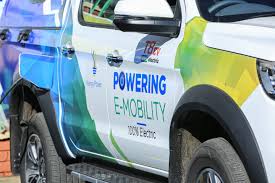
Kenya Power has accumulated Ksh 382 million in e-mobility revenue over a 34 month period spanning July 2023 to April 2026, according to the utility’s newly released E-mobility Sales Growth Analysis Report. Monthly EV charging revenues rose from Sh873,907 in July 2023 to a peak of Sh35 million in February 2026, reflecting rapid growth in electric mobility infrastructure and usage across the country.
Kenya Power Managing Director Joseph Siror attributed the surge to a fundamental shift in consumer behaviour. “Our E-mobility Sales Growth Analysis Report (July 2023 – April 2026) shows that electricity sales to the e-mobility sector have grown 113-fold in just under three years, from 13,500 kWh in July 2023 to over 1.5 million kWh in April 2026,” he said. “This is clear evidence that EV adoption is no longer a pilot, but a mainstream reality.”
A key milestone was crossed in November 2025, when monthly electricity sales to the e-mobility sector breached the one million kWh mark for the first time.
The growth in charging revenue mirrors a broader expansion of Kenya’s EV fleet. Data from the Electric Mobility Association of Kenya (EMAK) indicates that Kenya’s registered EV fleet surpassed 35,000 vehicles, dominated heavily by electric two wheelers, up from just 796 vehicles three years prior. Earlier EMAK figures show the number of EVs registered annually doubled to 5,294 in 2024, up from 2,694 in 2023, with motorcycles leading adoption at 4,862 units.
Geographically, Nairobi dominates the market, accounting for 71 per cent of cumulative revenue, while the Coast, North Eastern and Western regions are gradually expanding their uptake, signaling early signs of broader nationwide penetration.


Siror has flagged this regional imbalance as a priority. “This growth tells us the opportunity is truly national, and our focus must be on diversifying beyond the capital,” he said.
The push has been supported by the National Electric Mobility Policy launched on February 3, 2026, and tax incentives under the Finance Bill 2025, including zero rated VAT and reduced excise duty on electric buses, motorcycles, bicycles, and lithium-ion batteries. Over 90 per cent of the electricity Kenya Power supplies comes from renewable sources, positioning the country’s electric mobility transition as both economically and environmentally sustainable.
More than 1,000 stakeholders from East Africa’s electric mobility sector are expected to gather in Nairobi from June 4-5, 2026, for the 4th Annual Kenya Power E-mobility Stakeholders’ Conference and Expo, under the theme Aligning Policy, Infrastructure Development and Partnerships to Scale E-mobility in Kenya.